Vagrancy in the Animal Kingdom: When Species Wander Off Course
In the study of biology, vagrancy refers to the phenomenon where an individual animal appears well outside its normal geographic range. These wandering individuals are commonly referred to as vagrants. While it may seem like a simple mistake, vagrancy is a complex biological event that can lead to the colonization of new territories and, over vast periods of time, even the development of new species.
Scientists generally categorize the causes of vagrancy into two types: endogenous vagrancy, which stems from internal factors like navigation errors, and exogenous vagrancy, which is caused by external forces such as severe weather patterns.
Key Facts
- Vagrancy can be caused by internal navigation errors or external weather events.
- In birds, "reverse migration" occurs when individuals fly in the opposite direction of their expected path.
- Vagrant individuals can occasionally establish entirely new populations in new habitats.
- Small mammals have been known to cross oceans by rafting on vegetation mats.
- Vagrancy is documented across birds, insects, mammals, reptiles, and even plants.
Vagrancy in Birds
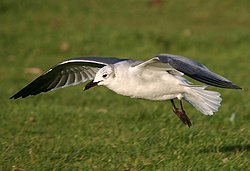
Birds are among the most frequently studied vagrants. In the Northern Hemisphere, many adult birds experience spring overshoots, where they continue past their normal breeding grounds during spring migration.
Autumn migration presents different challenges. Some young birds engage in reverse migration, taking incorrect courses that lead them away from their usual wintering grounds. For instance, certain Siberian passerines (small perching birds) that typically winter in Southeast Asia are occasionally found in Northwest Europe. While the exact cause is unknown, researchers suspect genetic mutations or anomalies in the birds' magnetic sensibilities may play a role.
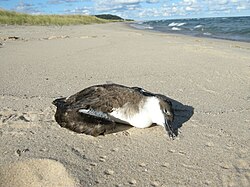
External factors also play a massive role. Storms and high winds can blow North American birds across the Atlantic Ocean to Europe. In some cases, birds exhausted by being blown out to sea may land on ships and be carried to entirely new destinations.
The Path to Colonization
While many vagrant birds do not survive the journey, successful vagrants can become pioneers. If enough individuals reach a new area, they can establish new populations. This process has shaped much of the world's biodiversity; for example, the Hawaiian honeycreepers and Darwin's finches are believed to have descended from landbirds that were blown out to sea.
Insects and Reptiles
Insects: Migration and Movement
Vagrancy is highly documented in insects, particularly among butterflies, moths, and dragonflies. In many species, vagrancy is closely linked to migration patterns. Research has shown that butterfly larvae feeding on shrubs and forbs exhibit higher frequencies of vagrancy compared to those feeding on grass. In dragonflies, such as those in the Tramea genus, elongated hindwings designed for long, gliding flights may make them more prone to wandering. Notably, the North American dragonfly Anax junius has been recorded in Europe during autumn due to strong westerly winds.
Reptiles: A Widespread Phenomenon
Vagrancy is also a widespread occurrence among reptiles, including sea turtles, snakes, and crocodilians. Saltwater crocodiles are particularly known for their wandering tendencies, with individuals recorded in unexpected locations such as Fiji, Iwo Jima, and the Sea of Japan.
Mammals and Transoceanic Travel
Vagrancy in mammals covers a diverse range of species, from bats and seals to whales and manatees. Migrating bats can be redirected by extreme weather, while nomadic Antarctic seals have been spotted on temperate islands in the South Atlantic. Marine mammals also exhibit unusual movements; male beluga whales typically breed in the Arctic, but a single vagrant has been reported as far south as Baja California, Mexico.
Manatees have also shown remarkable movement patterns. While some populations are localized, others, like the manatee named "Chessie," have made repeated northward journeys. Even more extraordinary is the phenomenon of rafting, where small mammals like moles, shrews, monkeys, and rats relocate to new continents by clinging to uprooted tree rafts or vegetation mats. This is made possible when individuals lower their metabolic activity to survive the harsh maritime conditions.
Vagrancy in Plants
The term is also applied to botany. A vagrant plant is one growing far outside its usual range, often with the implication that the population is temporary. In the context of lichens, a "vagrant form" refers to a species that occurs unattached to a substrate. In certain regions, such as New Zealand, vagrant taxa are defined as those whose presence is naturally transitory and fail to establish significant populations due to reproductive failure or specific ecological constraints.
Summary of Vagrancy Across Taxa
| Taxon Group | Common Causes | Notable Examples |
|---|---|---|
| Birds | Navigation errors, storms, reverse migration | Siberian passerines, Hawaiian honeycreepers |
| Insects | Migration patterns, wind assistance | Anax junius (dragonfly), butterflies |
| Mammals | Extreme weather, rafting on vegetation | Beluga whales, manatees, small rodents |
| Reptiles | Natural dispersal | Saltwater crocodiles, sea turtles |
| Plants | Dispersal, temporary establishment | Lichens, New Zealand flora |
Frequently Asked Questions
What is the difference between endogenous and exogenous vagrancy?
Endogenous vagrancy is caused by internal factors, such as a biological error in an animal's internal navigation system. Exogenous vagrancy is caused by external environmental factors, such as being blown off course by a storm or strong winds.
Can vagrancy lead to the creation of new species?
Yes. If enough vagrant individuals reach a new, isolated area and successfully establish a population, they can eventually undergo speciation, leading to the development of new species distinct from their ancestors.
How do small mammals cross oceans?
Small mammals can occasionally undergo transoceanic relocation by "rafting" on floating vegetation mats or uprooted trees. They can survive these journeys by lowering their metabolic activity to endure periods without food or water.
What is reverse migration in birds?
Reverse migration occurs when a bird migrates in the opposite direction of its expected or normal path. This is often seen in young birds and is suspected to be linked to genetic mutations or issues with their magnetic sensing abilities.
Are all vagrant animals able to survive?
No. Many vagrant animals do not survive their journey due to exhaustion, lack of food, or unfamiliar habitats that do not meet their biological needs.