Ute People: A History of Trade, Horse Culture, and Resilience
The Ute people possess a rich and complex history defined by their adaptability, strategic trade networks, and a profound transformation in lifestyle following the introduction of the horse. From their ancestral homelands in the mountainous regions of the West to their interactions with Spanish explorers and American settlers, the Utes navigated a shifting geopolitical landscape with skill and strength.
Key Facts
- Trade Experts: The Utes were primary trading partners for Spanish residents in New Mexico, specializing in high-quality tanned deerskins known as chamois.
- Horse Culture: The acquisition of horses by 1680 shifted Ute society toward greater mobility, hunting efficiency, and a warrior-centric status system.
- Strategic Alliances: They maintained close ties and intermarried with the Jicarilla Apache, Paiute, Bannock, and Western Shoshone.
- Territorial Loss: By the mid-1870s, Utes in Utah were forced onto reservations comprising less than 9% of their original lands.
Intertribal Relationships and Trade
Long before European contact, the Utes established extensive trade networks. They participated in annual trade fairs, or rescates, held at various pueblos including Taos, Santa Clara, and Pecos. These gatherings allowed the Utes to trade with the Rio Grande River Pueblo people, as well as the Navajo, Havasupai, and Hopi, specifically for woven blankets.
Socially, the Utes were deeply integrated with neighboring tribes. They shared territory and intermarried extensively with the Jicarilla Apache. Their relationship with the Southern Paiutes was so close that territorial borders in southeast Utah remain difficult to distinguish. While generally peaceful or defensive in their conflicts before the arrival of horses, they maintained poor relations with the Northern and Eastern Shoshone.
Spanish Contact and the Horse Revolution
Early contact with the Spanish was often volatile; in 1637, a conflict resulted in the capture and enslavement of 80 Utes. However, the trajectory of Ute culture changed dramatically by 1680 with the large-scale acquisition of horses. This shift mirrored the development of Great Plains Indian cultures, making the Utes more mobile and effective hunters of large game.
Horse ownership became the primary status symbol within the tribe, and the development of equestrian skills led to the rise of a respected warrior class. This newfound mobility also necessitated more structured political leadership to manage the tribe's expanding influence.
By 1765, the Utes had established direct trade with the Spanish. They became essential partners for New Mexico residents, trading meat, buffalo robes, and high-quality chamois (soft tanned deerskins) for cloth, blankets, firearms, maize, flour, and ornaments. The Spanish viewed this trade as vital and strictly regulated it through annual caravans. Additionally, the Utes participated in the trade of captives taken from the Apache, Comanche, Paiute, and Navajo tribes.
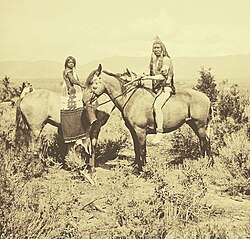
The Warrior Tradition and Horse Culture
With the mastery of the horse, the Utes transitioned from defensive postures to active raiding. While their relatives, the Comanches, moved onto the Great Plains, the Utes remained closer to their ancestral homelands. They frequently raided the Southern Paiutes, Western Shoshones, and groups in New Mexico to capture women and children for trade with the Spanish.
The relationship with the Comanche eventually soured; the word "Comanche" actually derives from the Ute word kɨmantsi, meaning "enemy." Ute warfare was primarily driven by the pursuit of prestige, revenge, and the acquisition of horses.
Combat and Ritual
Ute warriors were specialists in mounted combat, executing daring maneuvers that made them formidable opponents. War parties were led by a war chief and accompanied by medicine men. Preparation for battle involved spiritual rituals, including fasting and sweat lodge ceremonies, and the symbolic painting of faces and horses.
While most Plains Indians had formal warrior societies, the Utes generally did not, though the Southern Utes developed them late in their history. Women played a supporting role, following war parties to gather loot and singing songs. The Lame Dance was specifically performed by women to symbolize the effort of carrying heavy loads of loot after a successful raid.
European-American Settlement and Conflict
In the early 19th century, Utes traded with French trappers and participated in the annual Rocky Mountain Rendezvous. However, the arrival of Mormon settlers in Utah in 1847 marked the beginning of a period of intense territorial pressure. As settlers moved south toward the Wasatch Front, Utes were systematically pushed off their lands.
Tensions escalated into open warfare by the 1850s, fueled by the kidnapping of Ute children by Anglo-American traders and a gold strike in 1858 that brought a flood of prospectors into Ute territory. This era saw several significant conflicts, including the Walker War (1853–54) and the Black Hawk War (1865–72).
The Reservation Era
The U.S. federal government eventually forced the Utes onto reservations. In Utah, this meant a loss of over 91% of their ancestral land. In Colorado, the government attempted to force the Utes to transition from hunting and gathering to farming, a change that led to widespread starvation due to crop failures.
Further land losses occurred in 1873 in the gold-rich San Juan area and again in 1879 following the "Meeker Massacre." Today, the Ute people reside on the Uintah and Ouray Indian Reservation in Utah, as well as the Ute Mountain Ute and Southern Ute reservations in Colorado.
| Period/Factor | Key Characteristics | Primary Impact |
|---|---|---|
| Pre-Horse Era | Trade with Pueblos; defensive warfare | Stable ancestral homeland boundaries |
| Post-1680 (Horse Era) | Mounted combat; raiding; Spanish trade | Increased mobility and warrior status |
| 18th Century Spanish Trade | Export of chamois and robes | Acquisition of guns, cloth, and maize |
| 19th Century Settlement | Conflict with Mormons and prospectors | Massive land loss and reservation confinement |
Frequently Asked Questions
What was the significance of the horse to Ute culture?
The horse revolutionized Ute society by increasing mobility for hunting and trade, shifting their military strategy toward raiding, and establishing horse ownership and riding skill as the primary markers of social status.
What is chamois in the context of Ute history?
Chamois refers to the soft, high-quality tanned deerskins produced by the Utes, which were highly sought after by Spanish residents of New Mexico and served as a cornerstone of their trade economy.
How did the Utes' relationship with the Comanche change?
Originally allies, the Utes and Comanches eventually became enemies. This shift is immortalized in the name "Comanche," which comes from the Ute word kɨmantsi, meaning "enemy."
What caused the transition to reservations in Colorado?
The transition was driven by U.S. federal government policy and the discovery of gold in areas like the San Juan region. Events such as the Meeker Massacre further accelerated the removal of Utes from their remaining lands.
Who were the Utes' primary allies and enemies?
The Utes were closely allied and intermarried with the Jicarilla Apache, Paiute, Bannock, and Western Shoshone. They generally had poor relations with the Northern and Eastern Shoshone and eventually fought with the Comanche and various Euro-American settlers.