UTC−06:00 Time Zone: Global Usage and Regional Variations
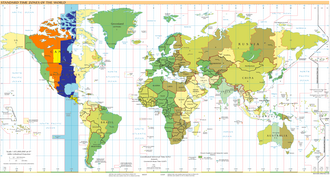
UTC−06:00 is a time offset identifier indicating that a region is six hours behind Coordinated Universal Time (UTC), the primary time standard by which the world regulates clocks and time. Centered on the 90th meridian west, this offset serves as a critical temporal anchor for much of North and Central America, as well as specific territories in the Pacific.
Depending on the region and the time of year, UTC−06:00 may function as standard time, daylight saving time, or a permanent year-round offset. This flexibility allows different nations to align their business and social schedules with neighboring trade partners and seasonal sunlight changes.
Key Facts
- Offset: 6 hours behind Coordinated Universal Time (UTC−06:00).
- Central Meridian: 90 degrees West.
- Primary Roles: Serves as Central Standard Time (CST) in winter and Mountain Daylight Time (MDT) in summer for many North American regions.
- Year-Round Use: Observed permanently across most of Central America and large portions of Mexico.
- Global Reach: Spans from Canada and the US to Central America, the Galápagos Islands, and Easter Island.
UTC−06:00 as Standard Time (Northern Hemisphere Winter)
During the winter months, UTC−06:00 is primarily known as Central Standard Time (CST) in North America. It is used across vast stretches of the United States, Canada, and Mexico.
United States and Canada
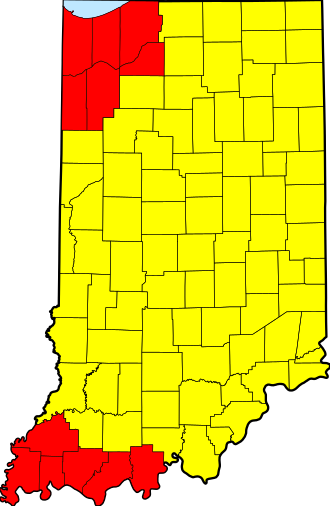
In the U.S., this offset covers a significant portion of the central states, including Alabama, Arkansas, Illinois, Iowa, Louisiana, Minnesota, Mississippi, Missouri, Oklahoma, and Wisconsin. It also includes parts of Florida (the panhandle), Indiana (northwestern and southwestern counties), Kansas (most of the state), Kentucky (western counties), Nebraska (central and eastern), North Dakota (most of the state), South Dakota (eastern half), Tennessee (western counties), and Texas (except for the far northwest).
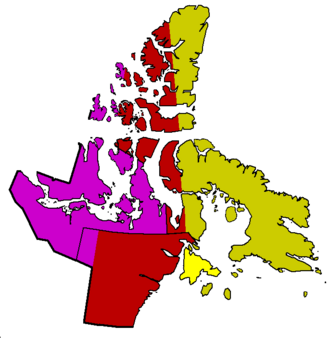
In Canada, it is observed in Manitoba and parts of Ontario (west of 90° west) and Nunavut (Kivalliq Region, excluding Southampton Island).
Mexico
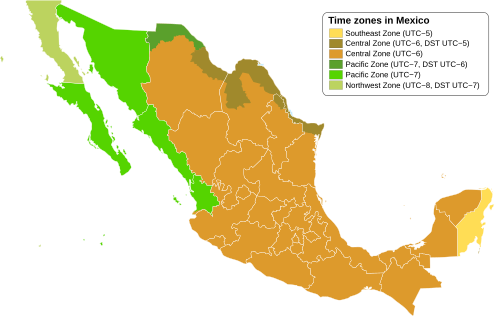
Near the U.S. border with Texas, several municipalities in Chihuahua, Coahuila de Zaragoza, Nuevo León, and Tamaulipas utilize this offset as their standard time.
UTC−06:00 as Daylight Saving Time (Northern Hemisphere Summer)
When regions shift for Daylight Saving Time (DST)—the practice of advancing clocks to extend evening daylight—UTC−06:00 often serves as the summer offset for the Mountain Time Zone.
Mountain Time Regions
Major cities such as Denver, Salt Lake City, Boise, and Albuquerque operate on UTC−06:00 during the summer. This includes most of Colorado, Idaho (south of Salmon River), Montana, New Mexico, Utah, and Wyoming. It also extends to the Navajo Nation in Arizona and specific western counties in Kansas, Nebraska, North Dakota, Oklahoma, and South Dakota.
In Canada, this summer offset is used in the Kitikmeot Region of Nunavut, southeastern British Columbia (including Cranbrook and Golden), and the Northwest Territories.
Year-Round Observation of UTC−06:00
Many regions forgo seasonal clock changes and maintain UTC−06:00 as their permanent standard time.
Central America and Mexico
The Central America Time Zone consists of Belize, Costa Rica, El Salvador, Guatemala, Honduras, and Nicaragua. In Mexico, the Zona Centro observes this offset year-round, covering the majority of the country, including Mexico City, Guadalajara, and Monterrey, with a few exceptions in the north and west.
North American Exceptions
In Canada, Alberta officially uses Alberta Time (UTC−06:00) year-round, and Saskatchewan also maintains this offset permanently.
Oceania and the East Pacific
Outside of the Americas, UTC−06:00 is used in the Galápagos Province of Ecuador. Additionally, Easter Island (Chile) uses this offset during the Southern Hemisphere winter.
Regional Time Offset Summary
| Region | Usage Type | Common Name | Key Examples |
|---|---|---|---|
| Central North America | Standard (Winter) | Central Standard Time (CST) | Chicago, Dallas, Winnipeg |
| Mountain North America | Daylight Saving (Summer) | Mountain Daylight Time (MDT) | Denver, Salt Lake City, Boise |
| Central America | Year-Round | Central America Time | Guatemala City, San José |
| Mexico (Zona Centro) | Year-Round | Zona Centro | Mexico City, Monterrey |
| East Pacific | Year-Round/Seasonal | Various | Galápagos, Easter Island |
Frequently Asked Questions
What is the difference between UTC−06:00 and CST?
UTC−06:00 is the scientific identifier for the time offset. Central Standard Time (CST) is the name given to this specific offset when it is used as the standard winter time in North America.
Which US states use UTC−06:00 year-round?
Most US states that use UTC−06:00 do so seasonally. However, the Navajo Nation in Arizona uses this offset during the summer as part of the Mountain Time Zone's daylight saving shift.
Does Mexico use UTC−06:00 everywhere?
No. While the majority of Mexico (Zona Centro) uses UTC−06:00 year-round, exceptions include Baja California, Baja California Sur, most of Nayarit, Quintana Roo, Sinaloa, Sonora, and certain northern municipalities.
Why does Alberta use UTC−06:00 year-round?
Alberta utilizes a permanent offset officially called Alberta Time, which keeps the region at UTC−06:00 regardless of the season, avoiding the need to shift clocks.
Is Easter Island always in UTC−06:00?
Easter Island uses UTC−06:00 specifically during the Southern Hemisphere winter.