UTC−05:00 Time Zone: Global Distribution and Usage
UTC−05:00 is a time offset identifier indicating that a region is five hours behind Coordinated Universal Time (UTC), the primary time standard by which the world regulates clocks and time. Centered on the 75 degrees West central meridian, this offset is utilized across diverse geographies, serving as a standard time for some and a seasonal daylight saving adjustment for others.
In North America, this offset is particularly dynamic. It serves as the Eastern Standard Time (EST) during the winter months and shifts to become the Central Daylight Time (CDT) during the summer. Meanwhile, several regions in the Caribbean and South America maintain this offset year-round, regardless of the season.
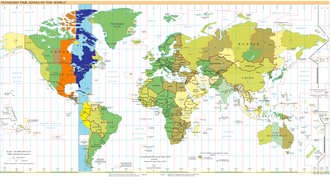
Key Facts
- Offset: 5 hours behind Coordinated Universal Time (UTC−05:00).
- Central Meridian: 75 degrees West.
- Primary Roles: Serves as Standard Time for the Eastern Time Zone and Daylight Saving Time for the Central Time Zone in North America.
- Year-Round Usage: Observed permanently in parts of the Caribbean, Panama, Colombia, Peru, and Ecuador.
- Date-Time Group: Identified by the letter R.
Seasonal Application in North America
Standard Time (Northern Hemisphere Winter)
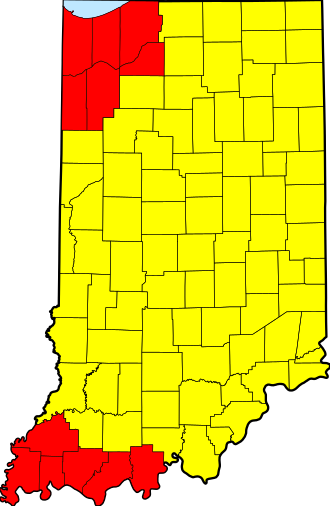
During the winter, UTC−05:00 is the standard for the Eastern Time Zone. This includes major global hubs such as New York, Washington, Toronto, and Montreal. In the United States, it covers the majority of the East Coast, including New England, Florida (excluding the panhandle), and parts of Michigan, Indiana, and Kentucky.
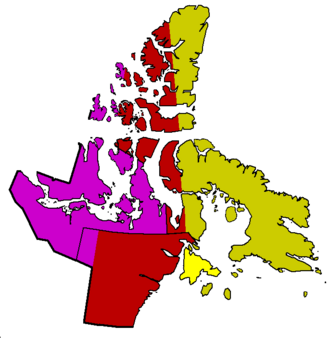
In Canada, this includes most of Ontario and Quebec, as well as the Qikiqtaaluk Region of Nunavut (excluding Resolute). The Caribbean nations of Cuba, Haiti, and the Bahamas also observe this as their standard time.
Daylight Saving Time (Northern Hemisphere Summer)
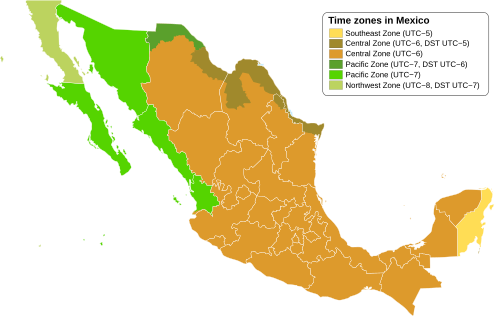
When the Northern Hemisphere shifts to Daylight Saving Time (DST)—the practice of advancing clocks to extend evening daylight—UTC−05:00 becomes the active offset for the Central Time Zone. This brings cities like Chicago, Dallas, Winnipeg, and Mexico City's border regions (such as Reynosa) into this time bracket.
This seasonal shift affects a vast area of the U.S. Midwest and South, including states like Illinois, Texas, and Minnesota, as well as the western portions of Ontario and the Kivalliq Region of Nunavut.
Year-Round Observation
Many regions do not observe seasonal clock changes and remain at UTC−05:00 throughout the year. This is common in tropical regions where daylight variance is minimal.
The Americas and Caribbean
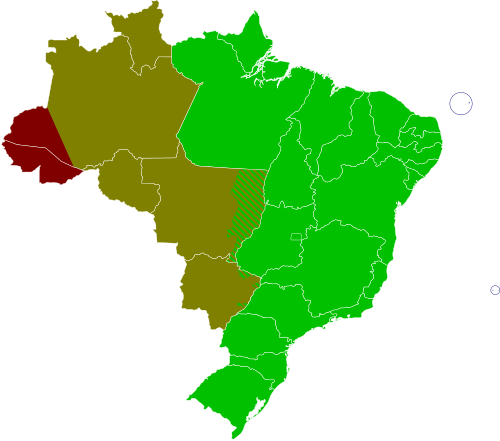
- South America: Observed in Colombia, Ecuador (excluding the Galápagos Islands), Peru, and parts of Brazil (Acre and western municipalities of Amazonas).
- Central America & Caribbean: Observed in Panama, Jamaica, the Cayman Islands, and the Mexican state of Quintana Roo (Zona Sureste).
- North America: Specific areas like Southampton Island in Canada and Navassa Island maintain this offset permanently.
Southern Hemisphere Usage
In the Southern Hemisphere, the offset is used as Daylight Saving Time during their summer. A notable example is Easter Island in Chile, where the settlement of Hanga Roa adopts UTC−05:00 seasonally.
Regional Summary Table
| Region | Usage Type | Key Examples |
|---|---|---|
| North America (East) | Standard Time | New York, Toronto, Miami |
| North America (Central) | Daylight Saving Time | Chicago, Winnipeg, Dallas |
| Caribbean | Year-Round / Standard | Jamaica, Panama, Cuba |
| South America | Year-Round | Bogotá, Lima, Quito |
| East Pacific | Daylight Saving Time | Easter Island (Chile) |
Frequently Asked Questions
What is the difference between UTC−05:00 and EST?
UTC−05:00 is the technical offset from Coordinated Universal Time. Eastern Standard Time (EST) is the specific name given to this offset when it is used as the standard time in the Eastern Time Zone of North America.
Which South American countries use UTC−05:00 year-round?
Colombia, Peru, and Ecuador (excluding the Galápagos Islands) use UTC−05:00 as their permanent standard time. Parts of Brazil, specifically Acre and western Amazonas, also observe this offset.
Does Mexico use UTC−05:00?
Yes, Mexico uses this offset in different ways. The state of Quintana Roo (Zona Sureste) uses it year-round, while certain municipalities in Chihuahua, Coahuila, Nuevo León, and Tamaulipas use it during Daylight Saving Time.
Why do some U.S. states have split time zones?
Some states, such as Indiana, Kentucky, and Tennessee, are split between the Eastern and Central time zones to better align local time with the economic and geographic centers of the regions they serve.
Is Easter Island in the UTC−05:00 zone?
Easter Island uses UTC−05:00 specifically during the Southern Hemisphere's summer as part of its Daylight Saving Time observance.