Utah National Guard: A Legacy of Service and Sacrifice
The Utah National Guard stands as a cornerstone of the state's defense and community resilience. From its early roots in territorial militias to its modern role in global security and disaster relief, the Guard has evolved alongside the United States, providing critical support during times of national crisis and local emergency.
The Roots of Utah's Military Tradition
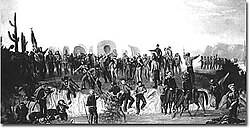
The lineage of the Utah National Guard begins with the Nauvoo Legion, a militia established in 1840 by The Church of Jesus Christ of Latter-day Saints in Illinois. After the church migrated west, the Legion was formally re-established in 1852 under Utah's territorial laws. This reorganization was heavily influenced by veterans of the Mormon Battalion, who had gained vital military experience during the Mexican-American War.
Throughout the mid-19th century, the Nauvoo Legion played a central role in the territory, participating in the Utah War of 1857-1858 and various conflicts with local Native American tribes. The militia remained active until the federal Edmunds-Tucker Act of 1887 led to its official disbandment, paving the way for a more standardized military structure.
Establishment and Early 20th Century Mobilizations
The modern Utah National Guard was officially founded in Salt Lake City on March 26, 1894. Its initial force consisted of two infantry companies and one artillery battery. The Guard quickly proved its utility, undertaking its first state mission in April 1894 to assist law enforcement in managing Kelley's Industrial Army as it traversed the state.
As the United States expanded its global presence, Utah's citizen-soldiers answered the call. During the Spanish-American War in 1898, Guard members volunteered for service in the Philippines, engaging in significant combat operations near Manila.
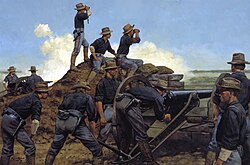
In 1916, the Guard was mobilized by President Woodrow Wilson to patrol the Mexican border, contributing cavalry, artillery, and hospital corps units. When the U.S. entered World War I on April 6, 1917, approximately 1,400 Utah Guard members served, with many integrated into active-duty Army units on the front lines.
The Development of Camp W.G. Williams
Between the world wars, the Guard established a permanent training foundation. On April 25, 1928, the Governor of Utah named the Jordan Narrows training site Camp W.G. Williams. Over the next 15 years, the site was expanded through Works Progress Administration (WPA) projects, which included the construction of the historic Officer's Club.
World War II and the Pacific Theater
The federalization of the National Guard in May 1940 marked a massive escalation in readiness. Over 4,000 enlisted soldiers and 150 officers from Utah were activated. Many were assigned to the 40th Division, a composite unit comprising Guardsmen from Utah, California, and Nevada.
Following the attack on Pearl Harbor, the mission shifted from training to active defense. After protecting the U.S. west coast and the Hawaiian Islands, Utah units saw intense combat across the Pacific, including operations on Guadalcanal, Panay, Negros, and Okinawa. By 1943, roughly 2,600 Utah Guard members had served in the conflict. While the 204th Field Artillery Battalion fought in Europe under General Patton's 3rd Army, various other units—including the 115th Medical Regiment and several Tank Destroyer Battalions—operated in the Pacific.
The Rise of the Air National Guard and the Korean War
The Utah Air National Guard was born on November 18, 1946, with the federal recognition of the 191st Fighter Squadron at the Salt Lake City Municipal Airport. Starting with F-51 Mustangs and later transitioning to F-86 Sabres, the Air Guard has operated eight different aircraft types throughout its history.
The Korean War (1950-1953) saw a significant mobilization, with 3,080 members activated—representing the entire Air Guard and 62 percent of the Army Guard. A historic milestone was reached on August 8, 1952, when Captain Clifford Jolley became the first Air National Guard "Ace" by downing his fifth MiG-15 jet.
On the ground, the 213th Field Artillery Battalion distinguished itself at the Battle of Kapyong in May 1951, successfully repelling a nighttime raid and capturing over 800 prisoners.
Cold War Era to the Persian Gulf
The Guard continued to adapt to global tensions, mobilizing 1,600 members during the 1961 Berlin Crisis. While no Army Guard units were activated for the Vietnam War, the Air Guard flew 96 volunteer missions, totaling 6,600 flight hours. Domestically, the Guard responded to severe flooding in 13 Utah counties in 1983.
In 1990, following the invasion of Kuwait, Utah Air Guard crews volunteered for airlift missions during Operation Desert Shield/Desert Storm. In total, 1,706 Utah Guard members served as volunteers or active duty during the conflict.
Modern Missions and Global Terrorism
After the September 11, 2001 attacks, the Utah National Guard shifted to high-alert security at Salt Lake International Airport and provided intelligence translation for the FBI. Since then, over 17,000 members have deployed for operations including Noble Eagle, Enduring Freedom, and Iraqi Freedom.
The Guard's versatility was further demonstrated during the 2002 Winter Olympics, where 4,500 members from Utah and 23 other states provided security. Internationally, the Guard established a State Partnership Program with the Kingdom of Morocco in 2003, providing critical humanitarian aid after a major earthquake in 2004.
Today, the Utah National Guard continues to support the U.S. Border Patrol, conduct counter-drug operations, engage in wildland firefighting, and provide disaster relief, such as the shelter provided to 600 evacuees during Hurricanes Katrina and Rita.
Key Facts
- Founded: March 26, 1894, in Salt Lake City.
- Predecessor: The Nauvoo Legion (est. 1840).
- Training Hub: Camp W.G. Williams, established in 1928.
- Air Guard Milestone: Captain Clifford Jolley became the first Air National Guard "Ace" during the Korean War.
- Global Reach: Over 17,000 deployments since the 9/11 attacks.
- International Partnership: Formal State Partnership Program with Morocco since 2003.
| Conflict/Event | Period | Key Contribution/Unit |
|---|---|---|
| Spanish-American War | 1898 | Combat operations near Manila, Philippines |
| World War I | 1917-1918 | ~1,400 members served |
| World War II | 1940-1945 | 40th Division (Pacific); 204th Field Artillery (Europe) |
| Korean War | 1951-1953 | 213th Field Artillery (Battle of Kapyong) |
| Desert Shield/Storm | 1990-1991 | 1,706 members; Air Guard airlift missions |
| War on Terrorism | 2001-Present | 17,000+ deployments (Noble Eagle, Enduring Freedom) |
Frequently Asked Questions
What was the Nauvoo Legion?
The Nauvoo Legion was a militia created in 1840 by The Church of Jesus Christ of Latter-day Saints. It served as the precursor to the Utah National Guard, providing territorial defense and participating in the Utah War of 1857-1858 before being disbanded in 1887.
Where does the Utah National Guard train?
The primary permanent training site is Camp W.G. Williams, located in the Jordan Narrows area. It was officially named in 1928 and developed further through WPA projects.
Who was the first Air National Guard "Ace"?
Captain Clifford Jolley of the Utah Air National Guard became the first Air National Guard "Ace" on August 8, 1952, after downing five MiG-15 jets during the Korean War.
How has the Guard assisted in international humanitarian efforts?
Through the State Partnership Program established in 2003, the Utah National Guard has maintained a strong relationship with the Kingdom of Morocco, including providing vital humanitarian aid following a major earthquake in 2004.
What role did the Guard play in the 2002 Winter Olympics?
The Utah National Guard led a massive security operation for the Salt Lake City Games, deploying over 4,500 members from Utah and 23 other states to augment law enforcement.