Utah Hockey Club: The Rise of Professional Ice Hockey in Salt Lake City
Salt Lake City has long harbored a passion for ice hockey, but the journey to securing a permanent place in the National Hockey League (NHL) was a decades-long evolution. From the early days of minor-league success to the strategic acquisition of professional assets, the city has transformed into a legitimate hockey market.
The Foundation: Minor League Roots
Before the NHL arrived, Salt Lake City built its hockey culture through several minor-league franchises. The Salt Lake Golden Eagles led the way, playing 25 seasons from 1969 to 1994 across the Western Hockey League (WHL), Central Hockey League (CHL), and International Hockey League (IHL). Based primarily at the Salt Palace and later the Delta Center, the Eagles captured three Adams Cup championships and two Turner Cup championships before relocating to Michigan as the Detroit Vipers.
The void left by the Eagles was quickly filled in 1995 by the Utah Grizzlies, who relocated from Denver. The Grizzlies saw immediate success, winning a Turner Cup in 1996. A landmark moment occurred during Game 4 of the 1996 Finals, which drew 17,381 fans—a record for minor-league hockey attendance at the time. After moving to the Maverik Center in West Valley City and transitioning to the American Hockey League (AHL) in 2001, the franchise eventually moved to Cleveland in 2007.
A subsequent ECHL franchise also adopted the Grizzlies name in 2005. While they maintained a long-term presence in Utah for 19 seasons, they struggled to find championship success. In September 2025, this franchise was sold to a New Jersey-based group and is scheduled to move to Trenton following the 2025–26 season.
The Path to the NHL
The transition to the NHL began in earnest in June 2023 amid rumors regarding the Arizona Coyotes. By January 2024, Ryan Smith—owner of the Utah Jazz and co-owner of Real Salt Lake—petitioned the NHL for an expansion team. This effort was supported by the Utah State Senate, which passed tax legislation in February 2024 to facilitate a new downtown arena, provided the team used "Utah" in its branding to represent the entire state.
On April 18, 2024, the NHL Board of Governors officially granted an expansion franchise to Utah. The deal was structured uniquely: the Arizona Coyotes franchise became "inactive," and Utah was established as an expansion team using the Coyotes' hockey assets. This structure mirrors the NFL's historical handling of the Cleveland Browns and Baltimore Ravens.
Financially, the move involved two distinct transactions. The NHL paid $1 billion to Alex Meruelo for the Coyotes franchise, while Ryan Smith paid a $1.2 billion expansion fee to the league. The $200 million difference served as a de facto relocation fee distributed among the other 31 NHL clubs.
Inaugural Season and Early Milestones
The team, officially named the Utah Hockey Club, began building its roster in June 2024. Their first signing was Noel Nordh, followed by the selection of forward Tij Iginla as the franchise's first-ever draft pick (6th overall).
The club's on-ice journey started on September 22, 2024, with a 5–3 preseason victory over the St. Louis Blues. Their first home game at the Delta Center followed a day later, resulting in a 3–2 win against the Los Angeles Kings.
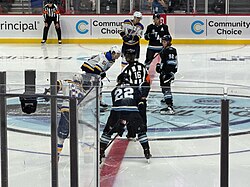
For the regular season, forward Clayton Keller was named the first captain in franchise history. The team opened its first official game on October 8 with a 5–2 win over the Chicago Blackhawks, featuring the first goal in franchise history scored by Dylan Guenther. The inaugural season concluded with a record of 38–31–13, placing them sixth in the Central Division.
The second season marked a significant leap forward. Utah clinched the first wild card spot, securing their first-ever berth in the Stanley Cup playoffs. Notably, the team set an NHL record by completing a full 82-game season without a single shootout, the first team to do so since the tiebreaker was introduced in 2005.
Key Facts
- First NHL Draft Pick: Tij Iginla (6th overall).
- First Captain: Clayton Keller.
- First Goal Scorer: Dylan Guenther.
- Financials: $1.2 billion expansion fee paid by Ryan Smith.
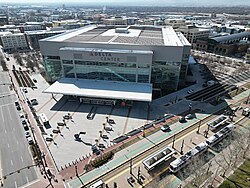
- Home Arena: Delta Center.
- Historic Achievement: First NHL team to play an 82-game season without shootouts (since 2005).
| Era/Team | League | Key Achievement | Outcome |
|---|---|---|---|
| Salt Lake Golden Eagles | WHL/CHL/IHL | 3 Adams Cups, 2 Turner Cups | Relocated to Detroit |
| Utah Grizzlies (AHL) | IHL/AHL | 1996 Turner Cup Champions | Relocated to Cleveland |
| Utah Grizzlies (ECHL) | ECHL | 1 Division Championship | Relocating to Trenton |
| Utah Hockey Club | NHL | First Playoff Berth (Season 2) | Active |
Frequently Asked Questions
Is the Utah Hockey Club a relocation of the Arizona Coyotes?
Technically, the NHL considers Utah an expansion team. While they acquired the Coyotes' hockey assets, the Coyotes franchise was rendered "inactive," making Utah a new entity rather than a direct successor.
Who is the owner of the Utah Hockey Club?
The team is owned by Ryan Smith, who also owns the NBA's Utah Jazz and is a co-owner of MLS's Real Salt Lake.
Where does the team play its home games?
The team plays its home games at the Delta Center in Salt Lake City.
Who was the first player ever drafted by the team?
The Utah Hockey Club selected forward Tij Iginla with the 6th overall pick in their first NHL entry draft.
What is the significance of the team's second season?
In their second season, the team earned its first playoff appearance via a wild card spot and became the first team since 2005 to complete an 82-game season without any shootouts.