US States: Governance, History, and the Path to Statehood
The United States is composed of 50 federated states, each functioning as a primary political subdivision within the Union. From the original 13 colonies that established the nation in 1776, the country has expanded its borders and its membership, granting each new state equal footing with those that came before. While the federal government maintains overarching authority, the states exercise significant autonomy over their own internal affairs.
The diversity among these states is vast, ranging from the massive wilderness of Alaska to the compact coastal area of Rhode Island, and from the sparsely populated plains of Wyoming to the bustling urban centers of California.
Key Facts
- Total States: 50
- Largest State by Area: Alaska (665,384 sq mi)
- Smallest State by Area: Rhode Island (1,545 sq mi)
- Most Populous State: California (39,538,223)
- Least Populous State: Wyoming (576,851)
- Commonwealths: Four states (Virginia, Pennsylvania, Massachusetts, and Kentucky) formally self-identify as commonwealths.
The Structure of State Government
Each state operates under its own constitution, which defines the powers and limits of its government. While they follow a general tripartite structure, there are distinct differences in how they are administered.
The Executive and Legislative Branches
State legislatures are responsible for creating laws. As of 2013, there were 7,383 legislators across the 50 states. Compensation for these roles varies wildly; for example, legislators in New Mexico earn $0 annually, while those in California can earn up to $90,526, often supplemented by per diem and mileage payments.
The Judicial System
State courts possess plenary jurisdiction, meaning they have broad and general authority to hear most types of cases. This stands in contrast to federal courts, which have limited jurisdiction. The scale of state judiciaries is immense: roughly 30 million new cases are filed in state courts annually, overseen by approximately 30,000 judges. In comparison, federal courts handle about 1 million new cases per year with roughly 1,700 judges.
Commonwealths and Unique Designations
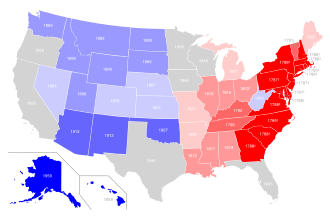
Four states—Virginia (1776), Pennsylvania (1777), Massachusetts (1780), and Kentucky (1792)—distinguished themselves early in American history by designating themselves as Commonwealths in their first constitutions. Despite this formal title, they maintain the same legal status and powers as any other state in the Union.
Admission and Evolution of the Union
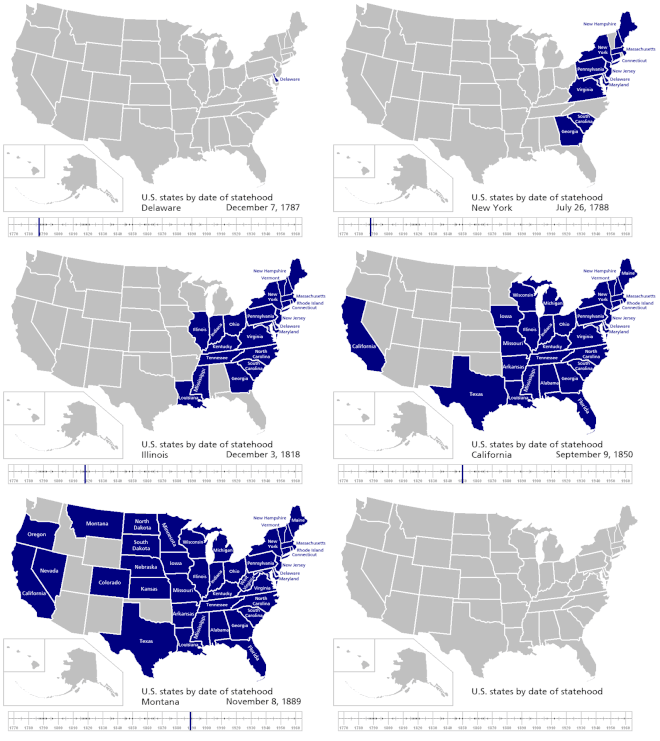
The U.S. Constitution grants Congress the authority to admit new states. The process has evolved from the ratification of the original 13 states to the admission of territories and the splitting of existing states.
Notable State Origins
- Vermont (1791): Previously the Vermont Republic.
- Kentucky (1792): Formed from Virginia.
- Maine (1820): Formed from Massachusetts.
- Texas (1845): Previously the Republic of Texas.
- West Virginia (1863): Formed from Virginia during the American Civil War.
Territorial Status and Proposed Statehood
Not all U.S. territories are states. The District of Columbia (D.C.) was created in 1800 as a neutral seat of government. Because it is not a state, it lacks Senate representation and has only a non-voting delegate in the House. Its citizens did not gain the right to vote in presidential elections until the 23rd Amendment in 1961.
Puerto Rico has also sought statehood. In 2012, the Legislative Assembly of Puerto Rico requested that Congress respond to a referendum in which citizens voted to end their territorial status. This effort continued with the introduction of the H.R. 6246 Act in 2018, which aimed to establish terms for Puerto Rico's admission as a state.
Geography and Borders
While most state borders have remained stable, some have shifted. Missouri and Nevada grew significantly after statehood. Many original states ceded land to the federal government to create the Northwest, Southwest, and Mississippi Territories. For instance, Maryland and Virginia ceded land to create the District of Columbia, though Virginia's portion was returned in 1847.
| Metric | Smallest/Least | Largest/Most |
|---|---|---|
| Population | Wyoming (576,851) | California (39,538,223) |
| Land Area | Rhode Island (1,545 sq mi) | Alaska (665,384 sq mi) |
Frequently Asked Questions
What is the difference between a state and a commonwealth?
Legally, there is no difference. Four states (Virginia, Pennsylvania, Massachusetts, and Kentucky) use the term "commonwealth" in their constitutions, but they possess the same powers and status as the other 46 states.
Can a state legally secede from the Union?
No. While the Constitution does not explicitly address secession, the U.S. Supreme Court ruled in Texas v. White (1869) that states are not permitted to unilaterally secede from the Union.
Why does Washington, D.C. not have the same representation as a state?
The District of Columbia was designed as a neutral site for the federal government so that no single state would have undue influence. Consequently, it is not a state and does not have voting representation in the Senate.
How do state courts differ from federal courts?
State courts have general jurisdiction and handle the vast majority of criminal and civil cases (roughly 30 million annually). Federal courts have limited jurisdiction and handle significantly fewer cases (roughly 1 million annually).
How was West Virginia formed?
West Virginia was created in 1863 from the Trans-Allegheny region of Virginia during the American Civil War.