Uruguayan Election Results: Luis Alberto Lacalle Pou Wins Presidency
The Uruguayan presidential race concluded in a tight contest, culminating in a runoff election that saw Luis Alberto Lacalle Pou emerge as the winner. The process was marked by a narrow margin and a period of suspense as officials worked to finalize the count of absentee ballots.
On November 25, preliminary results indicated that Lacalle Pou held a slim lead of 28,666 votes over his opponent, Daniel Martínez. Because 35,229 absentee votes—ballots cast by citizens living abroad—remained uncounted, the official announcement of the winner was initially delayed. However, by November 28, Martínez conceded the race, concluding that the remaining ballots would not be sufficient to reverse the preliminary lead. The final vote counts were officially confirmed on November 30.
Key Facts
- Winner: Luis Alberto Lacalle Pou (National Party) won with 50.79% of the second-round vote.
- Runner-up: Daniel Martínez (Broad Front) received 49.21% in the second round.
- Voter Turnout: High engagement was recorded, with a turnout of 90.12% in the runoff.
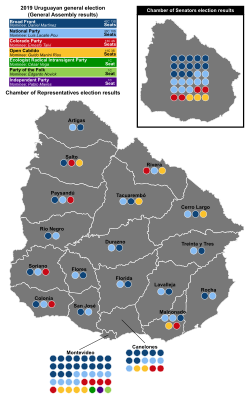
- Legislative Shift: The Broad Front lost 8 seats in the Chamber and 2 in the Senate.
- New Entries: The Open Cabildo successfully entered the legislature, winning 11 Chamber seats and 3 Senate seats.
Detailed Election Breakdown
The election progressed through two stages: a first round featuring multiple parties and a second-round runoff between the top two candidates. While the Broad Front led the first round, the National Party secured the presidency in the final stage.
Presidential and Legislative Performance
The Broad Front, led by Daniel Martínez, maintained a strong presence but saw a decrease in its legislative majority. The National Party, led by Lacalle Pou, successfully consolidated enough support to win the presidency. Other parties, such as the Colorado Party and the newly emerged Open Cabildo, played significant roles in the first round and the distribution of legislative seats.
The legislative results show a diverse parliament, with the Broad Front holding 42 seats in the Chamber and 13 in the Senate, while the National Party holds 30 Chamber seats and 10 Senate seats.
Regional Voting Patterns
Voting patterns varied significantly by department. The Broad Front showed particular strength in Montevideo and Canelones. Conversely, the National Party performed strongly in departments such as Rivera, Lavalleja, and Artigas. The Colorado Party and Open Cabildo also captured notable percentages of the vote in various rural and urban constituencies during the first round.
Election Summary Table
| Party | Candidate | First Round % | Second Round % | Chamber Seats | Senate Seats |
|---|---|---|---|---|---|
| Broad Front | Daniel Martínez | 40.49% | 49.21% | 42 | 13 |
| National Party | Luis Alberto Lacalle Pou | 29.70% | 50.79% | 30 | 10 |
| Colorado Party | Ernesto Talvi | 12.80% | N/A | 13 | 4 |
| Open Cabildo | Guido Manini Ríos | 11.46% | N/A | 11 | 3 |
Frequently Asked Questions
Who won the Uruguayan presidential election?
Luis Alberto Lacalle Pou of the National Party won the election, with final counts confirmed on November 30.
Why was the announcement of the winner delayed?
The announcement was delayed because 35,229 absentee votes needed to be counted to ensure the preliminary lead of 28,666 votes was insurmountable.
What was the voter turnout for the runoff?
The turnout for the second round was 90.12%, with 2,699,980 registered voters.
Which party holds the most seats in the Chamber?
The Broad Front holds the most seats in the Chamber with a total of 42.
How did the Open Cabildo perform?
The Open Cabildo entered the legislature as a new party, securing 11 seats in the Chamber and 3 seats in the Senate.