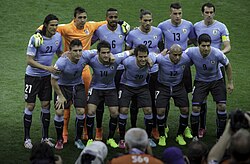
Uruguay national football teamLa CelesteLos CharrúasUruguay FIFA World Cup winnersCopa América champions

Uruguay National Football Team: A Legacy of Glory and Resilience

The Legacy of La Celeste: A History of Uruguay National Football Known affectionately as La Celeste (The Sky Blue) or Los Charrúas, the Uruguay national football team holds a place of unp...

The Legacy of La Celeste: A History of Uruguay National Football

Known affectionately as La Celeste (The Sky Blue) or Los Charrúas, the Uruguay national football team holds a place of unparalleled prestige in the world of sports. Despite being a small nation, Uruguay has consistently punched above its weight, establishing a legacy defined by early dominance, tactical brilliance, and a trophy cabinet that commands respect across the globe.

From their first international match in 1902 to their modern-day appearances in major tournaments, the journey of the Uruguayan national team is a testament to their enduring passion for the beautiful game.
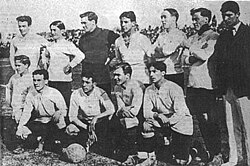
In 1917, Uruguay won back-to-back South American titles – this time as hosts.
: In 1917, Uruguay won back-to-back South American titles – this time as hosts.

Key Facts

  • FIFA World Cup Titles: 2 (1930, 1950)
  • Olympic Gold Medals: 2 (1924, 1928)
  • Copa América Titles: 15 (First in 1916)
  • Most Capped Player: Diego Godín (161 appearances)
  • Top Goalscorer: Luis Suárez (69 goals)
  • Iconic Kit: The light blue shirt has been worn since 1910.

The Early Years and Continental Dominance

Uruguay's international journey began on 20 July 1902, with a match against Argentina in Montevideo that resulted in a 0–6 defeat. However, the team quickly evolved from these humble beginnings into a continental powerhouse.

The establishment of the CONMEBOL Copa América (originally the South American Championship) provided a platform for Uruguay to assert its dominance. They were champions in the inaugural 1916 tournament and went on to secure a total of 15 titles, including a period of significant success in the early 20th century.
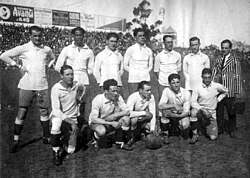
Uruguay's 1923 Copa America had a significant impact on global football, as they decided to enter the 1924 FIFA organized Olympics due to this result.
: Uruguay's 1923 Copa America had a significant impact on global football, as they decided to enter the 1924 FIFA organized Olympics due to this result.

The Golden Era: Olympic Glory and World Dominance

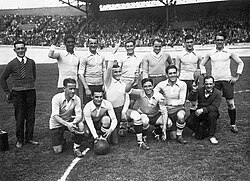
The 1920s marked the beginning of a "Golden Era" for Uruguayan football. Their success in the South American Championship paved the way for their entry into the 1924 Olympic Games in Paris, where they secured the gold medal. They successfully defended their Olympic title in 1928 in Amsterdam.
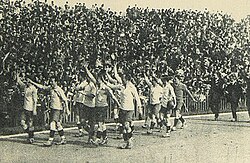
1924 – Uruguay performed football's first Lap of Honour in France after beating Switzerland 3–0 to become the sport's first world champions.
: 1924 – Uruguay performed football's first Lap of Honour in France after beating Switzerland 3–0 to become the sport's first world champions.

This period of excellence culminated in the very first FIFA World Cup in 1930. Playing on home soil, Uruguay became the inaugural world champions. This feat was followed by another period of immense success, including winning the 1950 World Cup, making them the only nation to win three consecutive major football titles (the 1924 and 1928 Olympics followed by the 1930 World Cup).
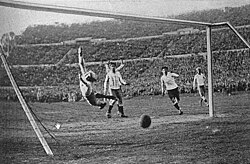
1928 – Uruguay beat Argentina in Amsterdam to claim back-to-back FIFA world championships.
: 1928 – Uruguay beat Argentina in Amsterdam to claim back-to-back FIFA world championships.
1930 – Uruguay became the first and only nation in history to win three consecutive FIFA world titles after winning the inaugural World Cup
: 1930 – Uruguay became the first and only nation in history to win three consecutive FIFA world titles after winning the inaugural World Cup

The Estadio Centenario in Montevideo served as the stage for this historic 1930 triumph. Today, it holds the unique distinction of being the only building in the world declared by FIFA as a Historical Monument of World Football.
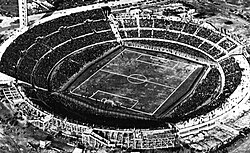
The Estadio Centenario in Montevideo – declared by FIFA as the first Historical Monument of World Football, to this day the only building to achieve this recognition worldwide.
: The Estadio Centenario in Montevideo – declared by FIFA as the first Historical Monument of World Football, to this day the only building to achieve this recognition worldwide.

Mid-Century Legends and Iconic Matches

Uruguay's footballing identity was further cemented in 1950. In a tournament held in Brazil, the national team achieved one of the most famous victories in football history to claim their second World Cup title.
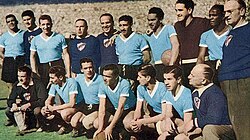
The team that beat Brazil in the decisive match to win the 1950 FIFA World Cup
: The team that beat Brazil in the decisive match to win the 1950 FIFA World Cup
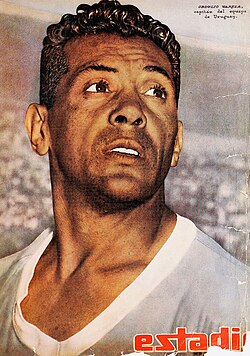
1950 World Cup winning captain, Obdulio Varela
: 1950 World Cup winning captain, Obdulio Varela

The following decade continued to produce legendary encounters. In 1954, Uruguay faced Hungary in a match that was later dubbed the "Match of the Century" by Four-Four-Two magazine, recognized as one of the greatest World Cup matches of all time.
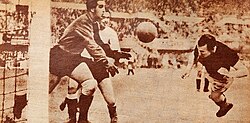
1954 – Uruguay vs. Hungary was later dubbed "Match of the Century" by English magazine Four-Four-Two, and is often referenced as one of the greatest World Cup matches of all-time.
: 1954 – Uruguay vs. Hungary was later dubbed "Match of the Century" by English magazine Four-Four-Two, and is often referenced as one of the greatest World Cup matches of all-time.

Modern Era and Statistical Milestones

As football evolved, so did the Uruguayan squad. While the team has faced various periods of transition, they have remained a consistent presence in major international competitions, including the FIFA Confederations Cup and the World Champions' Gold Cup (which they won in 1980).
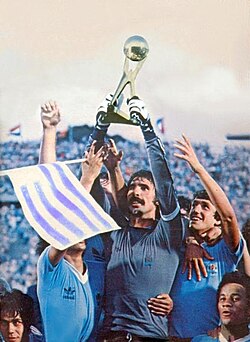
Rodolfo Rodríguez raises the Mundialito trophy won in January 1981
: Rodolfo Rodríguez raises the Mundialito trophy won in January 1981

In recent years, the team has continued to showcase its talent on the world stage, participating in the 2014, 2018, and 2022 FIFA World Cups. The squad has been characterized by players who have achieved legendary status, such as Diego Godín, the most capped player in the nation's history, and Luis Suárez, the all-time leading goalscorer.
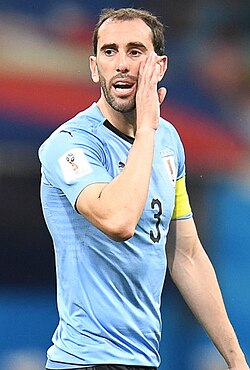
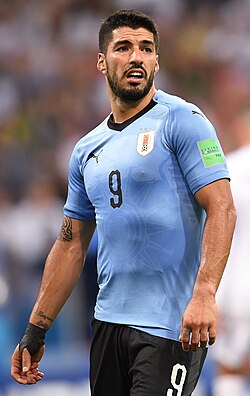
Diego Godín is Uruguay's most capped player with 161 appearances.
: Diego Godín is Uruguay's most capped player with 161 appearances.
Luis Suárez is Uruguay's top scorer with 69 goals.
: Luis Suárez is Uruguay's top scorer with 69 goals.
Uruguay at the 2014 FIFA World Cup, wearing the light blue shirt they have worn since 1910
: Uruguay at the 2014 FIFA World Cup, wearing the light blue shirt they have worn since 1910

Looking toward the future, the team continues to compete at the highest level, including recent appearances in the 2018 World Cup and preparations for the 2026 tournament.
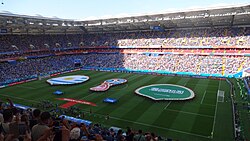
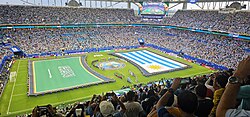
Uruguay vs Saudi Arabia match at the 2018 FIFA World Cup in Russia
: Uruguay vs Saudi Arabia match at the 2018 FIFA World Cup in Russia
Prior to Uruguay’s opening match against Saudi Arabia during the 2026 FIFA World Cup at Hard Rock Stadium in Miami
: Prior to Uruguay’s opening match against Saudi Arabia during the 2026 FIFA World Cup at Hard Rock Stadium in Miami

Uruguay National Team Summary

Key Performance Statistics and Honors
Competition Titles/Wins Runner-up/Other
FIFA World Cup 2 (1930, 1950) 2nd place (1958, 1978, 1982)
Olympic Games 2 (1924, 1928) -
Copa América 15 6 Runners-up
World Champions' Gold Cup 1 (1980) -
Confederations Cup 2 2 Fourth places

Frequently Asked Questions

What are the nicknames of the Uruguay national team?

The team is most commonly known as La Celeste (The Sky Blue) due to their iconic shirt color, and Los Charrúas.

How many FIFA World Cups has Uruguay won?

Uruguay has won two FIFA World Cup titles: the inaugural tournament in 1930 and the tournament in 1950.

Who is the all-time leading goalscorer for Uruguay?

Luis Suárez holds the record as Uruguay's top scorer with 69 goals.

Who has made the most appearances for the national team?

Diego Godín is the most capped player in Uruguayan history, with 161 appearances.

What is the significance of the Estadio Centenario?

The Estadio Centenario is the site of the 1930 World Cup and is the only building in the world to be declared a Historical Monument of World Football by FIFA.

References

  1. Includes matches against Czechoslovakia.
  2. Includes matches against West Germany.
  3. Includes matches against the Soviet Union.
  4. Includes matches against Yugoslavia and Serbia and Montenegro.
  5. Although the first match recorded by both Argentina and Uruguay was played on 16 May 1901, this is not considered an official game due to the match not being organized by Uruguay's Football Association but by Albion FC on its home field in Paso del Molino.[2][3][4][5]