Unocal Corporation: The Rise and Acquisition of a Petroleum Giant
For over a century, the Union Oil Company of California, and its later holding company Unocal Corporation, stood as a pillar of the global energy sector. From its humble beginnings in the late 19th century to its role as a major international explorer and marketer, Unocal shaped the landscape of petroleum production in the United States and beyond. Known widely by its iconic 76 brand, the company navigated a complex history of strategic growth, geopolitical ambition, and environmental challenges before its eventual acquisition by Chevron.
Key Facts
- Founded: October 17, 1890, in Santa Paula, California.
- Founders: Lyman Stewart, Thomas Bard, and Wallace Hardison.
- Key Brand: The 76 brand (used from 1932 to 1997).
- Major Acquisition: Acquired by Chevron on August 11, 2005, for $17.9 billion.
- Industry Impact: Pioneer of "production sharing" contracts in Indonesia.
- Legal Legacy: The landmark Unocal v. Mesa Petroleum case regarding takeover defenses.
Founding and Early Growth
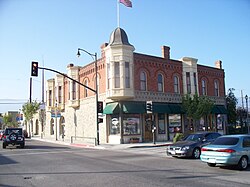
Unocal began as a merger of three Southern California oil companies: the Sespe Oil Company, the Torrey Canyon Oil Company, and the Hardison and Stewart Oil Company. Notably, these entities were completely unaffiliated with Standard Oil, the dominant force of the era. After moving its headquarters to Los Angeles in 1901, the company began expanding its reach through strategic alliances.
Around 1910, Union Oil partnered with the Independent Producers Agency to build pipelines from Kern County to the Pacific coast. This move provided small producers an alternative to Standard Oil's pricing and high railroad freight rates, while securing a massive volume of crude oil for Union Oil. This era of corporate struggle was later fictionalized in the 2007 film There Will Be Blood.
Corporate Evolution and Expansion
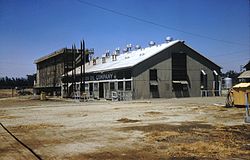
The company's structure evolved through several holding companies to protect its interests. In 1919, the Union Oil Company of Delaware was formed, and by 1922, Union Oil Associates, Inc. was incorporated to prevent foreign control following a merger with Royal Dutch-Shell subsidiaries to form Shell Oil Company.
By 1965, the company achieved national status by merging with the Pure Oil Company of Illinois. This expansion allowed Union Oil to become a dominant producer of oil in southern Alaska and natural gas in the Gulf of Mexico.
Global Operations and Geopolitics
Unocal's international footprint expanded significantly in 1961 when it entered the Indonesian market. Under Vice President Henry L. Brandon, the company introduced the contract of work—a production sharing arrangement that became a standard for the Indonesian government under President Sukarno.
The Central Asian Ambitions
In the 1990s, Unocal pursued the ambitious Trans-Afghanistan Pipeline, intended to transport gas from the Caspian area through Afghanistan to the Indian Ocean. This project involved complex negotiations with the Taliban in the late 1990s, including the establishment of a training facility in Kandahar funded through the University of Nebraska.
The project was fraught with controversy, with allegations that the company provided financial support to the Taliban. Ultimately, Unocal suspended work following U.S. cruise missile strikes in 1998 and fully withdrew in December of that year, citing regional instability and low oil prices.
The 76 Brand and Cultural Impact
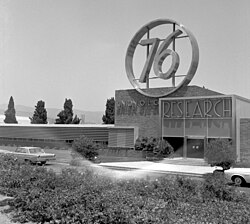
The 76 brand became one of the most recognizable symbols in American energy. Beyond gas stations, the brand was deeply embedded in American sports. It served as the official fuel and motor oil of NASCAR from 1948 until 2003 and was a primary sponsor for the Los Angeles Dodgers starting in 1958. To this day, the 76 logo remains a fixture in several West Coast MLB and NFL stadiums.
Environmental and Legal Controversies
Unocal's history is also marked by significant environmental failures. In 1969, a blowout at Platform "A" in the Dos Cuadras field leaked up to 100,000 barrels of oil into the Santa Barbara Channel, contributing to the passage of the 1970 National Environmental Policy Act (NEPA).
Further disasters included leaks at Avila Beach and a massive spill of diluent (a petroleum derivative used to thin heavy oil) under the Guadalupe-Nipomo Dunes. The latter, totaling 18 million gallons, is cited as the largest oil spill in California's history. Internationally, the company faced the Doe v. Unocal case, where Burmese villagers alleged complicity in human rights abuses, leading to a settlement in 2005.
The Final Acquisition
The end of Unocal as an independent entity came in 2005. Chevron launched a bid to acquire the company for $16.6 billion, which later escalated due to a competing $18.5 billion unsolicited bid from the Chinese firm CNOOC Limited. While CNOOC's offer was higher, it faced intense political opposition from the U.S. Congress on national security grounds.
Chevron's final offer of $17.9 billion (approximately $27.5 billion in 2025 dollars) was approved by shareholders on August 10, 2005. Unocal became a wholly owned subsidiary of Chevron, though it continues to operate in some capacities as the Union Oil Company of California.
| Category | Details |
|---|---|
| Founded | October 17, 1890 |
| Headquarters | El Segundo, California |
| Primary Brand | 76 |
| Key Assets | Mountain Pass rare earth mine (acquired 1977) |
| Acquisition Date | August 11, 2005 |
| Acquiring Company | Chevron |
| Acquisition Price | $17.9 Billion |
Frequently Asked Questions
What happened to the 76 brand after Unocal?
In 1997, Unocal sold its western U.S. refining and marketing operations, including the 76 brand rights, to Tosco Corporation. Tosco was later acquired by Phillips Petroleum, which eventually merged into ConocoPhillips.
Why did CNOOC withdraw its bid for Unocal?
Despite offering a higher price than Chevron, CNOOC faced significant political opposition from the U.S. Congress and a national security review by President George W. Bush, leading them to withdraw due to political uncertainty.
What was the significance of the Unocal v. Mesa Petroleum case?
This was a landmark Delaware Supreme Court decision that upheld the legality of Unocal's defensive measures against a hostile takeover attempt by Mesa Petroleum, controlled by T. Boone Pickens.
What was the Trans-Afghanistan Pipeline?
It was a proposed project by the CentGas consortium, including Unocal, to move natural gas from the Caspian region through Afghanistan to the Indian Ocean, though it was never completed due to instability and low oil prices.
How did Unocal impact environmental law in the U.S.?
The 1969 oil spill in the Santa Barbara Channel caused by Union Oil was a catalyst for widespread public criticism of offshore drilling and helped lead to the creation of the National Environmental Policy Act (NEPA) in 1970.