University of Waikato: A History of Academic Growth and Innovation
The University of Waikato stands as a cornerstone of higher education in New Zealand, evolving from a regional necessity into a comprehensive institution known for its commitment to indigenous studies and technological innovation. Established to serve the growing needs of the Hamilton region, the university has expanded its footprint across the Bay of Plenty and continues to push the boundaries of healthcare education.
Key Facts
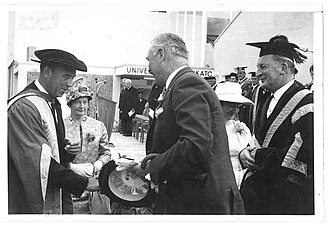
- Founded: Officially opened in February 1965 by Governor-General Sir Bernard Fergusson.
- Campuses: Primary campus in Hamilton and a dedicated CBD campus in Tauranga (opened 2019).
- Indigenous Focus: Home to Te Pua Wānanga ki te Ao, the Faculty of Māori and Indigenous Studies.
- Tech Innovation: Developer of Weka, a pioneering open-source AI and machine-learning workbench.
- Medical Milestone: Secured funding for a new medical school with a combined investment of NZ$232.5 million.
Founding and Early Development
The origins of the university date back to the mid-1950s, when regional leaders lobbied the government and the University of New Zealand (UNZ) for a tertiary institution in Hamilton. This movement coincided with a national shortage of teachers, leading Minister of Education Philip Skoglund to approve a teachers' college. In 1960, the Hamilton Teachers' College and a branch of the University of Auckland shared a joint campus at Ruakura.
By 1964, these institutions moved to their permanent home, and the University of Waikato was officially inaugurated the following year.
Academic Expansion
The university began with the School of Humanities and the School of Social Sciences. Over the following decades, it diversified its academic offerings to meet modern demands:
- 1969: Establishment of the School of Science.
- 1972: Launch of the Waikato Management School.
- 1973: Introduction of Computer Science and Computing Services.
- 1990: Establishment of the School of Law and the merger with Hamilton Teachers' College.
Commitment to Māori and Indigenous Studies
From its inception, the university prioritized Māori studies. This began in 1972 with the Centre for Māori Studies and Research within the School of Social Sciences. This commitment evolved into the School of Māori and Pacific Development in 1996, and eventually became Te Pua Wānanga ki te Ao (Faculty of Māori and Indigenous Studies) in 2016.
A significant physical manifestation of this commitment occurred in July 2023 with the opening of the Pā. Named after the traditional fortified Māori villages found north of Lake Taupō, this central hub includes a Marae (communal plaza) with a Wharenui (meeting house), alongside a modern Student Hub featuring study spaces and retail stores.
Technological Advancement and Regional Reach
The university has made significant contributions to the field of artificial intelligence. Since 1993, it has developed Weka, one of the first open-source workbenches for machine learning and AI used globally in research and teaching.
Geographically, the university expanded its presence in the Bay of Plenty. While it had a presence in Tauranga since the 1990s, it opened a dedicated CBD campus in 2019. Other regional facilities include the Adams Centre for High Performance in Mount Maunganui, the Coastal Marine Field Station at Sulphur Point, and a specialized algal research and aquaculture facility opened in November 2020.
The Journey Toward a Medical School
The pursuit of a third New Zealand medical school has been a long-term strategic goal for the university. In 2016, the university and the Waikato District Health Board proposed a four-year graduate entry program focusing on clinical training. Despite initial opposition from the University of Auckland and the University of Otago, the proposal gained strong regional and political support.
After a period of rejection by the Labour-led government in 2019, the proposal was revived in 2021 by Dean Sarah Strasser and Professor Roger Strasser, emphasizing partnerships with Māori, Pasifika, and rural communities. Following political campaigning and consultancy work, the project reached a breakthrough in 2025.
On July 21, 2025, Health Minister Simeon Brown announced that the Sixth National Government would contribute NZ$82.5 million toward the school. The University of Waikato will contribute an additional NZ$150 million, supported by philanthropists, bringing the total establishment funding to NZ$232.5 million.
University Evolution Summary
| Year | Event/Development | Significance |
|---|---|---|
| 1965 | Official Opening | Established as a full university in Hamilton. |
| 1972 | Centre for Māori Studies | Beginning of dedicated indigenous research. |
| 1990 | Teachers' College Merger | Integration of teacher training into the university. |
| 1993 | Weka Development | Pioneering open-source AI software. |
| 2019 | Tauranga Campus | Expansion into the Tauranga CBD. |
| 2025 | Medical School Funding | Secured NZ$232.5 million for establishment. |
Frequently Asked Questions
When was the University of Waikato officially opened?
The university was officially opened in February 1965 by the then Governor-General, Sir Bernard Fergusson.
What is Weka in the context of the university?
Weka is an open-source AI and machine-learning workbench developed by the university since 1993, used extensively for both teaching and academic research.
What is "the Pā" at the University of Waikato?
Opened in July 2023, the Pā is a central structure named after traditional fortified Māori villages. It houses a Marae, a Wharenui (meeting house), and a comprehensive Student Hub.
How much funding has been secured for the new medical school?
A total of NZ$232.5 million has been allocated, consisting of NZ$82.5 million from the Sixth National Government and NZ$150 million from the university and philanthropists.
Where are the university's facilities in the Bay of Plenty located?
Beyond the Tauranga CBD campus, the university operates the Adams Centre for High Performance in Mount Maunganui and the Coastal Marine Field Station and algal research facility at Sulphur Point.