University of Trieste: A Hub of International Research and Academic Excellence
Located in the vibrant Friuli-Venezia Giulia region of northeast Italy, the University of Trieste (Italian: Università degli Studi di Trieste, or UniTS) stands as a premier public research institution. Since its official establishment in 1924, the university has evolved from a specialized school into a comprehensive academic powerhouse, fostering a unique environment where historical tradition meets cutting-edge scientific innovation.
With approximately 15,177 students and a dedicated staff of 1,000 professors, UniTS offers a vast array of courses across 10 specialized departments. Its strategic location in Trieste—a city with a deep-rooted international vocation—allows it to serve as a vital link between diverse cultures and scientific disciplines.
Key Facts
- Established: 1924
- Type: Public Research University
- Student Population: Approximately 15,177
- Location: Trieste, Italy
- Academic Structure: 10 Departments
- Global Ranking: QS World 751-760 (2026)
A Rich Historical Evolution
The journey of the University of Trieste is closely tied to the political history of the region. Before World War I, while Trieste was part of the Austro-Hungarian Empire, local Italian-speaking populations advocated for a university. Following the annexation of Trieste to Italy, the existing Superior School in Commerce was transformed into a university by royal decree on August 8, 1924.
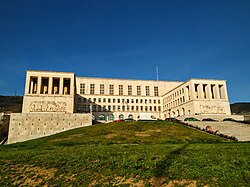
In 1938, the institution expanded its scope by establishing a Law faculty, becoming a Studium Generale (a general studies institution) and earning the title Regia Università degli Studi (The Royal University of Studies). During this same year, construction began on the iconic main building on the Scoglietto hill, designed by architects Raffaello Fagnoni and Umberto Nordio.
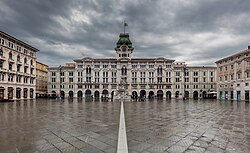
Despite delays caused by World War II and the subsequent period of joint UK-US administration of the Free Territory of Trieste, the university continued to grow. Following the 1954 agreement that returned Trieste to Italy, the university saw a rapid expansion of faculties, including Pharmacy, Medicine and Surgery, and Political Sciences. By the late 1990s, the university had completed its current range of faculties, including Psychology and Architecture.
The "Trieste System": A Global Science Network
One of the most distinctive features of UniTS is its integration into the "sistema Trieste" (Trieste System). This collaborative network connects the university with world-renowned research facilities, earning Trieste the reputation of being a "United Nations System of Sciences."
This ecosystem includes prestigious organizations such as:
- International Centre for Theoretical Physics (ICTP)
- International School for Advanced Studies (SISSA)
- Elettra Sincrotrone Trieste Facility
- National Institute of Nuclear Physics (INFN) and Astrophysics (INAF)
- National Institute of Oceanography and Experimental Geophysics
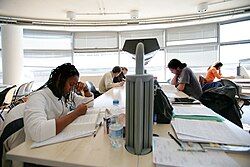
These partnerships facilitate intense research activity and high-level student and staff mobility, often supported by EU programmes like Socrates. This synergy makes the university a central player in global scientific advancement.
Academic Organization and Campus Life
The university is organized into 10 distinct departments, ensuring specialized expertise across various fields of study. These include departments ranging from Physics and Engineering and Architecture to Humanities and Legal, Language, Interpreting and Translation Studies.
Campus Locations and Facilities
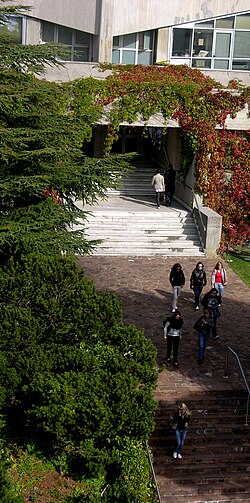
While the main campus is centered on the Scoglietto hill in Piazzale Europa, the university's footprint extends throughout the region:
- Trieste Urban Campus: Houses the Rector's office, administration, the Main Library, and various faculties.
- Specialized Sites: The Department of Theoretical Physics is located in Miramare-Grignano, while Astronomy is situated near the observatories on San Vito hill and the karst plateau.
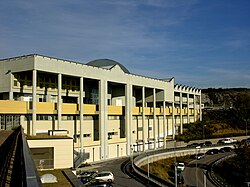
- Satellite Campuses: The university maintains a presence in Gorizia (International and Diplomatic Studies), Pordenone (Engineering and Education), and Portogruaro (Teaching Sciences).
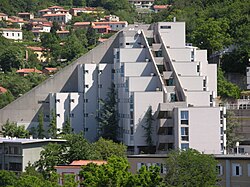
For students, the university provides essential services including a Language Centre—established in 2003 to support Erasmus and local language needs—and various residential options managed by ARDISS.
Summary of University Profile
| Feature | Details |
|---|---|
| Total Departments | 10 |
| Primary Location | Scoglietto hill, Trieste |
| Key Research Affiliations | ICTP, SISSA, INFN, Elettra Sincrotrone |
| Satellite Campuses | Gorizia, Pordenone, Portogruaro |
| Language Support | Independent Language Centre |
Frequently Asked Questions
Where is the main campus of the University of Trieste located?
The main campus is centered on the Scoglietto hill in Piazzale Europa, which houses the Rector's office, administration, and several key faculties.
What is the "Trieste System"?
The Trieste System is a worldwide recognized network of international research institutes and academic affiliations that collaborate closely with the University of Trieste, creating a concentrated hub for science and technology.
Does the university have campuses outside of Trieste?
Yes, the university operates satellite sites in Gorizia, Pordenone, and Portogruaro to offer specific degree programs in fields such as Engineering, Education, and International Studies.
How does the university support international students?
The university provides support through its independent Language Centre, which offers Italian language courses for Erasmus students and manages various international inter-university cooperation agreements.
What are the main areas of research at UniTS?
Research is highly diverse, spanning from theoretical physics and astrophysics to medical sciences, engineering, and the humanities, bolstered by connections to major national and international research institutes.