University of Pennsylvania Carey Law School
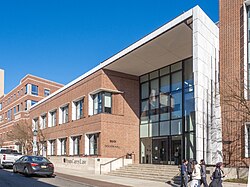
The University of Pennsylvania Carey Law School, commonly referred to as Penn Carey Law, stands as one of the most prestigious legal institutions in the United States. As a member of the elite "T14"—a group of law schools consistently ranked among the top 14 nationwide—it combines a deep historical legacy with a modern, interdisciplinary approach to legal education.
Located in the heart of Philadelphia, the school is renowned for its high bar passage rates, exceptional employment outcomes, and a commitment to public service that has shaped the American legal landscape for over two centuries.
Key Facts
- USNWR Ranking: Tied for 4th (2026).
- Bar Pass Rate: 96.7% (2024).
- Employment: 99.6% of the Class of 2020 secured full-time employment.
- Endowment: Parent university endowment of $22.3 billion (as of June 30, 2024).
- Notable Publication: Home to the University of Pennsylvania Law Review, the oldest law review in the U.S.
- Public Interest: First national law school to establish a mandatory pro bono program.
Historical Foundations
The 18th Century Origins
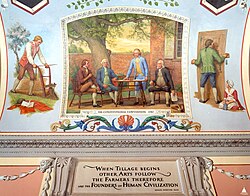
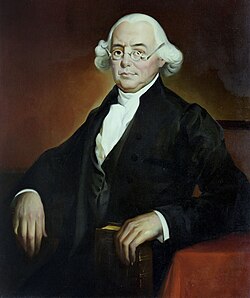
The school's roots trace back to 1790, when James Wilson delivered a series of Lectures on Law. Wilson was a pivotal figure in American history, serving as one of only six signers of both the Declaration of Independence and the U.S. Constitution. As a primary author of the first draft of the Constitution and a U.S. Supreme Court associate justice, Wilson's lectures were attended by George Washington's cabinet, including Thomas Jefferson and John Adams.
Wilson was appointed as Penn's first full professor of law in 1792, establishing a scholarly foundation that persists to this day.
19th Century Expansion and Pioneering Milestones
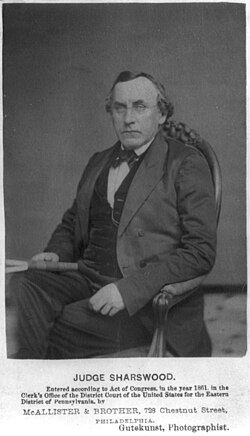
In 1850, the University of Pennsylvania transitioned to a full-time law program under George Sharswood, who became the school's Dean in 1852 and later served as the chief justice of the Supreme Court of Pennsylvania.
The 19th and early 20th centuries marked significant milestones in diversity and inclusion. In 1888, Aaron Albert Mossell became the first African-American man to earn a law degree from Penn. His daughter, Sadie Tanner Mossell Alexander, continued this legacy of firsts: she was the first African-American woman to graduate from Penn Law (1927) and the first African-American woman admitted to practice law in Pennsylvania (1929).
Evolution into the Modern Era
Institutional Growth
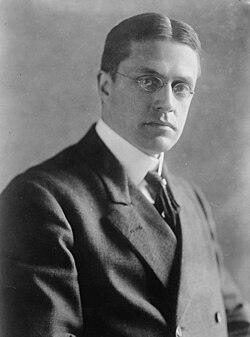
Throughout the 20th century, the school expanded its academic reach and infrastructure. Notable leadership, such as William Draper Lewis (Dean in 1896), helped steer the department through periods of national crisis and growth.
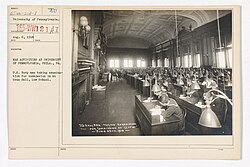
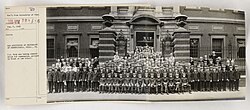
During World War I, the school played a critical role in military readiness, hosting U.S. Navy examinations for commissions in McKean Hall during 1918.
The Transition to Carey Law
In November 2019, the institution was renamed the University of Pennsylvania Carey Law School following a $128 million donation from the W.P. Carey Foundation. The gift honored alumnus Francis J. Carey. While the renaming sparked some debate among traditionalists who preferred "Penn Law," the official short-form designation is now "Penn Carey Law."
The school continues to break barriers in leadership; Osagie O. Imasogie, a 1985 graduate, became the first African-born chair of an American law school's board of overseers in 2021.
Academic Excellence and Specializations
Admissions and Student Profile
Admission to Penn Carey Law is highly competitive. The entering class typically consists of about 250 students. Recent data shows a diverse student body; for the class of 2024, 49% were women and 40% identified as persons of color. Additionally, 12% of students entered the program already holding an advanced degree.
The Toll Public Interest Center
Penn Carey Law is a pioneer in pro bono (free legal services for the public) work. The Toll Public Interest Center, founded in 1989, is supported by massive philanthropic contributions, including a $50 million gift in 2020 from the Robert and Jane Toll Foundation. This funding is the largest ever devoted entirely to the training and support of public interest lawyers in the U.S.
Legal Publications
The school is home to the University of Pennsylvania Law Review, founded in 1852. It is one of the most cited legal journals globally and is one of the four journals responsible for The Bluebook, the primary authority for legal citation in the U.S.
Other specialized journals include the University of Pennsylvania Journal of Business Law, the Asian Law Review, and the University of Pennsylvania Journal of Law and Social Change.
Career Outcomes and Professional Impact
Employment and Salaries
Graduates of Penn Carey Law are highly sought after by the legal industry. For the Class of 2019, the median salary was $190,000, with 75.2% joining law firms. The school is frequently ranked as a top provider of talent to the 100 largest law firms in the United States.
Judicial Clerkships
The school has a strong pipeline to the highest levels of the judiciary. Historically, Penn has placed 48 clerks at the U.S. Supreme Court, ranking it 11th among all law schools. Between 2000 and 2019, it ranked 10th for supplying Supreme Court clerks.
Faculty and Distinguished Alumni
The faculty includes renowned scholars such as Anita L. Allen, a professor of law and philosophy, and Stephanos Bibas, a criminal law scholar and judge for the US Court of Appeals for the Third Circuit.

The alumni network is equally distinguished, boasting a U.S. Supreme Court Justice, over 76 federal judges, 18 state Supreme Court Justices, and 46 members of the U.S. Congress.
Summary of Institutional Profile
| Category | Detail |
|---|---|
| Established | 1850 (First professor appointed 1792) |
| Current Dean | Sophia Z. Lee |
| Enrollment | 755 students |
| Faculty Size | 103 members |
| Bar Passage (2024) | 96.7% |
| Location | Philadelphia, Pennsylvania |
Frequently Asked Questions
What is the "T14" and does Penn Carey Law belong to it?
The "T14" refers to the top 14 law schools in the United States as consistently ranked by U.S. News & World Report. Penn Carey Law is a member of this elite group.
What is the significance of the University of Pennsylvania Law Review?
It is the oldest law review in the United States and is one of the four journals that create and maintain The Bluebook, the standard for legal citation in the U.S.
How does the school support public interest law?
Through the Toll Public Interest Center and a mandatory pro bono program, the school provides extensive training and financial support, including scholarships for graduates pursuing public interest careers.
Who was James Wilson and why is he important to the school?
James Wilson was a signer of the Declaration of Independence and the Constitution, and a U.S. Supreme Court justice. He delivered the first law lectures at Penn and was appointed its first full professor of law in 1792.
What are the employment prospects for graduates?
Prospects are exceptionally high, with nearly 100% of recent classes obtaining full-time employment. A large percentage of graduates join the top 100 largest law firms in the U.S. or secure prestigious judicial clerkships.