University of Limpopo: From Apartheid Resistance to Academic Merger
The University of Limpopo stands as a testament to the complex socio-political history of South Africa. Located in the foothills of the Hwiti (Wolkberg range) in Mankweng township, the institution is positioned midway between Polokwane and Tzaneen. Its journey from a racially exclusive college to a modern merged university reflects the broader struggle for liberation and education in the region.
The Origins of Turfloop
Established on August 1, 1959, the institution began as the University College of the North. Its creation was a direct result of the Extension of University Education Act of 1959, a piece of legislation designed by the apartheid regime to enforce racially exclusive higher education for black South Africans. The campus was situated on Turfloop farm, approximately 40 kilometers east of Pietersburg, earning the university its enduring nickname, "Turfloop."
Initially, the college operated under the academic trusteeship of the University of South Africa. This arrangement continued until the South African Parliament passed the University of the North Act (Act No. 47 of 1969), which officially transitioned the institution from a college to a full university on January 1, 1970.
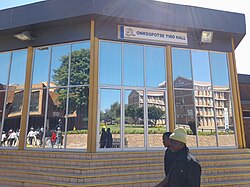
The Development of Sovenga and Mankweng
As the university grew, a town emerged around it. The apartheid government named this town Sovenga, derived from the three ethnic groups—Sotho, Venda, and Tsonga—that the regime intended to educate there. However, the local population largely ignored this designation, referring to the town as Mankweng, named after one of the area's chiefs.
A Model of Contradiction and Resistance
During the later years of apartheid, the University of the North was utilized as a "model" university. The government provided heavy subsidies to the institution so that visiting dignitaries could be shown the supposed viability of separate, ethnically-based facilities. Despite this funding, the university faced a critical challenge: the students entering the system had been severely under-resourced in their primary and secondary education, placing immense pressure on the quality of instruction.
Far from being a passive model of state policy, the university became a fierce center of resistance against apartheid throughout the 1960s, 70s, and 80s. This volatility often led to the grounds being occupied by the SADF (South African Defence Force).
Transition and the Formation of the University of Limpopo
Following the end of apartheid, the university entered a period of instability characterized by fluctuating enrollment and various rationalization and reorganization schemes. While some faculty struggled to adapt to the new political landscape, others leveraged the era of liberation to create new academic opportunities.
The modern University of Limpopo was officially formed on January 1, 2005. This was the result of a strategic merger between the University of the North and the former Medical University of Southern Africa.
Key Facts
- Established: August 1, 1959 (as University College of the North).
- Location: Mankweng township, foothills of the Hwiti (Wolkberg range).
- Nickname: Turfloop.
- Merger Date: January 1, 2005.
- Merger Partners: University of the North and Medical University of Southern Africa.
- Legislative Origin: Extension of University Education Act of 1959.
| Period/Date | Institutional Status | Key Event/Context |
|---|---|---|
| 1959 – 1969 | University College of the North | Established under the Extension of University Education Act; trusteeship of UNISA. |
| 1970 | University of the North | Granted full university status via Act No. 47 of 1969. |
| 1960s – 1980s | Center of Resistance | Active opposition to apartheid; frequent SADF occupation. |
| 2005 | University of Limpopo | Merger with the Medical University of Southern Africa. |
Frequently Asked Questions
Why is the university nicknamed "Turfloop"?
The university is nicknamed "Turfloop" because it was originally sited on Turfloop farm, located about 40 kilometers east of Pietersburg.
What is the difference between Sovenga and Mankweng?
Sovenga was the name given to the town by the apartheid government to represent the Sotho, Venda, and Tsonga ethnic groups. Mankweng is the name used by most inhabitants, named after a local chief.
How was the University of Limpopo created?
The University of Limpopo was established on January 1, 2005, through the merger of the University of the North and the Medical University of Southern Africa.
What role did the university play during apartheid?
While the government used it as a "model" to demonstrate the viability of separate facilities, the university actually served as a major center of resistance against the apartheid regime from the 1960s through the 1980s.
Which act led to the creation of the original college?
The institution was established under the provisions of the Extension of University Education Act of 1959, which allowed for the creation of racially exclusive universities for black South Africans.