University of Aberdeen: A Legacy of Academic Excellence in Scotland
The University of Aberdeen stands as a beacon of higher learning in the United Kingdom, blending a rich medieval heritage with cutting-edge modern research. As an ancient university established in 1495, it has spent over five centuries evolving from its early roots into a globally recognized public research institution. Located in the granite city of Aberdeen, Scotland, the university is defined by its commitment to wisdom, as reflected in its Latin motto, Initium sapientiae timor domini ("The fear of the Lord is the beginning of wisdom").
Key Facts
- Established: 1495 (531 years ago).
- Student Population: 13,930 students (2024/25), including 9,815 undergraduates and 4,115 postgraduates.
- Financials: Endowment of £70.5 million (2025) and a budget of £257.2 million (2024/25).
- Leadership: Chancellor Queen Camilla, Rector Iona Fyfe, and Principal and Vice-Chancellor Peter Edwards.
- Global Standing: Ranked 119th in the world by TIME magazine (2026).
- Mascot: Angus the Bull.
A History of Unity and Growth
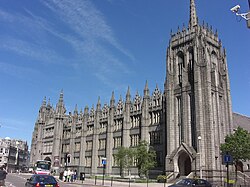
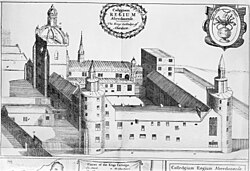
The university's origins are rooted in the coexistence and eventual merger of two distinct institutions: King's College and Marischal College. For centuries, these colleges operated independently, with a brief period involving King Charles' University between 1641 and 1661. It was not until 1860 that the two colleges formally merged to create the unified University of Aberdeen known today.
The institution's journey toward inclusivity was a gradual one. While students voted against granting degrees to women in 1873, the university opened all faculties to women by 1892. By 1894, the first 20 female students matriculated, and by 1899, women comprised a quarter of the faculty.
Architectural Evolution
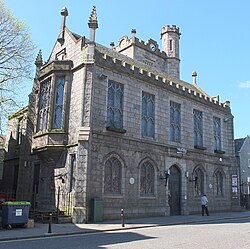
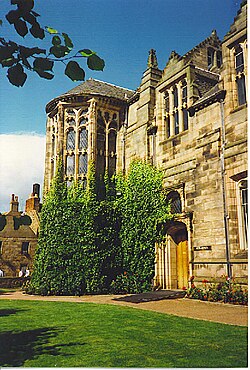
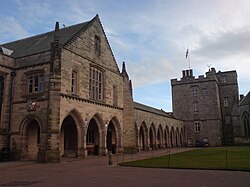
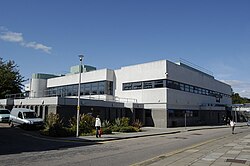
The university's physical presence reflects its history. Throughout the 20th century, expansion occurred primarily at King's College. Early additions, such as Elphinstone Hall and the New King's lecture rooms, were designed to harmonize with the ancient architecture. However, from the 1960s onward, the university adopted the brutalist style—an architectural movement characterized by raw concrete and geometric forms—for its newer constructions.
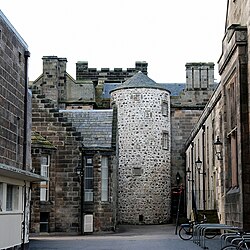
Campuses and Facilities
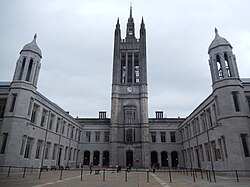
The University of Aberdeen operates across an urban landscape with two primary sites and an international presence in Doha, Qatar.
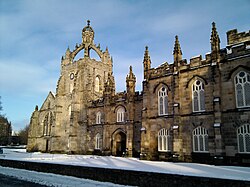
King's College and Old Aberdeen
King's College remains a central hub of academic life. Notable landmarks include the Ivy Tower (ca. 1525), one of the oldest remaining structures, and the Sir Duncan Rice Library, which serves as a modern architectural contrast to the historic surroundings.
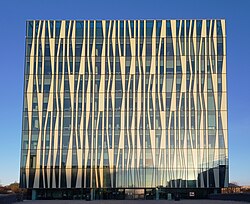
Marischal College
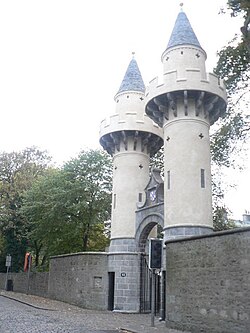
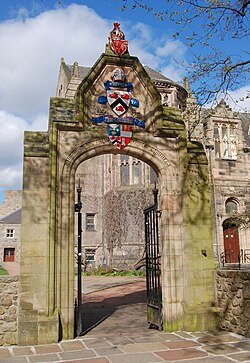
Known for its stunning granite façade and the iconic Great Gate, Marischal College continues to be a symbol of the university's prestige and history.
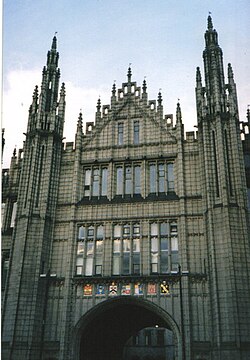
Foresterhill Campus
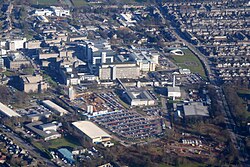
Specializing in medical education, the Foresterhill campus has been training medical students since the 1930s. It is strategically located adjacent to the Aberdeen Royal Infirmary, integrating academic study with clinical practice.
Academic Structure and Research
The university is organized into several comprehensive schools and institutes, ensuring a broad spectrum of research and teaching.
- Arts and Social Sciences: Includes the School of Law, the School of Social Science, and the School of Divinity, History and Philosophy.
- Business: Home to the University of Aberdeen Business School.
- Life Sciences and Medicine: Encompasses the School of Medicine, Medical Sciences and Nutrition, and the Rowett Institute.
- Physical Sciences: Includes the School of Engineering, the School of Geosciences, and the School of Natural and Computing Sciences.
The university's research prowess is well-documented; in the 2014 Research Excellence Framework, over 75% of its research was classified as either "world leading" or "internationally excellent."
Student Life and Traditions
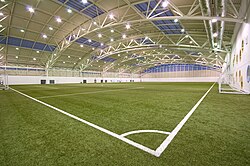
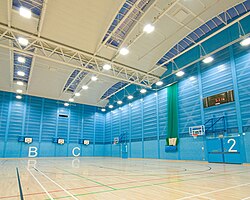
Student experience at Aberdeen is a blend of modern amenities and centuries-old customs. The Aberdeen University Sports Union, established in 1889, manages over fifty sports clubs and utilizes the state-of-the-art Aberdeen Sports Village (ASV).
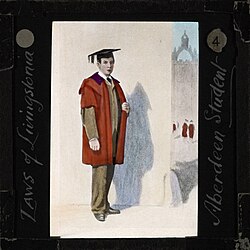
Traditions remain a vital part of the campus culture. These include the Sponsio Academica, Founders' Day, and the installation of the Rector. Historically, students used specific terms to denote their year of study: Bajan (first year), Semi (second year), Tertian (third year), and Magistrand (fourth year).
Institutional Performance and Admissions
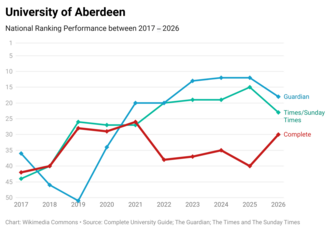
The university consistently ranks among the top 25 institutions in the United Kingdom according to The Guardian and The Times. Its global impact is also significant, ranking 31st worldwide for societal impact in the 2019 Times Higher Education University Impact Rankings.
| Year | Applications | Accepted | Offer Rate (%) |
|---|---|---|---|
| 2025 | 16,580 | 3,110 | 80.0% |
| 2024 | 16,620 | 2,855 | 80.8% |
| 2023 | 16,525 | 2,735 | 74.6% |
| 2022 | 18,440 | 2,960 | 74.4% |
| 2021 | 19,435 | 3,105 | 70.1% |
Frequently Asked Questions
When was the University of Aberdeen founded?
The university was established in 1495, making it one of the ancient universities of Scotland.
What are the main campuses of the university?
The university is primarily located across two main urban sites in Aberdeen—King's College and Marischal College—along with the Foresterhill campus for medical studies and a presence in Doha, Qatar.
Who is the current Chancellor of the university?
The current Chancellor is Queen Camilla.
What is the university's motto and meaning?
The motto is "Initium sapientiae timor domini," which translates from Latin to "The fear of the Lord is the beginning of wisdom."
How does the university rank globally?
The university is consistently ranked among the top 250 universities worldwide, notably placing 119th in TIME magazine's 2026 rankings.