University Library of Illinois Urbana-Champaign: A Legacy of Knowledge and Innovation
The University Library serves as the comprehensive library system for the University of Illinois Urbana-Champaign, functioning as a vast network of both physical and digital resources. Designed to support students, faculty, staff, and the broader community, this system has evolved from a modest collection into one of the most significant academic library infrastructures in the United States.
A History of Growth and Evolution
The origins of the University Library predate the university itself. Recognizing that a robust collection of books was essential for academic success, the university board ensured resources were available even before the institution officially opened. In its earliest years, the collection was small and lacked a dedicated facility.
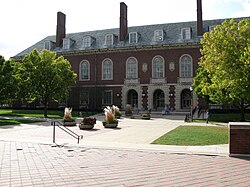
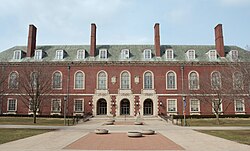
As the university expanded, so did its library. The first building constructed specifically for the collection was Altgeld Hall (then known as Library Hall). However, as the collection grew, the library eventually moved to its current home, the Main Library, during the 1920s. Today, Altgeld Hall serves the university's Math Department.
Expanding the Reach of Research
While the library was initially smaller than many private institutions and large public libraries, it experienced a massive surge in growth between the mid-1930s and 1940. By the end of this period, it was ranked as the fifth-largest academic library in the United States by volume. This expansion was critical for the university's ability to retain students and establish a successful graduate school program.
The Undergraduate Library (UGL) was established to provide students with free access to research materials, bolstered by the influx of collections from the University of Illinois at Galesburg in 1949. To preserve open spaces and ensure unobstructed sunlight for the university's experimental cornfield, the UGL building was constructed underground in 1969.
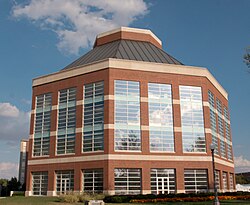
To manage the massive influx of materials, the Oak Street High Density Storage facility was opened in 2004. This facility provides a climate-controlled environment, maintained at approximately 50°F and 30% humidity, to ensure the long-term integrity of the stored items.
The Role of University Librarians
For the first two decades of its existence, the library lacked a professional librarian, with faculty members managing the collection. This changed in 1894 with the hiring of Percy Bicknell, the first University Librarian. Bicknell modernized the institution by introducing Dewey cataloging—a system used to organize library materials by subject—and creating the library's first card catalog.
Subsequent librarians have continued this tradition of innovation while championing intellectual freedom and patron privacy. For example, Paula Kaufman (University Librarian from 1999 to 2003) was recognized by the American Library Association for her work in protecting these fundamental rights.
Technological Advancements and Automation
The University Library has been a pioneer in library automation. In 1974, the library began using OCLC workstations to catalog monographs (single books), eventually expanding to serials (periodicals published in successive parts). Under the leadership of Hugh Atkinson (1976–1986), the library implemented MARC standards (Machine-Readable Cataloging), allowing patrons to request books via computer for the first time in the late 1970s and early 1980s.
The digital era brought further shifts. In 1994, the Grainger Engineering Library introduced internet-connected workstations. By the early 1990s, librarians were implementing federated search—a method that allows users to search multiple databases simultaneously—to provide access to full-text articles.
Diverse and Extensive Collections
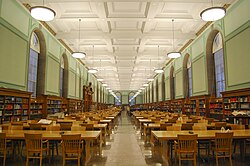
Today, the University Library is one of the largest public academic libraries in the nation. Its holdings are incredibly diverse, spanning various formats and languages. Beyond traditional print, the collection includes video games, comic books, and even unique historical artifacts like two bricks from Abraham Lincoln's home.
| Material Type | Estimated Quantity |
|---|---|
| Total Items/Materials | 24 million |
| Volumes | 13 million+ |
| Microforms | 9 million |
| Serials | 120,000 |
| Audiovisual Materials | 930,000+ |
| Electronic Books | 280,000+ |
| Maps | 650,000 |
Specialized Archives and Rare Books
The Rare Book & Manuscript Library (RBML) holds significant cultural treasures. Notable holdings include the Gwendolyn Brooks archives and the Carl Sandburg archives. The RBML also preserves the personal papers of world-renowned figures such as Marcel Proust, John Milton, H.G. Wells, and Anthony Trollope.
Key Facts
- The library holds over 24 million items in total.
- The Undergraduate Library (UGL) is built underground to protect sunlight for experimental cornfields.
- The library maintains one of the largest collections of Indian comic books in North America.
- The Oak Street High Density Storage facility maintains a strict 50°F and 30% humidity environment.
- The system includes numerous departmental libraries, such as the Grainger Engineering Library and the Law Library.
Frequently Asked Questions
What makes the University Library collection unique?
The library contains a massive variety of materials, including a significant collection of Indian comics in various languages and unique historical items like bricks from Abraham Lincoln's home.
How does the library protect its most sensitive materials?
The library uses the Oak Street High Density Storage facility, which provides a climate-controlled environment (50°F and 30% humidity) to preserve the integrity of the collections.
What is the purpose of the Undergraduate Library's design?
The Undergraduate Library was built underground in 1969 to ensure that the university's experimental cornfields received unobstructed sunlight and to maintain open campus spaces.
Does the library offer digital resources?
Yes, the library provides extensive digital services, including electronic books, full-text article searching, and various virtual libraries for subjects like Biology, Physics, and Astronomy.
Who manages the library collections?
The collections are managed by professional University Librarians and subject liaisons who oversee everything from cataloging to specialized research assistance.