Underwater Archaeological Preservation: Factors and Challenges
The survival of history beneath the waves is a delicate balance of chemistry, biology, and physics. Unlike land-based sites, which are frequently reused and overwritten by successive societies, the seabed has remained largely inaccessible until the 20th century. However, the very environment that hides these treasures also threatens to destroy them. The preservation of underwater archaeological material depends heavily on the chemical environment, the presence of biological organisms, and the dynamic forces of the ocean.
The Forces of Destruction
Not all underwater environments are created equal. Rocky coastlines, particularly in shallow waters, are often hostile to artifacts. The relentless action of surf and currents can smash, disperse, or grind objects into nothingness, often leaving behind a scattered pattern of debris rather than a coherent wreck structure.
Chemical and biological threats further complicate preservation. Saltwater is particularly aggressive toward iron artifacts and metal shipwrecks. Simultaneously, marine organisms readily consume organic materials like wood. For example, the shipworm (Teredo navalis), which exists only in saltwater, can rapidly devastate wooden hulls.
Even deep-water sites are not immune. The RMS Titanic, despite being in deep, calcium-starved waters where concretion (the buildup of mineral crusts) does not occur, is suffering from irreversible degradation of its steel and iron hull. Over centuries, such wrecks typically deteriorate until only the heaviest machinery projects from the seafloor. The USS Monitor provides a stark example; despite attempts at in situ preservation (preserving an object in its original place), the vessel deteriorated so rapidly that its turret had to be rescued to prevent total loss.
Factors Aiding Preservation
Despite these threats, some sites survive with exceptional detail. The primary savior of underwater archaeology is sediment burial. When artifacts are rapidly covered by sediment, they are shielded from currents and biological threats, creating an anaerobic environment (an environment lacking oxygen) that prevents further decay.
Wet environments—including underwater sites and terrestrial peat bogs—are essential for the survival of organic materials such as leather, fabric, horn, and wood. Additionally, cold temperatures and a lack of light reduce the energy available for chemical reactions and organic activity, further slowing degradation.
Because the shipworm is absent in freshwater and low-salinity environments, some of the best-preserved wrecks are found in the cold, dark waters of the Baltic Sea and the North American Great Lakes.
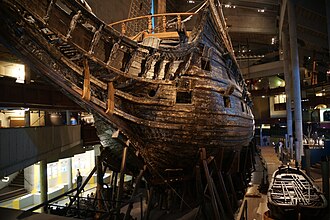
Case Study: The Mary Rose
The Mary Rose serves as a prime example of how sediment can protect a collection of artifacts. While the wreck was subject to salvage attempts as early as the 16th century, a vast amount of material remained protected by the seabed until maritime archaeologists recovered it in the 20th century.
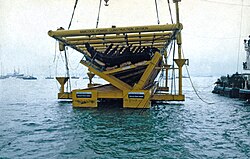
Modern Threats and Recovery Challenges
Beyond natural decay, human activity poses significant risks. Wrecks may be smashed by subsequent ships hitting the same navigational hazard or deliberately destroyed to clear shipping lanes. In deep water, commercial operations such as deep-sea trawling and pipe-laying can be catastrophic. Trawl nets can tear superstructures, while heavy pipelines dropped from the surface can crush sites, as seen with the Mardi Gras shipwreck in the Gulf of Mexico.
Recovery does not guarantee safety. Material recovered from the sea is typically unstable and requires highly specialized conservation. For instance, the hull of the Holland 1 required extensive conservation to remain intact, though its machinery is now inoperable. Conversely, the engine of the SS Xantho, recovered in 1985, is considered an anomaly because it can still be turned by hand after two decades of treatment.
Key Facts
- Anaerobic environments created by sediment burial are critical for preserving organic materials like wood and leather.
- Saltwater is highly corrosive to iron and steel, while Teredo navalis (shipworms) destroy wooden structures in saline waters.
- Cold, dark, and low-salinity waters (e.g., the Baltic Sea and Great Lakes) offer superior preservation conditions.
- Human activities, including deep-sea trawling and pipeline installation, can physically destroy deep-water archaeological sites.
- In situ preservation is often challenged by the fact that discovering a site often disturbs the protective sediment layer.
| Environment | Preservation Level | Primary Threats | Key Advantage |
|---|---|---|---|
| Shallow Rocky Coast | Low | Surf, currents, mechanical grinding | Rarely preserves structure |
| Deep Saltwater | Moderate to Low | Corrosion, biological decay | Reduced surface disturbance |
| Sediment-Buried | High | Initial disturbance during discovery | Anaerobic conditions |
| Cold/Low Salinity | High | Slow chemical degradation | Absence of shipworms |
Frequently Asked Questions
Why is sediment burial so important for shipwrecks?
Sediment burial creates an anaerobic environment, meaning oxygen is removed. This protects organic materials from biological decay and shields the wreck from the destructive physical forces of ocean currents.
What is the impact of the shipworm (Teredo navalis) on archaeology?
The shipworm lives only in saltwater and consumes wood, making it one of the primary biological threats to wooden shipwrecks in marine environments.
Can iron and steel ships be preserved underwater indefinitely?
Generally, no. Most iron and steel ships continue to degrade, especially in oxygenated water, until only the heaviest machinery remains. Even deep-water wrecks like the Titanic suffer irreversible hull degradation.
What is the difference between in situ preservation and recovery?
In situ preservation involves protecting the artifact in its original location on the seabed. Recovery involves bringing the object to land, where it must undergo expensive and complex conservation processes to prevent it from deteriorating upon exposure to air.
How do modern commercial activities affect deep-sea wrecks?
Activities such as deep-sea trawling can snag and tear ship superstructures, while the installation of large pipelines can crush archaeological sites and render remnants inaccessible.