Ulm Hauptbahnhof: A Central Hub of German Rail Transport
Located at Bahnhofplatz 1 in Baden-Württemberg, Ulm Hauptbahnhof (Ulm Hbf) serves as a critical junction in the German rail network. Owned by Deutsche Bahn and operated by DB Netz and DB Station&Service, this Category 2 station connects the state of Baden-Württemberg with Bavaria and extends its reach to international destinations across Europe.
From its origins in the mid-19th century to its current role as a high-speed rail node, Ulm Hbf has evolved to meet the demands of modern transit, facilitating the movement of thousands of passengers daily through its 12 platforms.
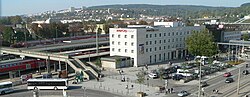
Key Facts
- Opened: June 1, 1850.
- Electrified: May 15, 1933.
- Infrastructure: 12 platforms serving long-distance and regional traffic.
- Key Connections: Direct links to Stuttgart, Munich, Augsburg, and international cities like Paris and Venice.
- Accessibility: Fully accessible, featuring tactile paving for the visually impaired since 1995.
Historical Evolution
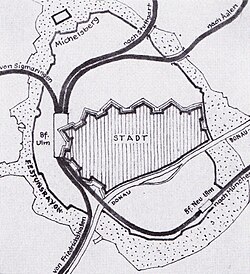
The station's history is marked by several distinct phases of growth and modernization. The first station opened in 1850, establishing Ulm as a rail destination. By 1855, the network expanded with the construction of the railway bridge over the Danube.
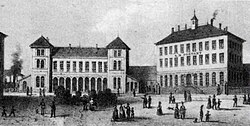

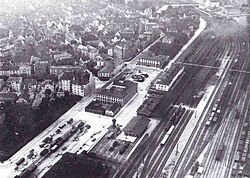
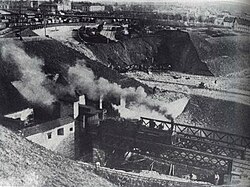
Between 1867 and 1913, the station underwent two major expansion phases and the construction of a marshalling yard—a specialized rail yard used to organize wagons into trains. The early 20th century brought electrification in 1933, though the facility suffered significant destruction during World War II, necessitating a comprehensive reconstruction period between 1939 and 1949.
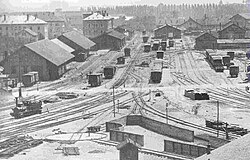
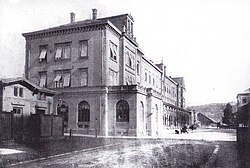
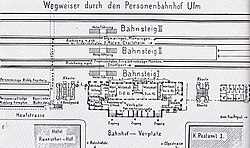
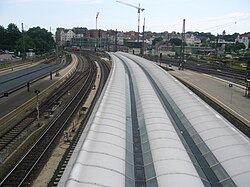
Modernization accelerated in the late 20th century. Following the establishment of Deutsche Bahn AG in 1994, the station introduced a new travel center and became the first in Baden-Württemberg to install tactile paving. Further upgrades included covered bicycle parking in 1995 and the installation of a new glass roof on platform B in 2000.

Station Structure and Operations
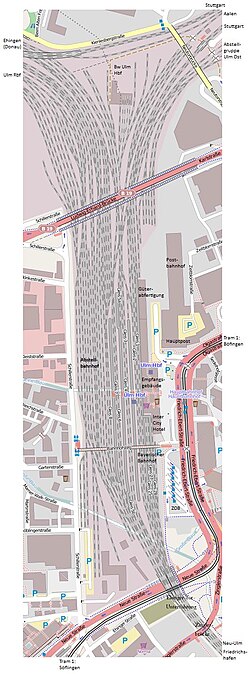
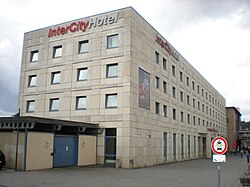
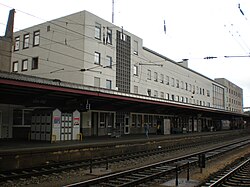
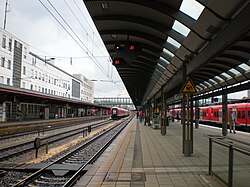
Ulm Hbf is designed to handle a diverse mix of traffic, from high-speed InterCity Express (ICE) trains to local S-Bahn services. The station building and its associated platforms are organized to optimize flow between long-distance and regional lines.
Platform Overview
The station utilizes a variety of platform heights and lengths to accommodate different rolling stock. Platforms 1 and 2 primarily handle long-distance traffic toward Stuttgart and Munich, while other platforms are dedicated to regional services heading toward Aalen, Memmingen, and Friedrichshafen.
| Platform | Length (m) | Height (cm) | Primary Use |
|---|---|---|---|
| 1 | 499 | 76 | Long-distance (Stuttgart), Regional (Geislingen) |
| 2 | 408 | 76 | Long-distance (Munich), Regional (Weißenhorn) |
| 5a/5b | 107-109 | 76 | Regional (Aalen, Munderkingen, Memmingen) |
| 7/8 | 335 | 76 | Regional (Donaueschingen, Biberach, Friedrichshafen) |
| 27/28 | 158-186 | 38 | Regional (Ingolstadt, Munich, Krumbach) |
Rail Services and Connectivity
The station is a vital node for several KBS (Kursbuchstrecke), or timetable routes, including the lines to Stuttgart (KBS 750), Augsburg (KBS 980), and Friedrichshafen (KBS 751).
Long-Distance Traffic
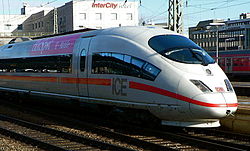
Ulm Hbf is served by a robust schedule of ICE and IC trains. Key routes include the ICE 11 to Berlin and the ICE 42 to Cologne and Düsseldorf. International connectivity is provided via the ICE/TGV 83 to Paris Est and the Nightjet services connecting Stuttgart to Venice and Zagreb.
Regional and S-Bahn Services
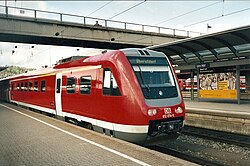
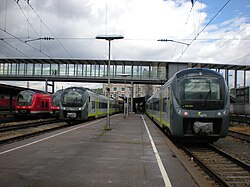
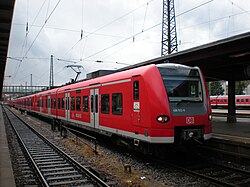
Regional connectivity is managed by operators such as DB Regio, agilis, and Go-Ahead Baden-Württemberg. A significant development is the Danube-Iller Regional S-Bahn, an urban rail network that began operations in December 2020, linking Ulm with Weißenhorn and Memmingen.
Local Transit
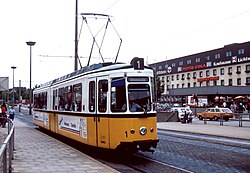
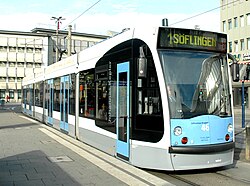
Beyond heavy rail, the station is integrated with the city's tram network, with stops serving various lines including the GT4 and Combino class trams.
Future Developments
Ulm is currently at the center of major infrastructure upgrades. The Wendlingen–Ulm high-speed railway became operational in December 2022, and further extensions to Stuttgart are expected by December 2026 as part of the Stuttgart 21 project.
Additionally, the line from Ulm to Augsburg is slated for extensive upgrades to support top speeds of 200 km/h. These improvements include the expansion of the Danube bridge to four tracks and the reconstruction of the Neu-Ulm station as part of the Neu-Ulm 21 project.
Frequently Asked Questions
When did Ulm Hauptbahnhof first open?
The station officially opened on June 1, 1850.
Which international cities can be reached from Ulm Hbf?
Passengers can access international destinations including Paris (via ICE/TGV 83), Venice, and Zagreb (via Nightjet services).
What is the Danube-Iller Regional S-Bahn?
It is an urban rail network with its central node at Ulm Hauptbahnhof, which began operating in December 2020 to improve local connectivity to areas like Weißenhorn and Memmingen.
Is Ulm Hbf accessible for passengers with disabilities?
Yes, the station is accessible and was a pioneer in the region by installing tactile paving for the blind in April 1995.
What major high-speed project is currently affecting the station?
The station is part of the Wendlingen–Ulm high-speed railway project and the broader Stuttgart 21 initiative, aimed at modernizing the connection between Stuttgart and Augsburg.