UK Video Game History: From Mechanical Engines to Indie Innovation
The United Kingdom's journey into the world of gaming did not begin with pixels, but with the theoretical foundations of computing. Long before the first arcade cabinet flickered to life, British visionaries were sketching the blueprints for the digital age. From the mechanical dreams of the 19th century to the global dominance of modern mobile architecture, the UK has played a pivotal role in shaping how the world plays.
The Foundations of Computing

The UK's contribution to computing began with theoretical breakthroughs, such as Boolean algebra developed by George Boole. This was followed by the practical ambitions of Charles Babbage and Ada Lovelace, who created the mechanical-based difference engine and one of the first primitive programming languages.
As the mid-20th century arrived, Alan Turing established the core principles of modern computer science and artificial intelligence. The pressures of World War II further accelerated these advances, particularly in cryptography with the development of the Colossus computer to decipher enemy messages. This momentum carried into the post-war era at institutions like Cambridge University and the University of Manchester.
By the 1980s, British engineers developed the ARM architecture. This reduced instruction set computing (RISC) paradigm became a global standard, eventually powering the heart of modern mobile gaming and consoles like the Nintendo Switch.
The Rise of the Arcade (1970s–1980s)
Before the digital revolution, British arcades were dominated by pinball and electro-mechanical games. The shift began in 1973 with Atari's Pong, though a Manchester-based company called Alca Electronics had released a clone called Ping Pong six months earlier.
The true "golden age" was ignited in 1978 by Taito's Space Invaders. The game was a phenomenon, with 85,000 cabinets installed across UK pubs and public buildings by 1979. Its popularity was so immense that it sparked political controversy; in 1981, MP George Foulkes proposed the "Control of Space Invaders Bill," citing the game's addictive properties. The bill was ultimately defeated in Parliament.
Following this success, a wave of hits including Pac-Man, Donkey Kong, and Pole Position flooded the market. This era also saw the birth of Computer and Video Games magazine in 1981, providing a dedicated voice for the growing community.
The Microcomputer Revolution and "Bedroom Coders"
While North America focused on consoles, the UK experienced a unique boom in microcomputers (home computers). Between 1982 and 1984, machines like the BBC Micro, the Commodore 64, and the ZX Spectrum became household staples.
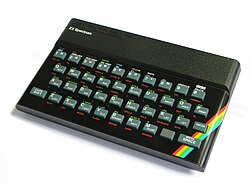
This shift effectively immunized the UK against the North American video game crash of 1983. Because home computers offered cheaper software than expensive console cartridges, they quickly became the dominant sector of the market by 1984.
This era gave rise to the bedroom coder: self-taught programmers who realized singular visions from their homes. Often distributing games via cassette tapes through mail order, these developers became cultural icons. Notable achievements included Manic Miner (1983), which introduced a distinct British wit to gaming, and Elite (1984), a non-linear space simulation that pioneered the open-world gameplay concepts seen in modern titles like Grand Theft Auto.
The Transition to 16-Bit and Consoles
By the mid-1980s, the arrival of 16-bit machines like the Atari ST and Commodore Amiga signaled the end of the solo bedroom coder era, as these complex systems required full development teams.
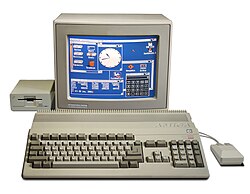
Although the Atari ST was initially more popular due to its lower price, the Amiga 500 found massive success through strategic bundling. The "Batman Pack," which bundled the game Batman with the hardware in 1989, sold over 186,000 units. During this time, Sensible Software produced hits like Sensible World of Soccer, which later earned a place in the Stanford University game canon for its cultural significance.
By 1991, the tide shifted again as consoles overtook computers. Sega led this charge with the Master System and Mega Drive, with Sonic the Hedgehog serving as a primary driver for console adoption. By 1992, Sega and Nintendo were generating over £700 million in annual UK sales, leading to investigations by the Monopolies and Mergers Commission regarding their market dominance.
Key Facts
- First Verifiable Game: Christopher Strachey's Draughts is recognized as the first verifiable video game to run on a general-purpose computer.
- Market Shift: By 1984, computer games surpassed both consoles and LCD games as the largest UK home gaming sector.
- Open World Origins: The 1984 game Elite established foundational principles for modern open-world and space simulation games.
- Economic Milestone: In 2009, the profits of the UK video game industry exceeded those of the British film industry for the first time.
- Hardware Legacy: The British-developed ARM architecture is now a global standard for mobile gaming and consoles.
Market Growth Summary (1980–1995)
| Year | Console Revenue (£) | Computer Revenue (£) | LCD Game Revenue (£) | Total Annual Revenue (£) |
|---|---|---|---|---|
| 1980 | 33,000,000 | N/A | 12,000,000 | 45,000,000 |
| 1984 | 25,000,000 | 100,000,000 | 40,000,000 | 165,000,000 |
| 1988 | 24,000,000 | 112,000,000 | 21,000,000 | 157,000,000 |
| 1992 | 578,000,000 | 132,000,000 | 20,000,000 | 730,000,000 |
The Modern Era: Indie Gaming
While large studios continue to produce high-budget titles, the late 2000s saw a resurgence of the hobbyist spirit. The rise of digital distribution allowed small teams to bypass retail, leading to the success of titles like World of Goo and Fez. This "indie" movement rekindled the original bedroom coder mindset, ensuring that individual creativity remains a cornerstone of the British gaming identity.
Frequently Asked Questions
Why did the UK avoid the 1983 video game crash?
The UK market was dominated by microcomputers rather than consoles. The transition to affordable home computers with superior graphical capabilities and cheaper software offset the decline of the console market.
Who were the "bedroom coders"?
Bedroom coders were often young, self-taught programmers in the 1980s who developed and sold original games from their homes, typically distributing them on cassette tapes via mail order.
What was the significance of the game Elite?
Released in 1984, Elite pioneered non-linear space exploration and trading, establishing the open-world gameplay principles used in many modern simulations and the Grand Theft Auto series.
How did the ARM architecture impact gaming?
Developed by British engineers, the ARM architecture became the de facto reference for reduced instruction set computing, eventually becoming the primary processor for mobile gaming and consoles like the Nintendo Switch.
Which console drove the UK market in the early 1990s?
Sega consoles, particularly the Mega Drive and the game Sonic the Hedgehog, were the primary drivers that led consoles to overtake home computers in the UK market by 1991.