U.S. Route 11: A Historic Journey Across the Eastern United States
U.S. Route 11 (US 11) is a cornerstone of the United States Numbered Highway System, stretching 1,645 miles (2,647 km) from the Gulf Coast to the Canadian border. Established in 1926, this major north-south artery traverses ten states, linking the marshlands of Louisiana to the northern reaches of New York. While officially designated as a north-south route, its physical trajectory follows a northeast-southwest alignment.
Much of the highway's path is steeped in history. In Virginia's Shenandoah Valley, the route follows the Valley Pike, a corridor that evolved from the Great Wagon Road and the even older Native American Great Warrior Path. Over the decades, the rise of the Interstate Highway System—specifically I-81, I-59, and I-75—has paralleled US 11, shifting long-distance through-traffic to high-speed freeways while leaving US 11 to serve as a vital local and commercial link.
Key Facts
- Total Length: 1,645 miles (2,647 km).
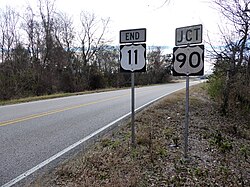
- Southern Terminus: US 90 in New Orleans, Louisiana.
- Northern Terminus: Rouses Point, New York (continuing into Canada as Route 223).
- States Traversed: Louisiana, Mississippi, Alabama, Georgia, Tennessee, Virginia, West Virginia, Maryland, Pennsylvania, and New York.
- Historic Roots: Follows the Great Warrior Path and Great Wagon Road in Virginia.
- Parallel Routes: Closely paralleled by I-81, I-59, I-75, and I-24 in various segments.
Route Breakdown by Region
The Deep South: Louisiana, Mississippi, and Alabama
The journey begins in New Orleans East, Louisiana, where US 11 starts at US 90. It crosses Lake Pontchartrain via the 4.8-mile Maestri Bridge, a historic span dating back to 1928, before passing through Slidell. In Mississippi, the route parallels I-59, serving as a business corridor for cities like Hattiesburg, Laurel, and Meridian.
Upon entering Alabama, US 11 continues its parallel relationship with I-20 and I-59. In Birmingham, the route is known locally as the "Bessemer Superhighway" and passes landmark sites such as Rickwood Field, one of the oldest baseball stadiums in the country. The route then proceeds through Gadsden and Fort Payne before entering Georgia.
The Appalachian Corridor: Georgia and Tennessee
In Georgia, US 11 covers a brief 23-mile stretch, traveling through Trenton and Wildwood. As it enters Tennessee, it passes through Chattanooga, where it is known as Lee Highway. This name persists as the road travels northeast toward Cleveland and Knoxville.
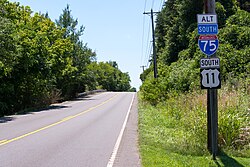
In East Knoxville, the highway splits into two distinct branches: US 11E (East) and US 11W (West). US 11E connects towns such as Morristown and Johnson City, while US 11W serves communities like Rogersville and Kingsport. These two branches eventually reunite in Bristol, Virginia.
The Mid-Atlantic and Northeast: Virginia to New York
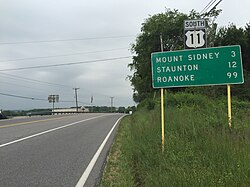
From Bristol, US 11 travels through the heart of Virginia's Shenandoah Valley. It passes through Abingdon, Wytheville, and Roanoke, crossing the famous Natural Bridge between Buchanan and Lexington. This segment is heavily paralleled by I-81, which often bypasses the smaller towns that US 11 serves.
After a short passage through West Virginia's Berkeley County and a crossing of the Potomac River into Maryland, the route enters Pennsylvania. Known here as the Molly Pitcher Highway in some sections, it parallels I-81 through the Cumberland Valley and follows the Susquehanna River through Danville and Bloomsburg.
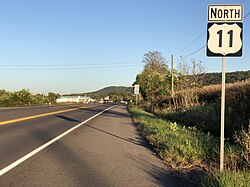
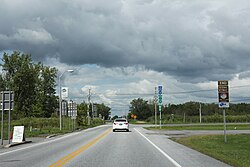
The final leg takes the highway through New York, passing through Binghamton, Syracuse, and Watertown. It skirts the northern edge of Fort Drum and the Adirondack Park before reaching its northern terminus at the Rouses Point–Lacolle 223 Border Crossing.
Route Summary Table
| Region/State | Key Cities/Landmarks | Primary Parallel Route |
|---|---|---|
| Louisiana | New Orleans, Maestri Bridge, Slidell | I-10 |
| Mississippi | Hattiesburg, Laurel, Meridian | I-59 |
| Alabama | Birmingham, Tuscaloosa, Gadsden | I-20 / I-59 |
| Tennessee | Chattanooga, Knoxville, Cleveland | I-75 / I-24 |
| Virginia | Shenandoah Valley, Roanoke, Natural Bridge | I-81 |
| PA & NY | Harrisburg, Scranton, Syracuse, Rouses Point | I-81 |
Frequently Asked Questions
Where does U.S. Route 11 begin and end?
The southern terminus is located at US 90 in the Bayou Sauvage National Wildlife Refuge in New Orleans, Louisiana. The northern terminus is at the Rouses Point–Lacolle 223 Border Crossing in Rouses Point, New York, where it becomes Route 223 in Canada.
What is the significance of the Valley Pike?
The Valley Pike in Virginia is a historic corridor that US 11 follows. It developed from the Great Wagon Road and the Native American Great Warrior Path, serving as a critical transportation route during the colonial era and the American Civil War.
What are US 11E and US 11W?
These are two split branches of US 11 that diverge in Knoxville, Tennessee, and reunite in Bristol, Virginia. US 11E (East) and US 11W (West) allow the highway to serve different sets of communities across East Tennessee.
How does US 11 differ from Interstate 81?
While I-81 is a high-speed, limited-access freeway designed for long-distance travel, US 11 is a traditional highway that often passes directly through the centers of towns and cities, serving as a local business route.
Does US 11 cross into Canada?
Yes, at its northern terminus in Rouses Point, New York, the road crosses the international border and continues into Canada as Route 223.