Understanding the U.S. Marine Corps Forces Reserve
The U.S. Marine Corps Forces Reserve (MARFORRES), also known as the United States Marine Corps Reserve (USMCR), serves as a vital expeditionary and warfighting organization. As the largest command by assigned personnel within the U.S. Marine Corps, its primary mission is to augment and reinforce active-duty units during times of war, national emergencies, or contingency operations.
Established on August 29, 1916, following the passage of the Naval Appropriations Act, the Reserve provides highly trained units and qualified individuals ready for mobilization. Beyond combat readiness, the Reserve provides operational tempo relief for active forces during peacetime and engages in community service through programs such as Toys for Tots.
Key Facts
- Founded: August 29, 1916
- Headquarters: Marine Corps Support Facility New Orleans, Louisiana
- Motto: Ready, Relevant, Responsive
- Personnel: Approximately 35,501 reserve personnel (as of 2020)
- Primary Mission: Augment and reinforce active Marine forces
The Structure of the Marine Corps Reserve
MARFORRES acts as the headquarters command for approximately 40,000 drilling Selected Reserve Marines and oversees 184 Reserve Training Centers across the United States. The organization is primarily composed of two distinct groups:
Selected Marine Corps Reserve (SMCR)
The SMCR consists of Marines who belong to specific reserve units. These members have a minimum service obligation that includes drilling one weekend per month and participating in two weeks of training per year.
Individual Ready Reserve (IRR)
The IRR is composed of Marines who have completed their active duty or USMCR obligations. While they are not part of a drilling unit, their names remain on record to be called up during wars or emergencies. The IRR is administered by the Marine Corps Individual Reserve Support Activity (MCIRSA), and members participate in annual musters to check in with the Corps.
Additionally, the MCIRSA administers a small number of Marines assigned to the Standby Reserve. This category includes those on the Active Status List or Inactive Status List, consisting of Marines who are retained involuntarily or are unable to participate in SMCR activities.
While the Reserve is a Marine Corps entity, it includes US Navy Sailors assigned to perform medical and religious specialty services. These Sailors are a mix of US Navy Reserve and US Navy Regular Sailors detailed by the Navy to serve alongside the Marines.
Organizational Components and Units
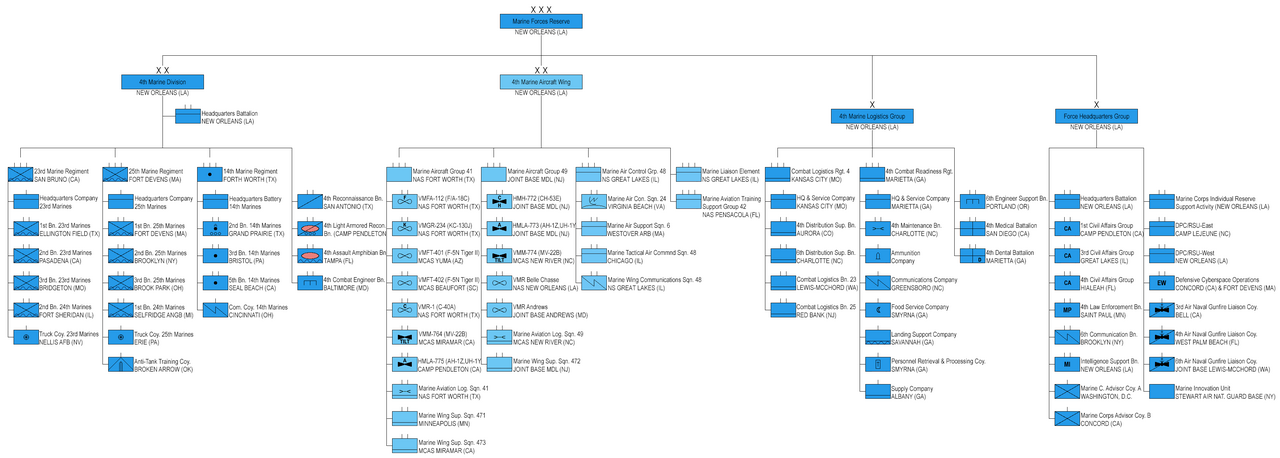
To ensure combat readiness, the Marine Forces Reserve is organized into several specialized combat elements:
- Ground Combat Element: 4th Marine Division
- Aviation Combat Element: 4th Marine Aircraft Wing
- Logistics Combat Element: 4th Marine Logistics Group
- Force Headquarters Group
- Marine Forces Reserve Band
When mobilized, reserve units utilize infrastructure through Reserve Support Units (RSU) located at various major bases, including Lejeune, Pendleton, Miramar, Quantico, and Twentynine Palms.
| Category | Details |
|---|---|
| Branch | United States Marine Corps |
| Parent Organization | U.S. Department of the Navy |
| Commanding Officer | LtGen Len Anderson IV |
| Major Engagements | WWI, WWII, Korean War, Desert Storm, Enduring Freedom, Iraqi Freedom |
Enlistment and Commissioning Paths
Enlistment Process
Enlisting in the Marine Forces Reserve follows a process similar to the active-duty Marine Corps. Candidates must pass the ASVAB (Armed Services Vocational Aptitude Battery), a comprehensive physical exam, and a formal swearing-in. Recruits may enter through the Delayed Entry Program (DEP).
After completing recruit training and earning the title of United States Marine, recruits undergo training at the School of Infantry (SOI) and receive their specific Military Occupational Specialty (MOS)—the specialized job code for their role. To support recruitment, the Select Reserve Incentive Program (SRIP) offers enlistment bonuses for certain needed MOSs.
Officer Commissioning
For college graduates, the Reserve Officer Commissioning Program (ROCP) provides a direct path to becoming a Marine officer. After selection via a regional Officer Selection Office (OSO), candidates attend Officer Candidates School (OCS) at Quantico, Virginia. Following a 10-week course, they are commissioned as Second Lieutenants and attend The Basic School (TBS) for foundational training.
Experienced enlisted Marines may also have the opportunity to earn a commission through the Reserve Enlisted Commissioning Program (RECP).
Service Terms and Obligations
All reservists contract for eight-year terms. Upon signing, they must choose one of three service options:
- 6x2: 6 years drilling with an SMCR unit and 2 years in the IRR. This is the most common option and the only one that makes reservists eligible for Montgomery GI Bill benefits (unless they complete active duty).
- 5x3: 5 years drilling with an SMCR unit and 3 years in the IRR.
- 4x4: 4 years drilling with an SMCR unit and 4 years in the IRR. This option is popular among officers.
It is also possible for reservists to serve simultaneously in the Marine Corps Reserve and their state's naval militia. However, if called into federal service, they are relieved from their naval militia duties until released from active duty.
Frequently Asked Questions
What is the difference between SMCR and IRR?
The Selected Marine Corps Reserve (SMCR) consists of Marines in drilling units who meet monthly and annual training requirements. The Individual Ready Reserve (IRR) consists of Marines who have completed their drilling obligations but remain on record to be mobilized during emergencies.
Do Reserve Marines receive the same training as active-duty Marines?
Yes. Marines in the Reserve undergo the same training and work in the same Military Occupational Specialties (MOS) as their active-duty counterparts.
How can a college graduate join the Marine Corps Reserve as an officer?
Graduates can use the Reserve Officer Commissioning Program (ROCP). This involves selection through an Officer Selection Office, attending Officer Candidates School (OCS), and completing The Basic School (TBS) at Quantico.
Can an enlisted Marine become an officer in the Reserves?
Yes, enlisted Marines can receive a commission through the Reserve Enlisted Commissioning Program (RECP) after serving several years and attaining leadership rank.
What are the service term options for a reservist?
Reservists sign eight-year contracts. The most common is the 6x2 option (6 years drilling, 2 years IRR), but they can also choose the 5x3 or 4x4 options.