TURKPA Missions and Organizational Structure
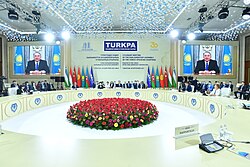
The Turkic Parliamentary Assembly (TURKPA) serves as a vital platform for cooperation among its member states, focusing on democratic integrity and regional development. Since 2010, one of the organization's primary functions has been the deployment of observation missions to ensure the legitimacy of democratic processes within its member nations.
Election Observation Missions
TURKPA actively monitors presidential and parliamentary elections, as well as referendums, across its member countries: Azerbaijan, Kazakhstan, Kyrgyzstan, and Turkey. These missions are composed of members of parliament from the respective member states and representatives from the TURKPA Secretariat.
To ensure a comprehensive evaluation, the observation missions engage in high-level diplomacy and ground-level monitoring. This includes meetings with government officials and high-ranking members of the Central Election Commission—the body responsible for managing the electoral process.
The monitoring process is exhaustive, covering all stages of the voting cycle. Observers visit polling stations to assess preparation, interview voters and polling station representatives, and consult with officials from various public and political organizations.
Standards of Observation
To maintain international credibility, TURKPA observers adhere to strict principles of objectivity, justness, transparency, and impartiality. These standards are guided by several key international frameworks:
- The Code of Conduct for International Observers, approved by the United Nations in 2005.
- Recommendations from the Venice Commission of the Council of Europe, which provides legal advice on constitutional matters.
- Other established international legal instruments.
Upon the conclusion of the elections or referendums, the observation missions hold press conferences to share their findings and conclusions with the public.
Organizational Structure: Permanent Commissions
Beyond election monitoring, TURKPA operates through four permanent commissions designed to address specific regional challenges and foster cooperation.
| Commission Name | Focus Area | Notes |
|---|---|---|
| Legal Affairs and International Relations | Law and Diplomacy | Merged in 2014 |
| Social, Cultural and Humanitarian Affairs | Society and Culture | Permanent |
| Economic Cooperation | Trade and Finance | Renamed from Economic, Trade and Financial Affairs |
| Environment, Natural Resources and Health Protection | Ecology and Public Health | Created in 2014 as Environment and Natural Resources |
Key Facts
- Member States: Azerbaijan, Kazakhstan, Kyrgyzstan, and Turkey.
- Observation Start Date: Election and referendum monitoring began in 2010.
- Compliance: Missions follow UN and Venice Commission guidelines.
- Structure: Four permanent commissions covering legal, social, economic, and environmental sectors.
Frequently Asked Questions
Which countries are members of TURKPA?
The member states of TURKPA are Azerbaijan, Kazakhstan, Kyrgyzstan, and Turkey.
What types of electoral events does TURKPA observe?
TURKPA missions observe presidential elections, parliamentary elections, and referendums.
Who participates in the TURKPA observation missions?
The missions consist of members of parliament from TURKPA member states and representatives from the TURKPA Secretariat.
What international standards do TURKPA observers follow?
Observers follow the UN's 2005 Code of Conduct for International Observers, the recommendations of the Venice Commission of the Council of Europe, and other international legal instruments.
How many permanent commissions does TURKPA have?
TURKPA has four permanent commissions focusing on Legal Affairs and International Relations; Social, Cultural and Humanitarian Affairs; Economic Cooperation; and Environment, Natural Resources and Health Protection.