Tunisia National Football Team: The Legacy of the Eagles of Carthage
Known affectionately as the Eagles of Carthage, the Tunisia national football team stands as one of the most storied programs in African football. From its early days under a French protectorate to becoming a dominant force in the Confederation of African Football (CAF), Tunisia has consistently represented the spirit and ambition of its nation on the global stage.
The team's journey is marked by periods of immense triumph, including continental championships, and eras of rebuilding. With a rich history of tactical discipline and passionate support, the Eagles of Carthage continue to strive for excellence in the FIFA World Cup and the Africa Cup of Nations (AFCON).
Key Facts
- Nickname: Eagles of Carthage (نسور قرطاج).
- Major Honors: Africa Cup of Nations Champions (2004), African Nations Championship Champions (2011), and Arab Cup Champions (1963).
- World Cup Presence: 7 appearances, debuting in 1978.
- All-Time Appearance Leader: Radhi Jaïdi with 105 caps.
- All-Time Top Scorer: Issam Jemâa with 36 goals.
- Highest FIFA Ranking: 12th (as of July 20, 2026).
Historical Evolution

Early Years and Independence (1928–1962)
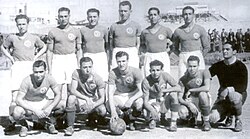
Football in Tunisia began during the French protectorate era. Following independence, the team entered the international arena, playing its first official international match on June 2, 1957, securing a 4–2 victory over Libya in Tunis.
The Golden Generation and World Cup Debut (1962–1978)
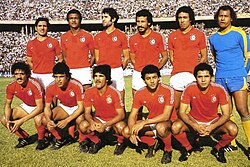
The period leading up to 1978 saw the rise of a golden generation. This era culminated in Tunisia's first-ever FIFA World Cup appearance in 1978, marking the country's arrival as a global competitor.
Fluctuation and Resurgence (1978–2002)
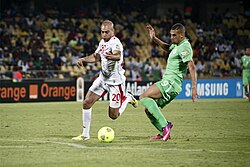
Following their initial success, the team faced a period of decline, missing six editions of the AFCON. However, a resurgence began in the mid-1990s, highlighted by a second-place finish at the 1996 AFCON in South Africa.
The Lemerre Era and Continental Glory (2002–2008)
Under the guidance of Roger Lemerre, Tunisia reached its zenith in 2004, winning the Africa Cup of Nations. This era solidified Tunisia's status as a powerhouse in African football.
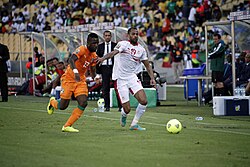
Modern Era and Recent Challenges (2008–Present)
The last two decades have seen a mix of renaissance and struggle. Tunisia returned to the World Cup in 2018 and 2022, showing resilience on the world stage. However, since 2023, the team has encountered difficulties and a period of decline in performance.
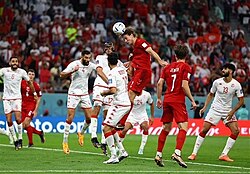
Tournament Performance Summary

Tunisia has competed in a wide array of international tournaments, from the prestigious FIFA World Cup to regional competitions like the Arab Cup and the African Games.
| Competition | Appearances | Best Result | Year of Best Result |
|---|---|---|---|
| FIFA World Cup | 7 | Group Stage | 1978, 1998, 2002, 2006, 2018, 2022, 2026 |
| Africa Cup of Nations | 22 | Champions | 2004 |
| African Nations Championship | 2 | Champions | 2011 |
| Arab Cup | 4 | Champions | 1963 |
| FIFA Confederations Cup | 1 | Group Stage | 2005 |
Global Reach and Match History

Tunisia has faced a diverse range of opponents globally. Their match history reflects a strong presence in Africa and frequent encounters with European powerhouses.
![Map of teams played against Tunisia by number of matches:[note 8] 1 Match 2–4 Matches 5–9 Matches 10–20 Matches 20–49 Matches +50 Matches](/images/3a/75/3a75a8ed1431bece5112eef91a02b7f5665eb079b3e779e7862bac05db3a88fc.png)
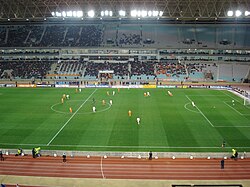
Recent fixtures have seen the team competing in high-stakes World Cup qualifiers and friendly matches against nations such as Belgium, Denmark, and Jordan, often utilizing the Hammadi Agrebi Stadium as their primary home ground.

Frequently Asked Questions
Who is the most capped player for Tunisia?
Radhi Jaïdi holds the record for the most appearances for the Tunisia national team, with a total of 105 caps.
When did Tunisia win the Africa Cup of Nations?
Tunisia won the Africa Cup of Nations in 2004, marking their greatest achievement in continental football.
How many times has Tunisia qualified for the FIFA World Cup?
Tunisia has qualified for the FIFA World Cup 7 times, with their first appearance occurring in 1978.
Who is the all-time leading goalscorer for the Eagles of Carthage?
Issam Jemâa is the team's all-time leading scorer, having netted 36 goals for the national side.
What is the significance of the nickname "Eagles of Carthage"?
The nickname refers to the ancient city of Carthage, a powerful civilization in Tunisia's history, symbolizing strength and nobility.