Tulane Green Wave Athletics: History, Traditions, and Triumphs
Based in the vibrant city of New Orleans, Louisiana, the Tulane Green Wave represents the athletic spirit of Tulane University. Competing primarily in the American Athletic Conference (The American) within NCAA Division I, the Green Wave manages 14 varsity teams across a diverse array of sports. From the roar of the crowd at Yulman Stadium to the historic courts of Devlin Fieldhouse, Tulane athletics blends a rich historical legacy with a modern commitment to academic and athletic excellence.
The university's identity is defined by its striking olive green and sky blue colors and its official mascot, Riptide. The athletic programs are supported by deep-rooted traditions, including the fight song "The Olive and the Blue" and the spirited cheer known as "The Hullabaloo."
Key Facts
- Primary Conference: The American (FBS for football).
- Associate Conference: Conference USA (CUSA) for beach volleyball and bowling.
- Home Stadiums: Yulman Stadium (Football), Avron B. Fogelman Arena in Devlin Fieldhouse (Basketball/Volleyball), and Greer Field at Turchin Stadium (Baseball).
- Notable Achievement: 1959 NCAA Tennis Team Championship.
- Athletic Director: David Harris.
The Evolution of the Green Wave Identity
The nickname "Green Wave" was not always the standard. From 1893 to 1919, Tulane teams were officially known as "The Olive and Blue." In 1919, the Tulane Weekly began using the unofficial moniker "Greenbacks," which eventually evolved into "Greenies." The current identity was solidified during the 1920 season after a song titled "The Rolling Green Wave" was published in the Tulane Hullabaloo.
The visual identity also evolved over time. While "Greenie," a mischievous boy, served as an unofficial mascot from 1945 to 1969, the university sought a more formal image in 1963. They commissioned commercial artist Art Evans—who also designed mascots for Purdue and USC—to create the anthropomorphic wave-crest adopted in 1964.
Historical Journey and Conference Affiliations
The SEC Era and Deemphasis
Tulane was a charter member of the Southeastern Conference (SEC) in 1932. This era saw significant success, particularly in men's tennis with 18 conference championships and football titles in 1934, 1939, and 1949. However, in 1951, President Rufus Carrollton Harris initiated a deemphasis of athletics to prioritize academics. This policy reduced football scholarships from 100 to 75 and reclassified physical education as an academic minor, requiring athletes to pursue full bachelor's degrees.
This shift led to a period of struggle on the field. Between 1952 and 1965, the football team averaged fewer than three wins per season. By 1966, Tulane officially left the SEC, a move driven by a desire to transition from a regional to a national university and to schedule games across the country.
Modern Era and Reform
Following a period of independence and a stint in the Metro Conference, Tulane joined Conference USA in 1996 for all sports. In 2014, the university moved to the American Athletic Conference. The program has also faced internal challenges, including a 2003 debate over the financial viability of Division I football. This led to a comprehensive review that reaffirmed the university's commitment to Division I athletics while focusing on graduation rates and financial sustainability.
Sport-Specific Highlights
Football and Baseball
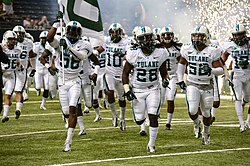
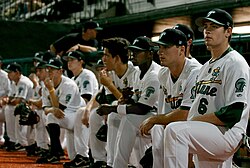
Established in 1893, the football program has won 10 conference championships and appeared in 12 postseason bowl games. They currently play at Yulman Stadium, which was funded through the "Home Field Advantage" campaign. The baseball program has also seen significant success, claiming six conference championships and ten tournament titles.
Basketball and Other Varsity Sports
The men's basketball team (est. 1905) and the women's team both compete in the Avron B. Fogelman Arena in Devlin Fieldhouse, the 9th-oldest active basketball venue in the U.S. The women's program, coached by Lisa Stockton since 1995, has made 10 NCAA tournament appearances. Other standout programs include sailing, which has secured nine national titles, and women's golf, with seven conference championships.
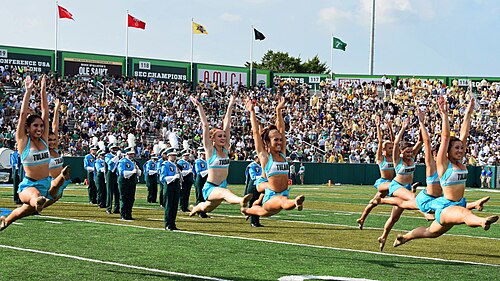
Athletic Summary Table
| Category | Details |
|---|---|
| NCAA Division | Division I (FBS) |
| Primary Colors | Olive Green and Sky Blue |
| Varsity Teams | 14 |
| Key Venues | Yulman Stadium, Devlin Fieldhouse, Turchin Stadium |
| National Titles | Tennis (1), Sailing (9), Women's Rugby (1) |
Resilience and Recovery
The Green Wave's fortitude was most evident following Hurricane Katrina. The 2005 football team received the Disney Wide World of Sports Spirit Award and the FWAA Annual Courage Award for their perseverance. While some sports were temporarily suspended as part of the university's Renewal Plan, Tulane returned to a full complement of 16 teams by the 2011–12 school year.
Frequently Asked Questions
Why did Tulane leave the SEC?
Tulane left the SEC in 1966 to pursue a more national identity. The university believed that athletic independence would allow them to play a national schedule, reflecting their transition from a regional to a nationally renowned institution.
What is the significance of the "deemphasis" period?
Starting in 1951, President Rufus Carrollton Harris reduced athletic scholarships and increased academic requirements for athletes. While this led to a decline in football competitiveness for several years, it reinforced the university's commitment to academic degrees over athletic specialization.
Where do the basketball teams play?
Both the men's and women's basketball teams play at the Avron B. Fogelman Arena in Devlin Fieldhouse, which is one of the oldest active basketball venues in the United States.
How was Yulman Stadium funded?
Yulman Stadium was funded through the "Home Field Advantage" campaign, which raised $73 million through private donations spearheaded by the Green Wave Club in 2011.
Which sports have won the most national titles?
Sailing is the most decorated program in terms of national titles, with nine championships bestowed by the Inter-Collegiate Sailing Association and other sailing bodies.