Troy Weight: The Standard for Precious Metals
In the world of gold, silver, and platinum, not all ounces are created equal. While most people are familiar with the standard ounce used in cooking or shipping, the industry relies on a specialized system known as troy weight. This system provides the precision necessary for trading high-value materials where even a fraction of a gram can represent a significant difference in value.
The most ubiquitous unit in this system is the troy ounce (oz t), which serves as the global benchmark for precious metals. Unlike the common avoirdupois ounce, the troy ounce is heavier, weighing exactly 31.1034768 grams.
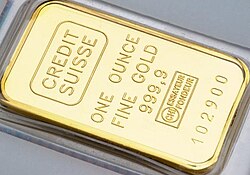
Key Facts
- Primary Use: The standard for measuring precious metals in industry and trade.
- Troy Ounce Mass: Exactly 31.1034768 grams.
- Troy Pound Composition: Consists of 12 troy ounces (unlike the 16 ounces in a standard pound).
- The Grain: The only unit shared between troy, avoirdupois, and apothecaries' systems.
- Legal Status: In the UK, the troy ounce is the only troy unit permitted for trade, exclusively for precious metals.
The Origins and Etymology of Troy Weight
The exact origins of the troy system are shrouded in uncertainty, but it is widely believed to be named after the French market town of Troyes. During the early 9th century, English merchants traded at the Champagne fairs in Troyes, adopting the local standards. The term "troy" first appeared in written records in 1390 in an account of the travels of the Earl of Derby.
An alternative theory proposed by historian Charles Moore Watson suggests the name derives from the word tron, referring to a market or a place of weighing. This distinguishes it from avoirdupois, which was used for bulk goods like coal or corn. While bulk goods were often weighed using a steelyard (a type of balance), precious goods like bullion and drugs were weighed using a balance scale.
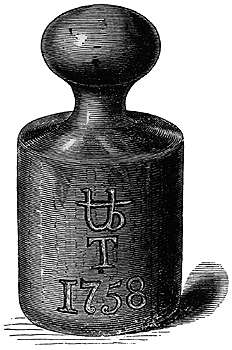
Historical Evolution
The troy system shares indirect roots with the Roman monetary system. Early Romans used bronze bars called aes grave ("heavy bronze") as currency. One-twelfth of an aes grave was an uncia, the ancestor of the modern "ounce."
By the 15th century, troy weights were in use in England, and they became the official standard for gold and silver in 1527. The system was later integrated into the British Imperial system of weights and measures established in 1824. In the United States, the British Imperial troy ounce was adopted as the official weight standard for coinage via an act of Congress on May 19, 1828.
Historically, the troy ounce and grain were also utilized in the apothecaries' system for medicinal measurements, though this has largely been replaced by the metric system (milligrams) in modern medicine.
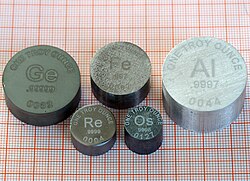
Understanding the Units of Measurement
The troy system is hierarchical, moving from the smallest unit of the grain up to the troy pound. It is important to note that while the grain is identical across different systems, the larger units diverge significantly from the common avoirdupois system.
The Troy Pound (lb t)
A troy pound consists of 12 troy ounces, totaling 5,760 grains or approximately 373.24 grams. This makes the troy pound significantly lighter than the avoirdupois pound (which contains 16 ounces and weighs approximately 453.59 grams).
The Troy Ounce (oz t)
The troy ounce is composed of 480 grains. Because the avoirdupois ounce contains only 437.5 grains, a troy ounce is roughly 9.7% heavier. In the European Union, directive 80/181/EEC allows the troy ounce to be approximated as 31.10 g for trading purposes.
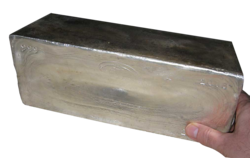
The Pennyweight (dwt)
The pennyweight is a smaller division used frequently in jewelry. One pennyweight equals 24 grains, and 20 pennyweights make up one troy ounce. The symbol "dwt" derives from denarius, an ancient Roman coin.

Troy Weight Conversion Summary
The following table provides the exact conversions for the primary units within the troy system.
| Unit | Grains | Grams (Exact) |
|---|---|---|
| Troy pound (12 oz t) | 5,760 | 373.2417216 |
| Troy ounce (20 dwt) | 480 | 31.1034768 |
| Pennyweight (dwt) | 24 | 1.55517384 |
| Grain | 1 | 0.06479891 |
Frequently Asked Questions
Is a troy ounce the same as a regular ounce?
No. A troy ounce (31.10 g) is heavier than a standard avoirdupois ounce (approximately 28.35 g). The troy ounce is used specifically for precious metals.
Why does a troy pound only have 12 ounces?
The troy system follows a duodecimal (base-12) structure for its pound, whereas the avoirdupois system uses a hexadecimal (base-16) structure. This makes the troy pound lighter than the standard pound.
What is a pennyweight?
A pennyweight (dwt) is a unit of mass equal to 24 grains. There are 20 pennyweights in one troy ounce.
Is the troy system still used today?
Yes, it remains the global standard for precious metal markets. While many countries use the International System of Units (SI) for other measurements, gold and silver are still predominantly traded in troy ounces.
What is the relationship between the grain and other systems?
The grain is a universal unit of mass. It is identical in the troy, avoirdupois, and apothecaries' systems, weighing exactly 64.79891 milligrams.