Trenton, New Jersey: The Capital City and Turning Point of the Revolution
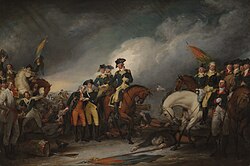
Located in the heart of Mercer County, Trenton serves as the state capital of New Jersey. Known by the nicknames "The Capital City" and "Turning Point of the Revolution," Trenton is a city defined by its deep historical roots, its role in the American Revolutionary War, and its industrial legacy, encapsulated in the city motto: "Trenton Makes, The World Takes." Founded on June 3, 1719, and named after William Trent, the city has evolved from a colonial settlement into a vital political and transportation hub.
Key Facts
- State Capital: Trenton is the seat of government for New Jersey.
- Historical Significance: Recognized as a pivotal site during the American Revolution.
- Population: 90,871 residents as of the 2020 Census.
- Geography: Situated along the Delaware River with a total area of 8.20 square miles.
- Government: Operates under a Faulkner Act form of government, led by Mayor Reed Gusciora.
Geography and Urban Layout
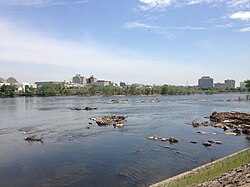
Trenton is positioned at 40°13′13″N 74°45′57″W, with an elevation of 59 feet. The city's geography is heavily influenced by its proximity to the Delaware River, which provides both scenic beauty and historical strategic value.
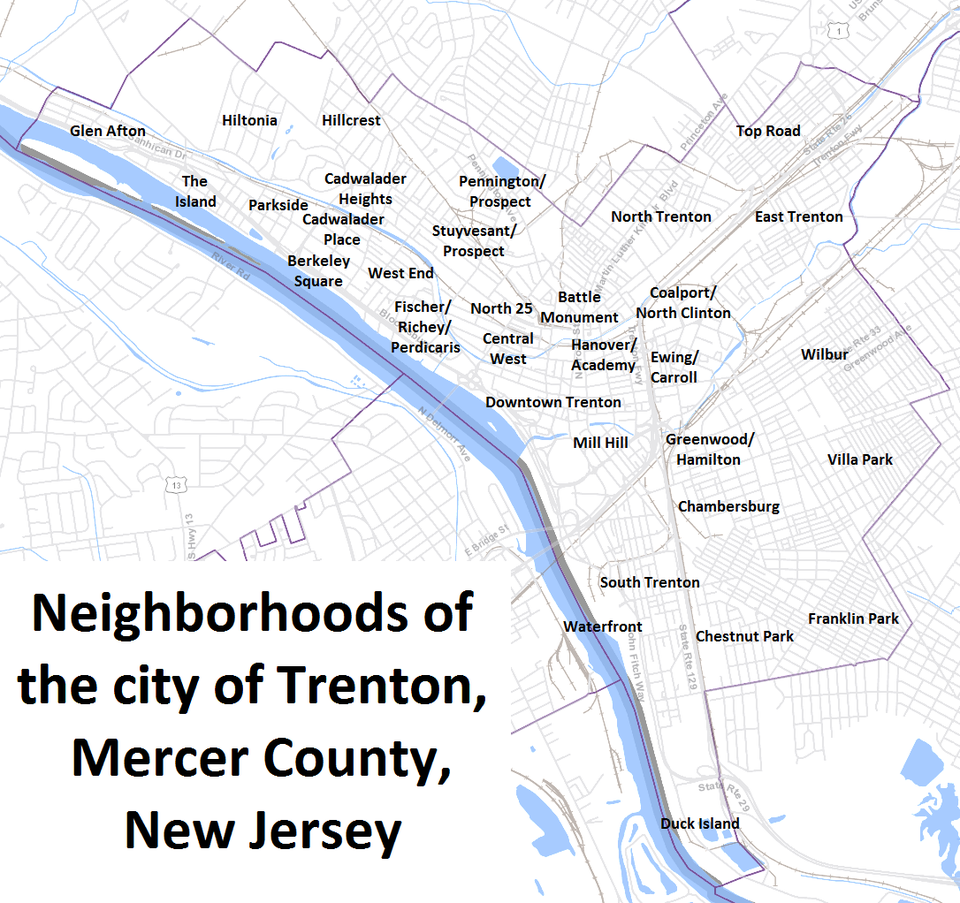
The city is divided into numerous distinct neighborhoods, reflecting its diverse urban fabric. These include the Mill Hill Historic District, Downtown Trenton, Cadwalader Heights, and the Waterfront. Other notable areas include the West End, South Trenton, and North Trenton, each contributing to the city's unique character.
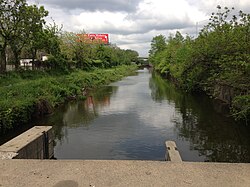
Waterways and infrastructure further define the landscape, including the Delaware and Raritan Canal, which flows under Mulberry Street, and the iconic Lower Trenton Bridge, affectionately known by locals as the "Trenton Makes Bridge."
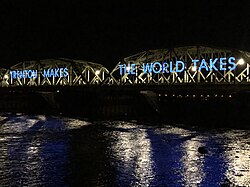
Government and Landmarks
As the state capital, Trenton is home to the New Jersey State House, the center of state legislative and executive power. Local governance is centered at Trenton City Hall, the seat of the municipal government.
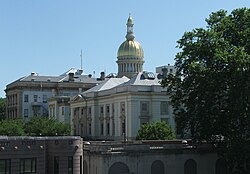
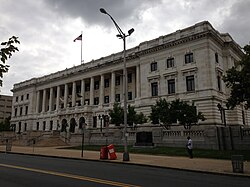
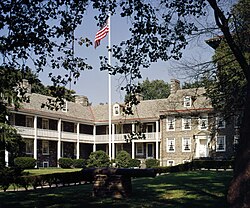
Beyond political buildings, the city boasts several cultural landmarks. The Trenton City Museum is located within the Ellarslie Mansion in Cadwalader Park, offering a glimpse into the region's heritage. Other significant sites include the Trenton War Memorial and the Broad Street National Bank.
Demographics and Population Trends
Trenton's population has seen significant fluctuations over the centuries. After a period of rapid growth peaking in the mid-20th century at over 128,000 residents in 1950, the population declined through the 1980s and 90s before stabilizing. According to the 2020 Census, the population stood at 90,871, with a 2023 estimate of 89,620.
The city is characterized by a rich ethnic diversity. As of 2020, the Hispanic or Latino population represents 45.0% of the residents, with significant ancestry from Guatemala and Puerto Rico. The Black or African American community makes up 43.7% of the population.
| Category | Data (2020 Census) |
|---|---|
| Total Population | 90,871 |
| Population Density | 11,989.8 per sq mi |
| Hispanic or Latino (Any Race) | 45.0% |
| Black or African American | 43.7% |
| White | 13.2% |
| Land Area | 7.61 sq mi |
Climate
Trenton experiences a temperate climate with distinct seasonal changes. The city sees its highest average temperatures in July, with a mean maximum of 86.0°F, and its lowest in January, with a mean daily minimum of 24.3°F. Annual precipitation averages 45.47 inches, distributed relatively evenly throughout the year, with snowfall occurring primarily from November through March.
Education and Infrastructure
The city provides a comprehensive public education system, ranging from early childhood learning centers to high schools. Trenton Central High School is the largest secondary institution, serving over 2,200 students. The city also hosts various intermediate and middle schools, such as the Arthur J. Holland and Dr. MLK Jr. Middle Schools.
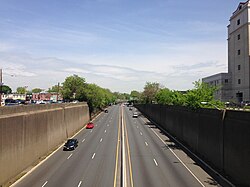
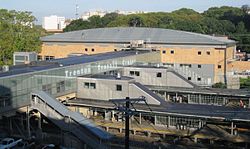
Transportation is a cornerstone of Trenton's connectivity. The Trenton Transit Center is a major hub serving Amtrak, NJ Transit, and SEPTA, linking the city to the broader Northeast Corridor. Major roadways, including U.S. Route 1, facilitate heavy traffic through the downtown area.
Sports and Recreation
Trenton has a vibrant sports history and current scene. The Trenton Thunder (MLB Draft League) plays at the Trenton Thunder Ballpark, and the Trenton Ironhawks (ECHL) are scheduled to begin play in 2026 at the CURE Insurance Arena. Historically, the city hosted teams like the Cuban Giants of the Negro Leagues and the Trenton Titans.
Frequently Asked Questions
What is the significance of the motto "Trenton Makes, The World Takes"?
The motto reflects Trenton's historical status as a major industrial center, highlighting the city's role in manufacturing goods that were distributed globally.
Who is the current mayor of Trenton?
The current mayor is Reed Gusciora, whose term is set to end on December 31, 2026.
What are the primary transportation options in Trenton?
Trenton is highly accessible via the Trenton Transit Center, which provides services through Amtrak, NJ Transit, and SEPTA, as well as major roads like U.S. Route 1.
Which major historical event earned Trenton the nickname "Turning Point of the Revolution"?
The nickname refers to the city's critical role during the American Revolutionary War, most notably the capture of the Hessians on December 26, 1776.
What is the largest high school in the Trenton public school system?
Trenton Central High School is the largest, with an enrollment of 2,255 students for the 2022–23 period.