Trawler Types: A Comprehensive Guide to Fishing Vessel Classifications
Trawlers are specialized fishing vessels designed to pull a trawl—a large net—through the water to capture fish and other marine life. Because the ocean is diverse, these vessels vary significantly in design. While they can be categorized by their geographical origin, the type of fish they target, or their architecture, the Food and Agriculture Organization (FAO) primarily classifies trawlers based on the gear they utilize.
From small shrimp boats to massive industrial factory ships, the design of a trawler is dictated by where the net is deployed and how the catch is handled. Understanding these distinctions provides insight into the mechanics of global commercial fishing.
![Trawler classifion by the type of gear and standard length [20]](/images/66/0d/660dd78cdf05305c69479b77e22c0b103e0ff770ab7666fae35802555b196d21.png)
Key Facts
- Classification: The FAO categorizes trawlers primarily by the type of fishing gear used.
- Deployment: Nets can be deployed from the sides (side trawlers), the rear (stern trawlers), or via booms (outrigger trawlers).
- Preservation: Vessels are divided into wet fish trawlers (ice-preserved) and freezer trawlers (frozen at sea).
- Safety: Bottom trawlers often have engine power restricted to 2000 HP (1472 kW) to prevent capsizing during gear snags.
- Versatility: Some vessels, known as trawler/purse seiners, can switch between trawling and purse seining methods.
Outrigger and Beam Trawlers
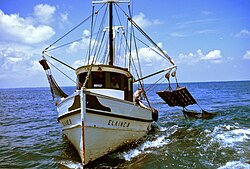
Outrigger trawlers utilize booms, known as outriggers, to tow their nets. These booms are typically attached to the mast and extend over the sides of the ship. Depending on the configuration, they can deploy a single otter trawl or a twin trawl on each side. These vessels use warp winches with capstans to haul in the catch.
When the superstructure is located forward and the working deck is aft, these vessels are frequently used for shrimp fishing. In this setup, the towing winch is positioned behind the superstructure, feeding warps to bollards and then to the outrigger blocks.
Beam Trawlers
A specific subset of the outrigger category is the beam trawler. These vessels feature an aft superstructure and a midship working deck. They use exceptionally strong outrigger booms to tow a beam trawl—a net held open by a rigid beam. This design is common in North Sea flatfish fisheries.
Beam trawlers are high-powered, medium-sized vessels capable of towing gear at speeds up to 8 knots. To ensure safety, they often employ winch brakes and safety release systems in the boom stays to prevent the vessel from capsizing if the gear snags on the seabed.
Otter, Pair, and Side Trawlers
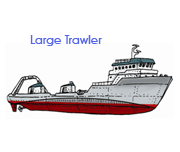
Otter trawlers use otter boards—heavy plates that act as underwater parachutes to keep the mouth of the net open horizontally. These can be used for bottom trawling or midwater (pelagic) fishing. They range in size from small sailing canoes to massive supertrawlers.
Most otter trawlers feature gallows at the stern with towing blocks. Larger versions typically include a stern ramp to facilitate hauling the net onto the deck. Some may also use fish pumps to empty the cod end (the back end of the net where fish collect).
Pair Trawlers
Pair trawlers consist of two vessels working in tandem to tow a single large trawl. Instead of using otter boards, the two ships maintain a specific distance from one another to keep the net open. They are used for both bottom and midwater fishing, with the working deck located aft.
Side Trawlers
Historically dominant in the North Atlantic until the late 1960s, side trawlers deploy their nets over the side of the vessel. The warps pass through blocks suspended from forward and aft gallows. While mostly replaced by stern trawlers, some remaining side trawlers have been modernized with net drums.
Stern Trawlers and Specialized Vessels
Stern trawlers are the modern standard, deploying and retrieving nets from the rear of the ship. This design allows them to operate in a wider variety of weather conditions. While larger stern trawlers use a ramp, smaller or pelagic versions may omit one.
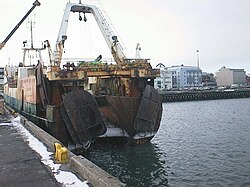
Stern trawlers are further categorized by how they handle their catch:
- Wet Fish Trawlers: Store fish in boxes covered with ice or in refrigerated seawater. They must stay close to port due to the limited shelf life of the catch.
- Freezer Trawlers: Equipped with onboard freezing facilities, allowing them to remain at sea for long periods.
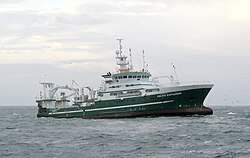
- Factory Trawlers: Advanced vessels that process the catch immediately after hauling.
Hybrid and Naval Trawlers
Some vessels are designed as trawler/purse seiners. These ships feature flexible deck equipment and combination winches that allow them to switch between trawling and purse seining (a method of encircling fish with a net). Because trawling requires more power, these are usually classified as trawlers.
Additionally, during the World Wars, many countries utilized naval trawlers. These were either purpose-built or converted fishing vessels armed with naval guns and depth charges for minesweeping, patrolling, and escort duties.
Trawler Comparison Summary
| Trawler Type | Deployment Method | Key Feature | Primary Use/Context |
|---|---|---|---|
| Outrigger | Side Booms | Outrigger booms | Shrimp fishing |
| Beam | Side Booms | Rigid beam net | North Sea flatfish |
| Otter | Stern/Side | Otter boards | General bottom/midwater |
| Pair | Two Vessels | No otter boards | Large scale midwater/bottom |
| Side | Side | Side gallows | Historic North Atlantic |
| Stern | Stern | Stern ramp/gantry | Modern all-weather fishing |
Frequently Asked Questions
What is the difference between a wet fish trawler and a freezer trawler?
A wet fish trawler preserves fish using ice or refrigerated seawater and must return to port quickly. A freezer trawler has onboard freezing equipment, enabling it to stay at sea for much longer durations.
How do otter boards work?
Otter boards are heavy plates attached to the sides of the trawl. As the vessel moves forward, the water pressure against these boards forces them outward, keeping the mouth of the net open horizontally.
Why is engine power restricted on some bottom trawlers?
Engine power is often restricted to 2000 HP (1472 kW) to prevent the vessel from capsizing if the trawl gear becomes snagged on the sea floor.
What is a trawler/purse seiner?
It is a versatile vessel equipped with adjustable deck gear and winches that allow it to perform both trawling and purse seining operations.
What were naval trawlers used for?
Naval trawlers were fishing vessels converted for military use during the World Wars, serving as minesweepers, patrol boats, and escorts, often armed with guns and depth charges.