Toshiba MSX Computers: A Comprehensive Model History
During the 1980s, Toshiba played a significant role in the MSX ecosystem. MSX (Machines with Software eXchange) was a standardized home computer architecture designed to ensure software compatibility across different manufacturers. Toshiba's contribution to this standard was primarily seen through their HX series and the Pasopia IQ line, bringing standardized computing to markets across Asia and Europe.
The journey began in 1983 with the introduction of the HX-10 series. These early machines established Toshiba's presence in the MSX 1 market, offering a reliable platform for users in Japan and eventually expanding into various European territories.
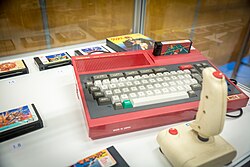
Key Facts
- Standardization: All listed models adhere to either the MSX 1 or MSX 2 hardware standards.
- Branding: Many Japanese models were marketed under the Pasopia IQ brand name.
- Global Reach: Toshiba distributed MSX machines across Japan (JP), Belgium (BE), the Netherlands (NL), Spain (ES), France (FR), Italy (IT), Germany (DE), the United Kingdom (UK), Finland (FI), Switzerland (CH), and Argentina (AR).
- Evolution: The product line evolved from the basic MSX 1 standard in 1983 to the more advanced MSX 2 standard by 1985.
The Evolution of the HX Series
The MSX 1 Era (1983–1986)
The MSX 1 generation focused on accessibility and broad compatibility. The HX-10 series was the vanguard, with models like the HX-10D and HX-10S launching in Japan in 1983. By 1984, Toshiba aggressively expanded into Europe, releasing region-specific models such as the HX-10E for Spain, HX-10F for France, and HX-10I for Italy.
Following the HX-10, the HX-20 and HX-22 series provided further options for users. These models continued the MSX 1 legacy through 1986, including the HX-20AR released for the Argentinian market.
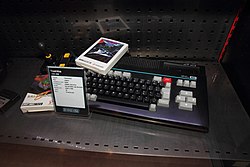
Transition to MSX 2 (1985–1986)
As computing needs grew, Toshiba transitioned to the MSX 2 standard, which offered enhanced graphical and sound capabilities. This era saw the release of the Pasopia IQ HX-23 and HX-33 in 1985. The transition culminated in models like the FS-TM1, released in Italy in 1986, marking the later stages of Toshiba's MSX production.
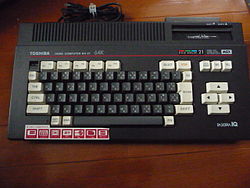
Toshiba MSX Model Summary
| Model | Year | Region | Compatibility |
|---|---|---|---|
| HX-10D / HX-10S (Pasopia IQ) | 1983 | JP | MSX 1 |
| HX-10AA / HX-10E / HX-10F / HX-10I / HX-10P / HX-10SF | 1984 | EU (BE, NL, ES, FR, IT, DE, UK, FI) | MSX 1 |
| HX-10DP / HX-10DPN / HX-10SA / HX-20 / HX-21 / HX-22 | 1984 | JP | MSX 1 |
| HX-20E / HX-20I / HX-21F / HX-22CH / HX-22GB / HX-22I | 1985 | EU (ES, IT, FR, CH, UK) | MSX 1 |
| HX-30 / HX-31 / HX-32 / HX-51 / HX-52 | 1985 | JP, ES, IT | MSX 1 |
| HX-20AR | 1986 | AR | MSX 1 |
| HX-23 / HX-23F / HX-33 / HX-34 (Pasopia IQ) | 1985 | JP | MSX 2 |
| FS-TM1 | 1986 | IT | MSX 2 |
Frequently Asked Questions
What was the Pasopia IQ?
Pasopia IQ was the branding used by Toshiba for many of its MSX compatible computers released in the Japanese market.
Which Toshiba models supported MSX 2?
The MSX 2 compatible models include the HX-23, HX-23F, HX-33, HX-34, and the FS-TM1.
In which countries were Toshiba MSX computers sold?
They were sold in Japan, Belgium, the Netherlands, Spain, France, Italy, Germany, the United Kingdom, Finland, Switzerland, and Argentina.
When did Toshiba first release an MSX computer?
Toshiba entered the MSX market in 1983 with the release of the HX-10D and HX-10S in Japan.
What is the difference between MSX 1 and MSX 2 in the Toshiba line?
MSX 1 models (like the HX-10 and HX-20 series) represent the original standard, while MSX 2 models (like the HX-23 and FS-TM1) provided updated hardware specifications for better performance and graphics.