Torres Women's Football Club: A History of Italian Dominance
From its humble beginnings in the local divisions of Sardinia to becoming a powerhouse of Italian football, Torres Women's Football Club has a legacy defined by rapid ascent and trophy-laden eras. Founded in 1980, the club evolved from a regional side into a national force, challenging the elite of women's football in Italy and Europe.
The Early Years and Rise to the Top
The club was established in 1980 as A.C.F. Delco Costruzioni of Sassari and was affiliated with the Federazione Italiana Calcio Femminile (FIGCF), Italy's autonomous women's football association. The team began its competitive journey in the 1981 season, starting in the local division of Serie C.
The late 1980s marked a turning point for the club, then known as CUS Sassari. After winning the Sardinian section of Serie C in 1989, the team earned promotion to Serie B. They maintained this momentum by winning the league again the following season, securing their first-ever promotion to Serie A.
The club's arrival at the top level was immediate and impactful. In the 1990–91 season, they captured their first Italian Women's Cup. This success culminated in the 1993–94 season when the prolific scoring of Carolina Morace led the team to their first Scudetto (the league championship title).
An Era of Trophies and Records
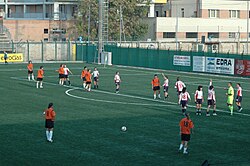
Between 1999 and 2005, Torres entered a golden age of dominance. During this six-year span, the club secured two league titles, four Italian Cups, two Italian Super Cups, and the Italy Women's Cup. The team's consistency was legendary, setting a record of 38 consecutive wins across official league and cup matches.
This domestic success translated to the international stage, as Torres became the first Italian team to participate in the UEFA Women's Cup, the predecessor to the modern UEFA Women's Champions League.
The success continued into 2008. Despite finishing second in the league, Torres claimed their seventh Italian Women's Cup by defeating Bardolino 1–0 in the second leg of the final, successfully overturning a 3–2 first-leg deficit. This era of victory was powered by the goal-scoring prowess of stars such as Rita Guarino, Pamela Conti, and Spanish forward Ángeles Parejo.
Peak Performance and European Ambitions
The 2009–10 season saw Torres dominate the league from the opening day to win their fourth Scudetto. While they secured the Super Cup, they fell short in the Italian Women's Cup final, though they reached the quarter-finals of the UEFA Women's Champions League.
The following year, 2010–11, was a landmark season as the club achieved a treble, winning the Super Cup, the Scudetto, and the Italian Women's Cup. They followed this with a double of the Scudetto and Super Cup in the subsequent season. By 2013, after retaining their league title, the International Federation of Football History & Statistics (IFFHS) ranked Torres as the fifth-best women's club in the world.
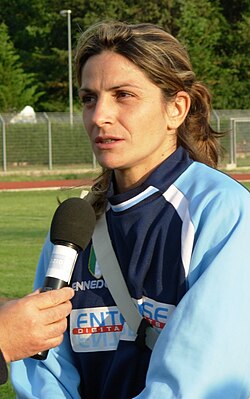
However, the 2013–14 season signaled a decline. Despite Patrizia Panico scoring over 40 league goals and the team winning the Super Cup, they finished as runners-up in both the league and the Italian Women's Cup. A heavy 12–1 aggregate defeat by Turbine Potsdam in the UEFA Women's Champions League quarter-finals left the season feeling underwhelming. Internal disputes regarding funding and strategic direction eventually led to the departures of president Leonardo Marras and coach Manuela Tesse in 2014.
Financial Struggles and Modern Recovery
In June 2014, the women's team was integrated into the structure of the Torres male club. This transition was fraught with difficulty; by September 2015, the club was denied a license for Serie A and excluded from the league. La Lega Nazionale Dilettanti, the governing body for women's football in Italy, required an upfront payment of half of a €90,000 debt, rejecting a repayment plan proposed by the male club's owners.
After a period of rebuilding, the club began its ascent once again. Following the 2020–21 season in Serie C (the third tier), Torres earned promotion back to Serie B in 2021.
Key Facts
- Founded: 1980 as A.C.F. Delco Costruzioni of Sassari.
- Major Records: Achieved a streak of 38 consecutive official match wins between 1999 and 2005.
- European Pioneer: First Italian team to compete in the UEFA Women's Cup.
- Global Ranking: Ranked 5th best women's club globally by IFFHS in 2013.
- Recent Status: Promoted to Serie B in 2021 after competing in Serie C.
| Competition | Notable Achievements |
|---|---|
| Scudetto (League) | Multiple titles, including 1993–94 and 2013 |
| Italian Women's Cup | At least 7 titles (including 1990–91 and 2008) |
| Italian Super Cup | Multiple titles, including a treble in 2010–11 |
| UEFA Women's Champions League | Multiple quarter-final appearances |
Frequently Asked Questions
When was Torres Women's Football Club founded?
The club was founded in 1980 as A.C.F. Delco Costruzioni of Sassari.
Who were some of the key players in the club's history?
Key players include Carolina Morace, who helped secure the first Scudetto, as well as Rita Guarino, Pamela Conti, Ángeles Parejo, and Patrizia Panico.
What is the club's most significant winning streak?
Between 1999 and 2005, Torres established a record of 38 consecutive wins in official league and Italian Cup matches.
Why was the club excluded from Serie A in 2015?
The club was refused a license due to a €90,000 debt. La Lega Nazionale Dilettanti rejected a proposed repayment plan and demanded half the debt be paid upfront.
What is the current status of the club's league standing?
After playing in Serie C during the 2020–21 season, the club earned promotion to Serie B in 2021.