Topeka Truck Series History: A Legacy of Racing
The history of the Truck Series at Topeka is a brief but intense chapter in motorsports, characterized by dominant performances, dramatic fuel failures, and strategic track changes. From its inception in the mid-1990s to its final event in 1999, the venue provided a unique challenge for drivers and teams alike.
The Early Years and Dominance
The inaugural race at Topeka took place on July 29, 1995. This event, known as the Heartland Tailgate 175, was a sponsorless race covering 175 kilometers (109 miles). Ron Hornaday Jr., driving the No. 16 Chevrolet for Dale Earnhardt, Inc., delivered a masterclass in performance. Starting from the pole position, Hornaday led every lap except two to secure the first-ever victory at the track.
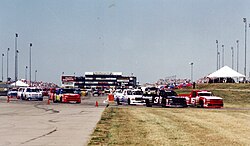
By 1996, the event grew in scale. Lund Look joined as the official sponsor, and the race distance was extended to 225 kilometers (140 miles). The 1996 race mirrored the first in its predictability; Mike Skinner, piloting the No. 3 Chevrolet for Richard Childress Racing, dominated the field by leading 70 of the 77 laps to claim victory.
Track Evolution and Dramatic Finishes
Following the 1996 season, the track underwent a significant reconfiguration, increasing its length from 1.8 miles (2.9 km) to 2.1 miles (3.4 km). Along with the physical changes to the circuit, the race distance was further increased to 275 kilometers (171 miles) for the 1997 event.
The 1997 race provided one of the most dramatic finishes in the track's history. While Joe Ruttman of Roush Racing started on the pole and eventually won in the No. 80 Ford, he led only five laps. The victory came unexpectedly when the leader, Jay Sauter, ran out of fuel on the final lap while attempting to secure a win for the No. 3 Chevrolet.
The 1998 race was equally unpredictable. Although Tom Hubert and Mike Bliss dominated much of the event, both suffered late-race engine failures. When Bliss' engine expired with only seven laps remaining, Stacy Compton took the lead in the No. 86 Ford for Impact Motorsports and held on to win.
The Final Chapter
The final race at Topeka occurred in 1999, with O'Reilly Auto Parts serving as the sponsor. The race distance was slightly reduced by six laps. Mike Bliss, driving the No. 99 Ford for Roush Racing, found redemption for his previous year's engine failure. After starting in 15th position, Bliss overtook Jay Sauter with six laps to go.
Bliss' victory was historic, as he became the only driver to win at Topeka after starting outside the top 10. Furthermore, this win established Roush Racing as the only team to achieve multiple victories at the venue.
In 2000, Topeka was removed from the schedule. This decision came as the Truck Series shifted its focus toward larger ovals, aligning more closely with the tracks used by the Winston Cup Series.
Key Facts
- First Winner: Ron Hornaday Jr. (1995).
- Most Successful Team: Roush Racing (only team with two wins).
- Track Change: Expanded from 1.8 miles to 2.1 miles after 1996.
- Unique Stat: Mike Bliss is the only winner to start outside the top 10 (15th).
- Final Race: Held in 1999 before the series moved to larger ovals.
| Year | Winner | Team/Vehicle | Distance | Notable Fact |
|---|---|---|---|---|
| 1995 | Ron Hornaday Jr. | Dale Earnhardt, Inc. (Chevrolet) | 175 km | Led all but two laps |
| 1996 | Mike Skinner | Richard Childress Racing (Chevrolet) | 225 km | Led 70 of 77 laps |
| 1997 | Joe Ruttman | Roush Racing (Ford) | 275 km | Leader ran out of gas on final lap |
| 1998 | Stacy Compton | Impact Motorsports (Ford) | 275 km | Won after leaders suffered engine failure |
| 1999 | Mike Bliss | Roush Racing (Ford) | ~270 km | Won from 15th starting position |
Frequently Asked Questions
Who was the first driver to win at Topeka?
Ron Hornaday Jr. won the first race on July 29, 1995, driving the No. 16 Chevrolet for Dale Earnhardt, Inc.
How did the track change over time?
After the 1996 race, the track was reconfigured and lengthened from 1.8 miles (2.9 km) to 2.1 miles (3.4 km).
Which team had the most success at Topeka?
Roush Racing was the most successful team, becoming the only organization to win twice at the track (1997 and 1999).
Why was Topeka removed from the Truck Series schedule?
Topeka was dropped in 2000 because the series began prioritizing larger ovals that were also utilized by the Winston Cup Series.
What was unique about Mike Bliss' 1999 victory?
Mike Bliss became the first and only driver to win at Topeka after starting the race from outside the top 10, specifically from 15th place.