Tomato Paste: Production, Varieties, and Culinary Uses
Tomato paste is a thick, rich concentrate created by cooking tomatoes for several hours to significantly reduce their water content. During the production process, seeds and skins are strained out, and the remaining liquid is cooked further until it reaches a dense consistency. This ingredient is prized in global cuisines for its ability to impart an intense tomato flavor to a wide variety of dishes.
While often confused with other tomato products, tomato paste is distinct from tomato purée, which has a thinner consistency, and tomato sauce, which is the thinnest of the three.
Key Facts
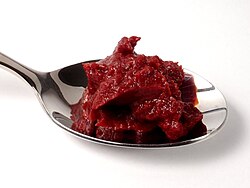
- Concentration: Made by reducing water content through prolonged cooking and straining seeds and skins.
- Flavor Profile: High in natural umami (a savory taste), influenced by the balance of fructose and citric acid.
- Culinary Use: Typically sautéed early in the cooking process to achieve caramelization.
- Industrial Standards: In the US, it is defined as concentrated tomato solids under 21 CFR 155.191.
History and Traditional Production
Tomato paste is a staple in many traditional cuisines. In Northern Italy, a historic method involved spreading a heavily reduced tomato sauce onto wooden boards. These boards were placed outdoors under the hot sun, allowing the sauce to dry into a thick paste that could be scraped up and stored as a dense mass.
Modern commercial production optimizes this process by selecting tomatoes with lower overall moisture and thicker pericarp walls (the outer wall of the fruit's ovary) to ensure a more efficient yield of solids.
Regional Differences and Standards
Production methods vary by region. In Iran, tomato paste is created by long-term cooking to reduce water, followed by the removal of skins and seeds and further reduction into a thick condiment.
In the United States, the product is strictly regulated as concentrated tomato solids. A key differentiator between paste and purée is the level of soluble solids. Tomato purée has a soluble solids cutoff of 24%. For context, fresh round tomatoes typically contain 3.5% to 5.5% soluble solids (measured as refractometric Brix), while cherry tomatoes contain roughly double that amount.
The Science of Flavor
The flavor of the paste is primarily determined by the concentrations of citric acid and fructose. The most desirable flavor profiles generally result from a combination of high sugar and high acid content, which can be influenced by the nutrition provided to the crops.
Culinary Applications and Manufacturing
Tomato paste is used to add depth and intensity to soups, pasta sauces, and braised meats. To maximize flavor, chefs often add the paste early in the cooking process, sautéing it to trigger caramelization.
Depending on the temperature used during manufacturing, the resulting paste serves different purposes:
- Hot break: Heated to approximately 100 °C (212 °F). This preserves pectin, resulting in a thicker paste ideal for ketchup.
- Warm break: Heated to about 79 °C (174 °F). This preserves flavor, though color is not as well preserved.
- Cold break: Heated to about 66 °C (151 °F). This preserves both color and flavor, making it suitable for reconstitution into tomato juice.
| Product | Consistency | Primary Characteristic |
|---|---|---|
| Tomato Paste | Thickest | Intense flavor, high soluble solids |
| Tomato Purée | Medium | Soluble solids cutoff at 24% |
| Tomato Sauce | Thinnest | Liquid consistency |
Frequently Asked Questions
What is the difference between tomato paste and tomato purée?
The primary difference is consistency and concentration. Tomato paste is a thicker, more concentrated version of tomato solids, whereas tomato purée is more liquid and has a lower requirement for soluble solids (cutoff at 24%).
Why is tomato paste sautéed during cooking?
Sautéing tomato paste early in the cooking process allows for caramelization, which enhances the depth of flavor and intensifies the natural umami of the tomatoes.
How does the "break" temperature affect the final product?
The temperature determines what is preserved: Hot break (100 °C) preserves pectin for thickness (ketchup); Warm break (79 °C) preserves flavor; and Cold break (66 °C) preserves both color and flavor for use in juices.
Which tomatoes are best for making paste?
Tomatoes with thick pericarp walls and lower moisture content, such as Roma tomatoes, are preferred because they produce a smoother product more quickly than juicier varieties.