Tom Catena: The Lone Surgeon of the Nuba Mountains
In the remote and conflict-ridden region of South Kordofan, one man provides a critical lifeline for hundreds of thousands of people. Dr. Tom Catena, known locally as "Dr. Tom," serves as the sole surgeon for a population of 750,000 in the Nuba Mountains of Sudan. His journey from a U.S. Navy flight surgeon to a dedicated missionary doctor is a testament to resilience and faith in the face of extreme adversity.
Key Facts
- Sole Surgeon: Catena is the only surgeon serving 750,000 people in his region.
- Massive Catchment: The Mother of Mercy Hospital covers an area roughly one-third the size of South Kordofan, comparable in size to Austria.
- Extreme Conditions: Patients often travel by foot or hitchhike for up to a week to receive care.
- High Volume: The hospital typically manages between 300 and 450 in-patients at any given time.
- Limited Resources: Due to government blockades, Catena sometimes relies on decades-old medical treatments.
Early Career and Medical Training
Tom Catena's commitment to global health began during his undergraduate years at Duke University, where he embarked on his first mission to Kenya in 1992. Following his graduation, he pursued a rigorous path of medical training and service. In 1993, he completed a one-year internal medicine internship at the Naval Medical Center San Diego before joining the U.S. Navy.
For four years, Catena served as a flight surgeon—a physician specializing in the health and safety of aviation personnel. This role included a posting at the Naval Support Facility Diego Garcia from 1994 to 1995. After leaving the Navy in 1997, he transitioned to family medicine, completing a postgraduate residency at Union Hospital in Terre Haute, Indiana. During this period, he maintained his commitment to humanitarian work through short-term medical missions to Guyana in 1997 and Honduras in 1998.
Missionary Work in Kenya
Upon finishing his residency in 1999, Catena dedicated himself to the Catholic Medical Mission Board (CMMB). He spent two and a half years as a missionary doctor at Our Lady of Lourdes Mutomo Hospital, located in the rural settlement of Mutomo, Kenya. His experience in East Africa continued from 2002 to 2007, during which he worked as a consultant at the private St Mary's Mission Hospital in Nairobi.
The Mother of Mercy Hospital in Sudan
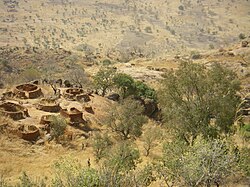
In 2007, Catena volunteered with CMMB to help the Roman Catholic Diocese of El Obeid establish the Mother of Mercy Hospital in the Nuba Mountains. Founded by Bishop Macram Max Gassis, the facility officially began operations in March 2008. The region has been plagued by active conflict since the mid-1980s, with only a brief window of peace between 2002 and early 2011.
The hospital treats a vast array of conditions, ranging from thyroid disease, cancer, and fractures to diarrhea. However, the war has brought an increase in patients suffering from malnourishment and injuries resulting from bombing attacks.
Overcoming Blockades and Danger
Operating in a region under a blockade by the Khartoum government, Catena faces immense challenges. While aid is not explicitly forbidden since 2012, the practical reality is that volunteers are often unable to travel into the region. Although organizations like Samaritan's Purse and German Emergency Doctors had a presence as of 2013, they did not employ trained medical doctors in the area.
The dangers are literal; in May 2014, the Sudanese Air Force used Sukhoi Su-24 fighter jets to bomb the hospital. While no one was injured, the facility now maintains foxholes—protective pits dug into the ground—where staff and patients can seek shelter during air raids.
Community Integration and Leadership
Despite earning only $350 a month and remaining on call 24/7, Catena has focused on sustainability by training local nurses and assistive personnel in Uganda, South Sudan, and Kenya. His dedication has earned him profound respect; a local Muslim chief once compared him to Jesus Christ for his tireless work healing the sick.
Beyond his clinical work, Catena is active in the global humanitarian community. Since 2016, he has served on the selection committee for the Gerson L'Chaim Prize for Outstanding Christian Medical Mission Service, and in 2018, he was appointed chair of the Aurora Humanitarian Initiative.
Summary of Dr. Catena's Impact
| Metric | Detail |
|---|---|
| Patient Population | 750,000 people |
| Catchment Area Size | Approx. 1/3 of South Kordofan (similar to Austria) |
| Average In-patients | 300 to 450 |
| Primary Challenges | Government blockades, air raids, lack of specialists |
| Staffing Strategy | Training local personnel in Kenya, South Sudan, and Uganda |
Frequently Asked Questions
What is the Mother of Mercy Hospital?
It is a medical facility in the Nuba Mountains of Sudan, established in 2007 by Bishop Macram Max Gassis and the Roman Catholic Diocese of El Obeid to provide essential healthcare to a conflict-affected population.
Why is Dr. Tom Catena's role so critical?
He is the only surgeon available for a population of 750,000 people across a vast area, meaning he is the sole provider of surgical interventions for the entire region.
How do patients reach the hospital?
Due to the remote location and lack of infrastructure, many patients must travel by foot or hitchhike, sometimes spending up to a week in transit to reach the facility.
What risks does the hospital face?
The hospital has been targeted by the Sudanese Air Force, specifically by Sukhoi Su-24 fighter jets, leading to the construction of foxholes for the safety of patients and staff.
What motivates Dr. Catena's work?
Dr. Catena credits his Catholic faith and finds inspiration in the life and teachings of St. Francis of Assisi.