Tolkien's Legendarium through the Lens of Tom Shippey
To understand the vast world of Middle-earth, one must first understand the mind of its creator, J.R.R. Tolkien. While many view Tolkien primarily as a novelist, he was first and foremost a philologist—a scholar of language and its historical development. This academic foundation is the central focus of the analysis provided by Tom Shippey, a leading expert and fellow philologist who has spent decades dissecting the intersection of linguistics and mythology.
Shippey's academic pedigree mirrors that of Tolkien himself. Having taught English at the University of Oxford using the same syllabus as Tolkien, and later serving as a professor at the University of Leeds (a post once held by Tolkien) and St. Louis University, Shippey possesses the unique scholarly tools required to decode the linguistic architecture of Middle-earth.
Key Facts
- Author Expertise: Tom Shippey is a professional philologist and leading Tolkien scholar.
- Core Thesis: Tolkien's world-building was driven by his detailed studies of Old Norse and Old English.
- Linguistic Creations: Languages like Sindarin and Khuzdul were central to the development of the narrative.
- Scope of Work: The analysis covers The Hobbit, The Lord of the Rings, The Silmarillion, and minor works.
- Publication History: First published in 1982, with subsequent editions in 1993 and 2003.
The Philological Foundation of Middle-earth
At the heart of Tolkien's creative process was the belief that philology could reveal lost histories. Shippey explains how Tolkien looked at the fall of the Gothic empire in the 4th century and the brief mentions of the mythical Mirkwood to reconstruct an imagined past. By building his mythology on these linguistic foundations, Tolkien felt his creation would not be "wholly false."
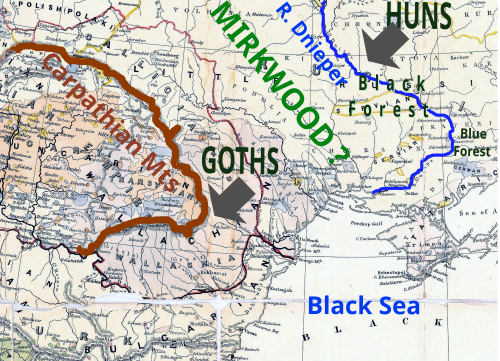
This approach is evident in the origins of The Hobbit. Rather than starting with a plot, Tolkien rebuilt the concepts of Elves and Dwarves from available clues and developed distinct ways of speaking for each race. This linguistic differentiation naturally led to the creation of richly characterized stories.
Analyzing the Major Works
The Lord of the Rings
Shippey explores The Lord of the Rings through several lenses, noting its map-based plot and the complex interlacement of narrative threads. He highlights the influence of literature, including the works of Shakespeare, as well as the underlying Christian and mythical themes that anchor the epic.
The Silmarillion and Unfinished Tales
The analysis turns to the more complex structures of The Silmarillion and Unfinished Tales. These works, curated by Christopher Tolkien in 1977 and 1980 respectively, delve into darker themes of death and immortality. Shippey notes that these texts are often more difficult for readers to navigate than the primary novels.
Minor Works and "Asterisk" Poems
Beyond the major novels, Shippey examines Tolkien's minor works and his "asterisk" poems. These poems are termed "asterisk" because, similar to conjectured wordforms in linguistics, they were not found in actual medieval manuscripts. Instead, Tolkien wrote them to serve as imagined ancient origins for later works. For example, the poem Ofer Widne Garsecg was written as an Old English version of a story about a man falling overboard into the Atlantic.
Adaptations and Legacy
In the third edition of his work, Shippey addresses Peter Jackson's film trilogy. While acknowledging the films' massive commercial success and their ability to attract new audiences, Shippey observes a trend toward the "democratisation" and "emotionalisation" of the narrative compared to the original text.
| Edition/Language | Year | Publisher/Location |
|---|---|---|
| First Edition | 1982 | Allen & Unwin (UK) / Houghton Mifflin (US) |
| Second Edition | 1993 | HarperCollins |
| Third Edition | 2003 | Various |
| Polish Translation | 2001 | Zysk i S-ka (Poznań) |
| Spanish Translation | 2002 | Planeta-De Agostini (Barcelona) |
| Russian Translation | 2003 | Limbus Press (Saint Petersburg) |
| German Translation | 2018 | Klett-Cotta (Stuttgart) |
Frequently Asked Questions
Who is Tom Shippey?
Tom Shippey is a professional philologist and a leading expert on J.R.R. Tolkien. He previously taught at the University of Oxford and held professorships at the University of Leeds and St. Louis University.
How did philology influence Tolkien's writing?
Tolkien used his knowledge of Old Norse and Old English to create constructed languages like Sindarin and Khuzdul. He believed that by reconstructing an imagined past based on linguistic clues, he could create a world that felt authentic.
What are "asterisk" poems?
These are poems written by Tolkien to appear as ancient origins of more recent works. They are called "asterisk" poems because they are not recorded in any actual medieval manuscripts, mirroring the way linguists mark conjectured wordforms.
What is Shippey's view on the Peter Jackson films?
Shippey believes the films tend to "democratise" and "emotionalise" the story. However, he views the films positively for bringing a fresh audience to Tolkien's original literary works.
Which languages was Shippey's book translated into?
The book has been translated into at least four languages: Polish, Spanish, Russian, and German.