Tokyo 2020 Summer Olympics: A Legacy of Resilience
The Tokyo 2020 Summer Olympics stand as one of the most unique chapters in sporting history. Defined by the motto United by Emotion, these Games were a testament to global perseverance, overcoming unprecedented challenges to bring the world's greatest athletes together in Japan.
Originally scheduled for 2020, the event faced a historic delay due to the global COVID-19 pandemic. Despite the shift in timing, the Games eventually took place from July 23 to August 8, 2021, showcasing a blend of cutting-edge infrastructure and strict health protocols.
Key Facts
- Host City: Tokyo, Japan
- Dates: July 23, 2021 – August 8, 2021
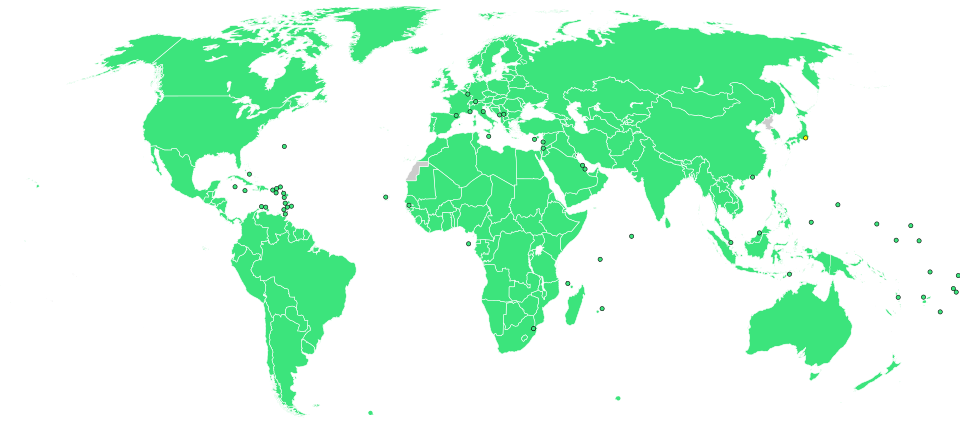
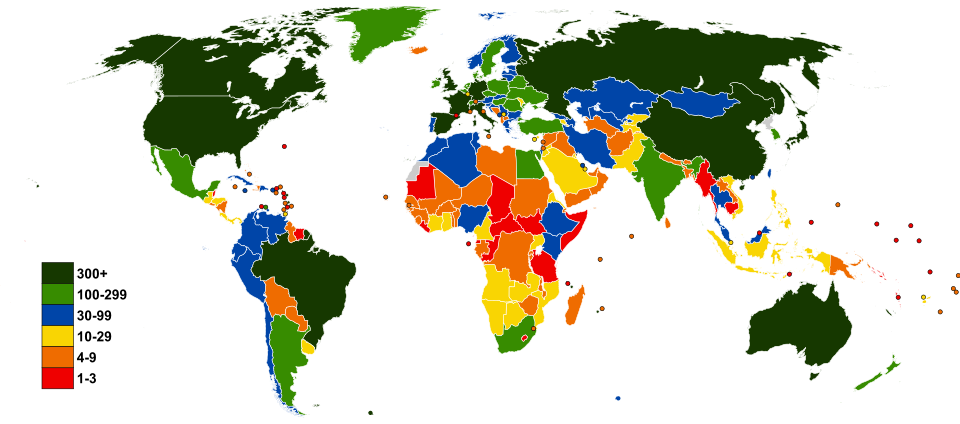
- Participants: 11,319 athletes from 206 nations (including ROC and EOR teams)
- Scale: 339 events across 33 sports and 51 disciplines
- Opening Ceremony: Opened by Emperor Naruhito
- Closing Ceremony: Closed by IOC President Thomas Bach
- Main Venue: Japan National Stadium
The Road to Tokyo: Bidding and Selection
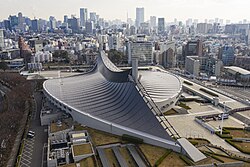
The journey to hosting the Games involved a competitive bidding process. Tokyo emerged victorious over Istanbul and Madrid. In the final round of voting, Tokyo secured 60 votes, comfortably winning the right to host the Summer Games.
Overcoming the Pandemic
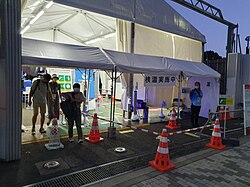
The COVID-19 pandemic fundamentally altered the trajectory of the Games. For the first time in history, the Olympics were postponed to the following year to ensure the safety of athletes and staff. This period was marked by significant logistical hurdles, including the cancellation of qualifying events and adjustments to doping test schedules.
To manage the health risks, the organizing committee implemented rigorous biosecurity protocols—a set of strict health and safety measures designed to prevent the spread of the virus. These included mandatory temperature checks and limited spectator attendance.
The pandemic also influenced the medal ceremonies. To maintain social distancing, medals were presented to athletes on a tray, and athletes placed the medals around their own necks rather than having them placed by a dignitary.
![Due to COVID-19 protocols, the medals were presented to the athletes on a tray and each athlete was asked to put on their own medal, rather than have it placed around their neck by a dignitary.[118]](/images/38/60/3860ca11c29a8a2d888ef60e032dc536045dfb31e93527174444dec51108f791.jpg)
Venues and Infrastructure
Tokyo utilized a mix of newly constructed facilities and existing landmarks to host the diverse array of sports. The Japan National Stadium served as the centerpiece for athletics and the opening and closing ceremonies.
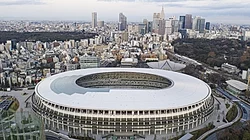
Other notable venues included:
- Tokyo Aquatics Centre: For swimming and diving events.
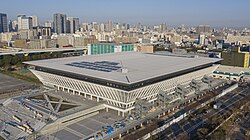
Tokyo Aquatics Centre - Ariake Arena and Ariake Gymnastics Centre: Hosting various indoor competitions.
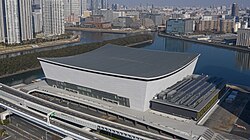
Ariake Arena 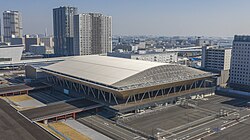
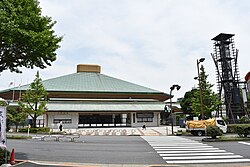
Ariake Gymnastics Centre - Nippon Budokan: A historic venue for martial arts.
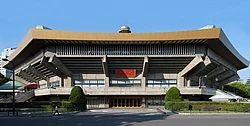
Nippon Budokan - Saitama Super Arena: Used for high-capacity events.
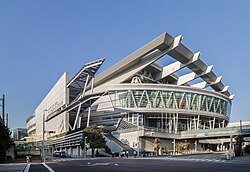
Saitama Super Arena - Tsurigasaki Beach and Enoshima Yacht Harbor: Hosting surfing and sailing.
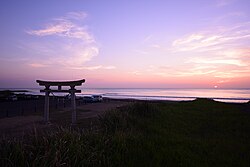
Tsurigasaki Beach, Chiba 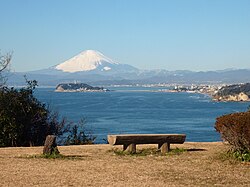
Enoshima Yacht Harbor, Kanagawa
The Sporting Program
The Games featured a massive program of 339 gold medal events. While traditional staples like Athletics and Aquatics remained central, the Tokyo Games were notable for introducing new and optional sports to appeal to a younger audience, including skateboarding, sport climbing, and surfing.
The competition saw incredible displays of dominance, including two full podium sweeps: Switzerland in women's cross-country mountain biking and Jamaica in the women's 100 metres.
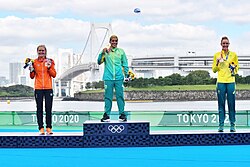
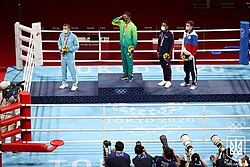
Participation Overview
The United States sent the largest delegation with 615 athletes, followed by the host nation, Japan, with 556. The Games also provided a platform for the Refugee Olympic Team, ensuring that displaced athletes had a place to compete.
Ceremonies and Symbols
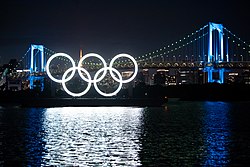
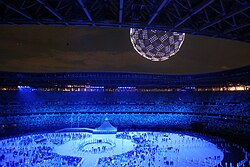
The Opening Ceremony was a high-tech spectacle, featuring drones that formed the official logo of the Games in the night sky. The Olympic cauldron was lit by tennis star Naomi Osaka, signaling the official start of the competitions.
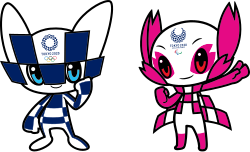
The Games were also represented by two distinct mascots: Miraitowa, the official mascot of the Summer Olympics, and Someity, the mascot for the Summer Paralympics.
Summary of Tokyo 2020
The following table provides a snapshot of the Games' scale and organization.
| Category | Details |
|---|---|
| Total Athletes | 11,319 (5,910 men, 5,409 women) |
| Participating Nations | 206 |
| Total Events | 339 |
| Sports/Disciplines | 33 Sports / 51 Disciplines |
| Main Stadium | Japan National Stadium |
| Motto | United by Emotion |
Frequently Asked Questions
Why were the Tokyo 2020 Olympics held in 2021?
The Games were postponed by one year due to the global COVID-19 pandemic to ensure the health and safety of the athletes and the public.
How were the medals presented differently in Tokyo?
Due to COVID-19 protocols, medals were placed on a tray for athletes to pick up and put on themselves, avoiding the traditional practice of a dignitary placing the medal around the athlete's neck.
Which nations sent the most athletes?
The United States sent the largest team with 615 athletes, followed by Japan with 556 athletes.
What new sports were included in the Tokyo Games?
The program expanded to include modern sports such as skateboarding, sport climbing, and surfing to diversify the competition.
Who lit the Olympic cauldron?
The Olympic cauldron was lit by Naomi Osaka.