Tobacco Use Trends: Global Prevalence and National Shifts
Tobacco consumption patterns have undergone a dramatic transformation over the last several decades. Once a socially accepted habit in many parts of the world, smoking is now increasingly viewed through the lens of public health risk. Data from the World Health Organization (WHO) and various national health surveys reveal a general downward trend in tobacco use, though the pace of decline varies significantly by region, socioeconomic status, and demographic group.
The shift is driven by a combination of stringent legislation, public awareness campaigns, and a growing understanding of the link between tobacco and chronic diseases. While traditional cigarettes remain a primary concern, the emergence of alternative nicotine products, such as snus (a moist powder tobacco product common in Scandinavia) and e-cigarettes, has added new layers of complexity to global health data.
![Prevalence of daily smoking in 2012[18]](/images/40/3c/403c06fb98dcf435bbc9bb369e88bad3ea2ec9a9af9100d34b2cb72d528f4151.png)
Key Facts
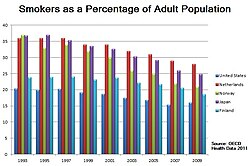
- Global Decline: Many countries saw a significant drop in age-standardized tobacco prevalence between 2000 and 2020.
- Socioeconomic Link: In countries like Australia and the UK, smoking rates are consistently higher among socioeconomically disadvantaged populations.
- Gender Gaps: While men generally smoke at higher rates, some regions, such as Romania, have seen an increase in smoking among women.
- Youth Trends: While youth smoking has declined in several industrial nations, new challenges have emerged with the rise of vaping and alternative tobacco products.
- Policy Impact: Strict tobacco control laws in New Zealand and public health campaigns in Brazil have contributed to substantial reductions in adult smoking.
Global Tobacco Prevalence (2000 vs 2020)
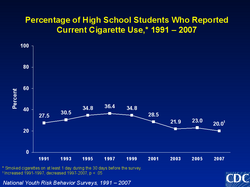
The WHO tracks the age-standardized prevalence of tobacco use among persons aged 15 and older. This metric allows for a fair comparison between countries with different age distributions.
| Country | Prevalence (2000) | Prevalence (2020) | Trend |
|---|---|---|---|
| Australia | 24.4 | 13.6 | Decrease |
| Brazil | 23.8 | 12.8 | Decrease |
| Canada | 28.4 | 13.0 | Decrease |
| India | 54.5 | 27.2 | Decrease |
| Indonesia | 35.4 | 37.6 | Increase |
| United Kingdom | 37.9 | 15.4 | Decrease |
| United States | 33.8 | 23.0 | Decrease |
![The share adults who smoke any tobacco product on a daily or non-daily basis in 2016[19]](/images/35/c1/35c1ec8958281b18369d06aca0cc14f91a97cd78c305449710f4fc4c089f7691.png)
Regional Analysis and National Trends
The Americas
In the United States, regular smoking rates fell to 11.2% of adults by 2022. However, disparities persist; in 2005, Native Americans and Alaska Natives had the highest rates (32.0%), while those living below the federal poverty line smoked more (29.9%) than those above it (20.6%).
Brazil has seen a substantial decline from 34.8% in 1989 to 9.3% in 2023. This success is attributed to the ratification of the WHO Framework Convention on Tobacco Control in 2005. Despite this, the country faces new challenges with e-cigarettes, which have been banned since 2009.

Canada reported a general decline in smoking across all age groups from 1985 to 2001, with a notable decrease in youth smoking starting in the mid-1990s. By 2011, approximately 17% of Canadians were smokers.
Europe
Germany has historically had a high density of cigarette vending machines, with one for every 102.5 people. While smoking is less common among those with higher education, daily smoking rates among 20-24-year-old men reached 38% in 2005.
In Spain, daily smoking rates for the population over 15 were 22.1% in 2017. While the rate for men dropped significantly from 44% in 1993 to 25.6% in 2017, the rate of decline has slowed since 2014.
Sweden presents a unique case due to the popularity of snus. By 2011, daily smoking tobacco use had dropped to 12.5% for men and 14.3% for women, while daily snus use among men over 15 was approximately 19.4%.
![Swedish citizens, 16 years or older, that consumed snus or smoking tobacco on a daily basis in 2011[53]](/images/39/aa/39aa389c273e37373a694ce272bebc8c0892e8d17fab8427d6c3a887db758775.png)
The United Kingdom has seen a steady decline, with the proportion of smokers falling to 10.6% by 2024. Similar to other nations, a strong correlation exists between socioeconomic deprivation and smoking prevalence.
Asia and Oceania
India showed a massive reduction in prevalence, dropping from 54.5% in 2000 to 27.2% in 2020. In Israel, smoking rates among adults fell from 34% in 2000 to 20.9% in 2009, with the highest prevalence found among Arab males (44% in 2011).
New Zealand experienced a peak in the 1970s (60%) before falling to 20% by 2011. While strict laws have helped, recent economic downturns and natural disasters have seen a slight uptick in sales, alongside a surge in vaping among youth.
![Share of men versus women who smoke in 2016[20]](/images/69/8c/698cb4859644ec5618e7ac7d48887f41abec968177b2316898aef0617956b581.png)
Africa and Other Regions
Data indicates wide variance across Africa. For example, Nigeria has one of the lowest prevalence rates, dropping from 9.3% in 2000 to 3.7% in 2020. Conversely, countries like Myanmar and Kiribati have maintained relatively high rates of tobacco use, although both saw declines between 2000 and 2020.
![Consumption per smoker per day in 2012[21]](/images/23/47/2347c73d790cb4cb9711aeb8c846357bd9dd3cca158f786996af7bc4ff735cc5.png)
Frequently Asked Questions
Which countries have seen the most significant decline in smoking?
Many countries have seen sharp declines, but India and the United Kingdom are notable examples. India's prevalence dropped from 54.5% in 2000 to 27.2% in 2020, while the UK fell from 37.9% to 15.4% in the same period.
How does socioeconomic status affect smoking rates?
There is a strong correlation between socioeconomic disadvantage and higher smoking rates. In Australia and the UK, individuals in the most deprived areas are significantly more likely to smoke than those in the most affluent areas.
What is snus and where is it common?
Snus is a moist powder tobacco product. It is particularly common in Sweden, where daily use among men over 15 was approximately 19.4% in 2011, even as traditional smoking rates declined.
Are youth smoking rates declining globally?
In many industrial nations, such as Canada and Germany, traditional cigarette use among youth has declined. However, in countries like New Zealand, there has been a corresponding increase in the use of e-cigarettes and vaping among younger demographics.
What impact does tobacco have on the economy and health in Brazil?
In 2020, smoking was responsible for 161,853 deaths in Brazil (13% of total deaths) and created economic costs exceeding 125 billion reais.