The Global Story of Tobacco: History, Biology, and Impact
Tobacco, derived from plants in the Nicotiana genus, has been a significant part of human history for centuries. Originating in the Americas, this plant has been utilized for a vast array of purposes, ranging from recreational and medical uses to sacred, religious, and traditional peacemaking rituals.

The Biology of Tobacco
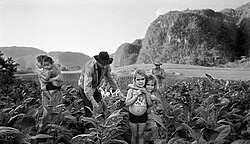
The primary part of the tobacco plant used for consumption is the leaf. Within these leaves, several active ingredients are found, most notably nicotine—the compound responsible for the addictive nature of tobacco use—and harmine.
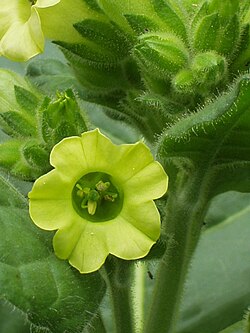
Nicotine is a potent alkaloid that affects the central nervous system. Because of its chemical properties, understanding the biological makeup of the plant is essential to understanding its effects on the human body.

The cultivation of tobacco involves various species, including the Nicotiana rustica. The quality and characteristics of the tobacco often depend on the specific variety and the environment in which it is grown, such as the Deli plantations in Sumatra.
A Brief History and Cultural Evolution
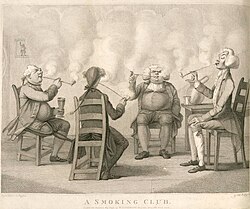
Tobacco has a long history of depiction in art and literature. Early records show its presence in various cultures, including the earliest known depictions of European men smoking and the traditional use of the hookah in regions like Rajasthan, India.


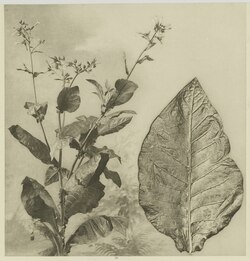
As tobacco became a global commodity, its production and consumption patterns shifted. Historical illustrations from the 19th century provide insight into how the plant was studied and perceived during the era of its widespread popularization.
In the modern era, the industry has faced scrutiny regarding the manipulation of nicotine levels. In the 1970s, the brand Brown & Williamson crossbred tobacco to create a strain known as Y1, which nearly doubled nicotine content from roughly 3.5% to 6.5%. This led to allegations by the Food and Drug Administration in the 1990s that companies were intentionally increasing addictiveness.
Global Production and Cultivation
Tobacco production is a massive global enterprise. Between 1971 and 1997, leaf production grew by 40%, rising from 4.2 million tons to 5.9 million tons. While production in developed nations has decreased, developing nations have seen a massive surge, with production increasing by 128% in that period.
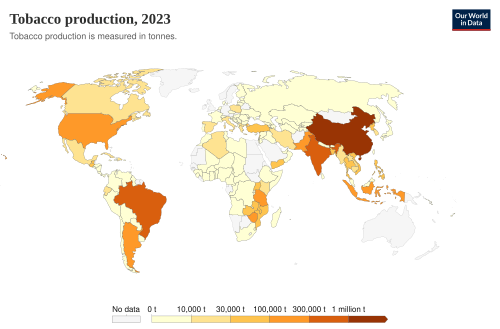
China has emerged as the dominant force in the global market. Its share of world production rose from 17% in 1971 to 47% in 1997. To manage this, the Chinese government established the State Tobacco Monopoly Administration (STMA) in 1982, which controls production, marketing, and trade, contributing 12% to the nation's national income.
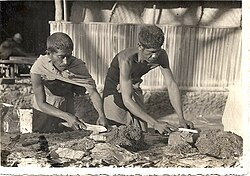
In India, tobacco is a significant crop, with the Tobacco Board headquartered in Guntur, Andhra Pradesh. The industry supports tens of thousands of registered farmers, though many more remain unregistered. In Brazil, tobacco is also a major agricultural component.
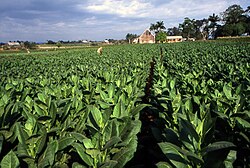
Cultivation methods vary by region. In the United States, tobacco is grown in various climates, such as the fields of Intercourse, Pennsylvania.
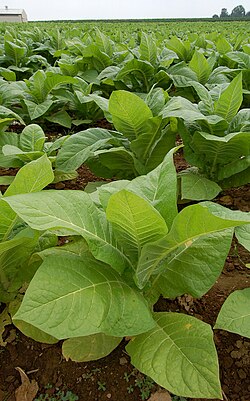
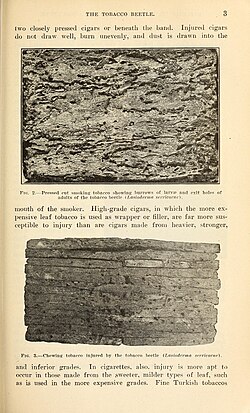
However, production is not without its challenges. The industry faces issues with parasites, such as the tobacco beetle (Lasioderma serricorne), which can infest leaves and damage crops.
Curing Methods
Once harvested, tobacco must undergo a curing process to prepare the leaves for use. This can be done in specialized tobacco barns, such as those used for air curing shade tobacco in Connecticut.

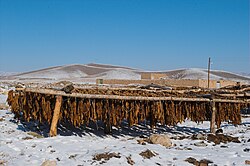
Other methods include sun-curing, where leaves are dried in the sun, as seen in traditional settings in Greece or Iran.
Top Tobacco Producers (2020)
| Country | Production (tonnes) | Note |
|---|---|---|
| China | 2,134,000 | Largest global producer |
| India | 761,335 | Significant regional producer |
| Brazil | 702,208 | Major South American producer |
| Zimbabwe | 203,488 | Key African producer |
| Indonesia | 199,737 | Major Southeast Asian producer |
| United States | 176,635 | Significant developed nation producer |
| Mozambique | 158,532 | Key African producer |
| Pakistan | 132,872 | Regional producer |
| Argentina | 109,333 | South American producer |
| Malawi | 93,613 | Key African producer |
Social and Economic Challenges
The tobacco industry is a double-edged sword. While it generates massive revenue—the global market was estimated at US$760 billion in 2010 (excluding China)—it also presents severe social issues. One of the most pressing concerns is child labor, which is widespread in the farms of Brazil, China, India, Indonesia, Malawi, and Zimbabwe.
Children working in these fields often suffer from green tobacco sickness. This is a form of nicotine poisoning that occurs when wet tobacco leaves are handled, causing the nicotine to be absorbed through the skin. Symptoms include nausea, vomiting, and dizziness. In some cases, children have been exposed to nicotine levels equivalent to smoking 50 cigarettes through direct contact alone.
Consumption and Health Impacts
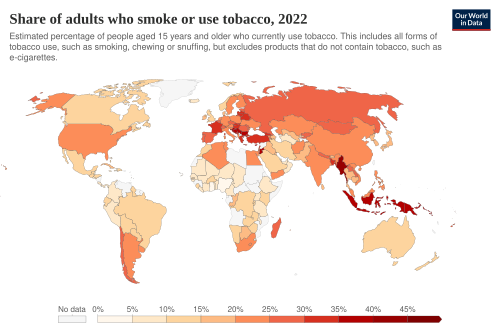
Tobacco use remains widespread, with an estimated 1.1 billion people using tobacco in some form. While smoking rates have declined in developed countries, they continue to rise in the developing world. In the United States, for example, smoking rates dropped from 42% in 1965 to 20.8% in 2006.
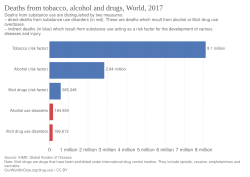
The health consequences are profound. The World Health Organization (WHO) identifies tobacco as the single greatest cause of preventable death globally. In 2004 alone, tobacco was linked to 5.4 million deaths. Furthermore, secondhand smoke poses significant risks to non-smokers, particularly children, contributing to respiratory illnesses, asthma, and ear infections.
![Table from the 2010 DrugScience study ranking various drugs (legal and illegal) based on statements by drug-harm experts. Tobacco was found to be the sixth overall most dangerous drug.[114]](/images/b8/11/b8116097c5f74bbc09f9a92611f7b6d801a7f41422ceacc9eb1e64006c709ea3.webp)
The mortality rate is staggering; it is estimated that a single 10-hectare field of tobacco used for cigarettes can be associated with 30 deaths per year due to lung cancer and other tobacco-induced diseases.
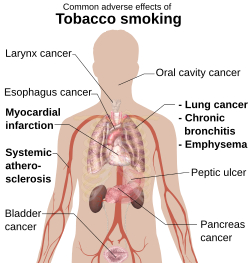
Common adverse effects of smoking include a wide range of physiological issues, from cardiac arrest to various forms of cancer.
Key Facts
- Origin: The Americas.
- Active Ingredients: Nicotine (addictive) and harmine.
- Major Producer: China is the world's leading producer.
- Global Use: Approximately 1.1 billion people use tobacco.
- Health Risk: Tobacco is the leading cause of preventable death worldwide.
- Economic Impact: The industry generates hundreds of billions in tax revenue but also incurs massive healthcare costs.
Frequently Asked Questions
What is nicotine and how does it affect the body?
Nicotine is the primary active ingredient in tobacco. It is a highly addictive compound that affects the central nervous system, making tobacco use difficult to quit.
What is green tobacco sickness?
Green tobacco sickness is a form of nicotine poisoning that occurs when workers, including children, handle wet tobacco leaves. The nicotine is absorbed through the skin, leading to nausea, vomiting, and dizziness.
Which countries are the largest producers of tobacco?
As of 2020, the top producers are China, India, Brazil, and Zimbabwe.
How does the World Health Organization (WHO) address tobacco use?
In 2003, the WHO successfully rallied 168 countries to sign the Framework Convention on Tobacco Control, which aims to implement legislation and enforcement to reduce the harmful effects of tobacco globally.
What are the main health risks associated with tobacco?
Tobacco use is linked to numerous serious health issues, including lung cancer, cardiac arrest, bladder cancer, and mouth cancer. Secondhand smoke also poses risks to children, including asthma and respiratory illnesses.