Time Magazine: A Century of Global News and Influence
For over a hundred years, Time has served as a cornerstone of American journalism, distilling the complexities of global events into a weekly digest. Founded in 1923, it evolved from a niche news magazine into a global multimedia brand, shaping how millions of readers perceive politics, culture, and history.
The publication is renowned for its distinctive style and its ability to identify the most influential figures of the era. From its early days under the vision of its founders to its current digital-first approach, Time continues to document the trajectory of the "American Century" and beyond.
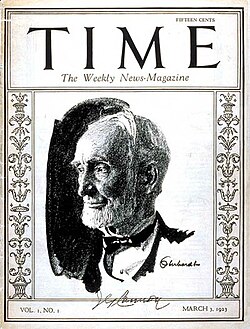
Key Facts
- Founded: March 3, 1923, by Henry Luce and Briton Hadden.
- Current Editor-in-Chief: Sam Jacobs.
- Frequency: Weekly from 1923 to 2020; bi-weekly from 2020 to the present.
- Circulation: 1,044,989 as of 2023.
- Signature Feature: The annual Person of the Year award.
- Ownership: Currently owned by Time USA, LLC (Marc & Lynne Benioff).
The Evolution of a Media Giant
Time was launched in the early 1920s, quickly establishing itself as a primary source for news summaries. Throughout the 20th century, the parent company, Time Inc., expanded its reach by launching other iconic imprints, including Fortune and Life in the 1930s, and Sports Illustrated in the 1950s. By the 1960s, the organization had transitioned into a multimedia powerhouse known as Time-Life.
The magazine's ownership has shifted significantly over the decades. After years as an independent entity, Time Inc. merged with Warner Communications in 1990 to become part of Time Warner. Later transitions saw the company move to the Meredith Corporation in 2018, before finally being acquired by Marc and Lynne Benioff's Time USA, LLC that same year.
Iconic Traditions and Editorial Style
Time is perhaps most famous for its Person of the Year franchise, which began in 1927. The inaugural winner was Charles Lindbergh, recognizing his historic transatlantic flight.
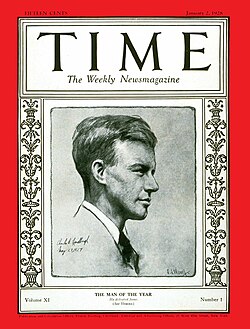
Beyond the annual honoree, the magazine is known for the Time 100, a list of the world's most influential people, and its visually striking covers. One of the most enduring symbols is the "Red X" cover, used to mark the death of significant figures.

The magazine's covers also serve as a historical record of political longevity; for example, former President Richard Nixon appeared on the cover 55 times between 1952 and 1994.
Modern Challenges and Digital Expansion
Like much of the print industry, Time has faced a steady decline in circulation. Newsstand sales saw sharp drops in 2009 and 2010, leading to significant restructuring and staff reductions, including a cut of nearly 500 jobs in 2013.
To adapt, the brand has diversified into several spin-offs and digital ventures, including:
- Time for Kids: Educational content for younger audiences.
- International Editions: Versions tailored for Canada, Africa, and France.
- Time LightBox: A dedicated focus on photography.
- TimePieces NFTs: A venture into the metaverse and digital collectibles.
Publication Overview
| Attribute | Details |
|---|---|
| First Issue Date | March 3, 1923 |
| Founders | Henry Luce & Briton Hadden |
| Language | English |
| ISSN | 0040-781X |
| Current Frequency | Every other week |
Frequently Asked Questions
Who was the first Time Person of the Year?
The first person to receive the honor in 1927 was Charles Lindbergh.
How has the publication frequency changed?
Time was published weekly from its inception in 1923 until 2020, after which it moved to a bi-weekly (every other week) schedule.
Who currently owns Time magazine?
The magazine is currently owned by Time USA, LLC, which is operated by Marc and Lynne Benioff.
What does the red 'X' on a Time cover signify?
The red 'X' is a stylistic choice used by the magazine to denote the death of the person featured on the cover.
Who is the current Editor-in-Chief?
As of 2023, the Editor-in-Chief of Time is Sam Jacobs.