Tilde: The Versatile Symbol in Language, Math, and Computing
The tilde (represented as ∼ or ˜) is far more than a simple wavy line. From its ancient roots in medieval scribal shorthand to its critical role in modern programming languages and mathematical notation, this symbol serves a vast array of functions. Whether it is acting as a diacritic to alter the pronunciation of a letter or as a logical operator in a line of code, the tilde is a fundamental tool in human communication and digital processing.
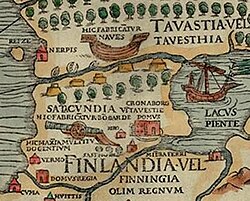
![Text of Exeter Domesday Book of 1086[a]](/images/46/24/4624916ac57f1c48ac6540c8a09a7d9dea24d970f2e0c93c51e4022df16ad4d1.jpg)
Key Facts
- Linguistic Role: Acts as a diacritic to indicate nasalization, pitch, or tone in various languages.
- Mathematical Use: Often denotes approximation (e.g., ∼42) or serves as a relational operator.
- Computing: Used in programming languages like D and AWK for bitwise operations and pattern matching.
- Unicode: Represented by U+007E (the character) and U+0303 (the combining diacritic).
- Spanish Connection: Essential for the letter Ñ, a cornerstone of the Spanish alphabet.
Historical Evolution and Standardization
The history of the tilde is deeply intertwined with the evolution of writing and data encoding. In the era of medieval scribes, the tilde was frequently used as an abbreviation mark. For example, in historical documents like the Exeter Domesday Book of 1086, it served to condense text.
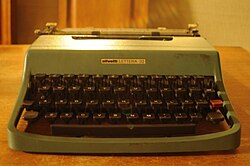
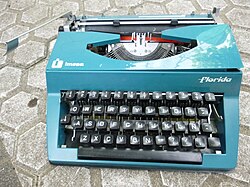
As technology transitioned from handwriting to mechanical typewriters, the tilde's role became more standardized. Typewriters designed for specific languages, such as the Portuguese or Spanish models, required dedicated keys or "dead keys" to accommodate the tilde's role in local orthography.
The modern digital tilde owes its existence to the standardization of character sets. During meetings in 1963, the CCITT decided that the proposed ISO 7-bit code standard would be suitable if certain diacritical marks were added. This led to the birth of ISO 646 and the updated ASCII standard, which provided the tilde as an optional character. This standardization ensured that the symbol could be reliably transmitted across different computing systems.
Linguistic and Diacritical Functions
In linguistics, a tilde is a diacritic—a mark added to a letter to change its sound. It is used to indicate changes in pitch, tone, or nasalization. Many languages rely on the tilde to distinguish meaning, including:
- Spanish (the letter Ñ)
- Portuguese
- Basque
- Vietnamese
- Guaraní
- Tagalog (Filipino)
In the International Phonetic Alphabet (IPA), the tilde is used to denote specific phonetic qualities. While some specialized uses involve complex superimpositions of the tilde over consonants, modern linguistic conventions are increasingly moving toward more precise decomposed notations, such as velarized or pharyngealized markers.

Mathematical and Technical Applications
Beyond language, the tilde is a vital symbol in technical fields. In mathematics, it is frequently used as a unary operator to mean "approximately" or "of the same order of magnitude." In physics and economics, it can represent various relational or statistical concepts.
Computing and Programming
In the digital realm, the tilde has several distinct roles:
- Regular Expressions: In the AWK programming language, it is used for pattern matching.
- Bitwise Operations: In the D programming language, the tilde acts as a bitwise NOT operator.
- File Systems: It is often used in filenames, particularly in legacy Microsoft environments.
- Machine Learning: It may represent a candidate value for a cell state in neural networks like GRUs or LSTMs.
Summary of Tilde Usage
| Field | Primary Function | Example/Context |
|---|---|---|
| Linguistics | Diacritic | Nasalization (e.g., Ñ) |
| Mathematics | Approximation | ∼50 (Approximately 50) |
| Programming | Operator | Bitwise NOT or Pattern Matching |
| Punctuation | Range Indicator | 10~20 (10 to 20) |

Frequently Asked Questions
What is the difference between a tilde and a wave dash?
While they look similar, the wave dash (Unicode U+301C) is primarily used in East Asian languages to indicate a range, whereas the tilde is more commonly used as a diacritic or an approximation symbol in Western contexts.
How is the tilde used in Spanish?
In Spanish, the tilde is most famously used over the letter 'n' to create the character Ñ, which represents a palatal nasal sound.
Can a tilde be used to show a range of numbers?
Yes, in some contexts, such as in French or in certain electronic model numbers, a tilde can be used between two numbers to indicate a range (e.g., "12~15").
What does the tilde mean in a mathematical equation?
In mathematics, a tilde preceding a number typically means "approximately" or "about," though formal standards like ISO/IEC 80000-2 suggest using the double tilde (≈) for approximation instead.
Why is the tilde important in computer encoding?
The tilde was included in early standards like ASCII and ISO 646 to ensure that different computer systems could communicate symbols and diacritics consistently across different languages and software.