Thomas Drummond: The Scottish Botanical Collector of the Americas
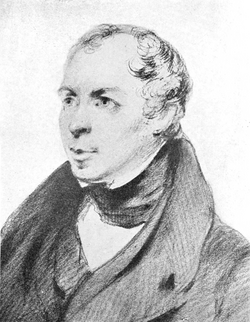
Thomas Drummond (1793–1835) was a distinguished Scottish botanical collector whose tireless exploration of the North American wilderness significantly expanded European knowledge of New World flora. A specialist in bryology—the study of mosses and liverworts—Drummond spent his career documenting rare species across diverse landscapes, from the rugged Rocky Mountains to the river basins of Texas.
Drummond began his professional journey at Don's nursery in Forfar, Scotland. He first gained recognition within the scientific community through the publication of exsiccatae (sets of dried, identified plant specimens) titled Musci Scotici, Volumes 1 and 2, which detailed the mosses of his homeland.
Expeditions to North America
In February 1825, Drummond's career took a global turn when he joined Sir John Franklin's second land expedition as an assistant naturalist under Dr. Richardson. Sailing from Liverpool to New York, the party traveled westward via the Hudson River and lakes Ontario and Winnipeg toward the Mackenzie River.
Driven by a desire for deeper exploration, Drummond eventually separated from the main party at Cumberland House to venture into the Rocky Mountains. His efforts during this period resulted in the 1828 publication of Musci Americani, a collection of moss specimens gathered from British North America.
Meeting David Douglas
During his travels, Drummond crossed paths with another legendary botanical figure. On June 3, 1827, at Carlton House, he met David Douglas, who was returning to London from Fort Vancouver while collecting for the Royal Horticultural Society.
Botanical Surveys of the American South
In the spring of 1831, Drummond embarked on a journey on foot through the Alleghany Mountains. Although he reached St. Louis in July, a period of illness prevented him from joining the northern fur trader expeditions. This setback shifted his focus toward the southern United States.
Drummond conducted an extensive botanical tour of Texas, collecting specimens along the Brazos, Colorado, and Guadalupe Rivers. Despite suffering a severe attack of cholera at Velasco, he recovered and continued his work for nearly two years. His collections of plants and birds from Texas were later distributed throughout Europe, sparking further botanical interest in the region.
Legacy and Scientific Contribution
Drummond's life came to an end in early March 1835, shortly after arriving in Havana. However, his contributions lived on through the work of Sir William Hooker, who described Drummond's plants in the Flora Boreali-Americana, the Journal of Botany, and the Companion to the Botanical Magazine.
In 1841, Hooker and William Watson published a posthumous exsiccata titled Musci Americani, featuring mosses and Jungermanniae (liverworts) collected by Drummond in the Southern States, arranged and named by W. Wilson and Sir W. J. Hooker.
In recognition of his and his brother James's contributions to science, the Australian plant genus Drummondita (family Rutaceae) was named in their honor in 1855.
Key Facts
- Specialization: Expert in bryology (mosses and liverworts).
- Major Works: Published Musci Scotici and multiple volumes of Musci Americani.
- Expeditions: Served as assistant naturalist on Sir John Franklin's second land expedition.
- Regional Impact: Conducted pivotal early botanical surveys of Texas and the Rocky Mountains.
- Honors: The genus Drummondita is named after him and his brother, James.
| Period/Date | Location | Key Activity/Achievement |
|---|---|---|
| Early Life | Forfar, Scotland | Worked at Don's nursery; published Musci Scotici |
| 1825–1828 | North America / Rocky Mountains | Assistant naturalist for Sir John Franklin; published Musci Americani |
| 1831–1833 | Texas, USA | Collected plants and birds along the Brazos, Colorado, and Guadalupe Rivers |
| March 1835 | Havana | Passed away shortly after arrival |
Frequently Asked Questions
What were exsiccatae?
Exsiccatae are sets of dried, pressed plant specimens that have been formally identified and distributed to other botanists or herbaria for study and comparison.
Which famous explorer did Thomas Drummond work with?
Thomas Drummond served as an assistant naturalist under Dr. Richardson during Sir John Franklin's second land expedition to the Arctic.
What was Drummond's primary botanical focus?
Drummond specialized in bryology, specifically the collection and classification of mosses and liverworts (Jungermanniae).
How did Drummond contribute to the study of Texas flora?
He spent nearly two years collecting plant and bird specimens along the Brazos, Colorado, and Guadalupe Rivers, which stimulated further botanical exploration of Texas in Europe.
Who helped publish Drummond's work after his death?
Sir William Hooker and William Watson published his southern North American collections in 1841, with naming assistance from W. Wilson.