Third Tunnel of Aggression: A Hidden Relic of the Korean Border
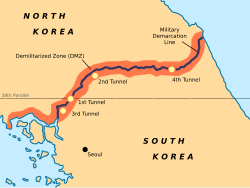
Deep beneath the earth, south of Panmunjom, lies a stark reminder of the Cold War tensions on the Korean Peninsula. The Third Tunnel of Aggression (also known as the Third Infiltration Tunnel) is one of four known subterranean passages constructed by North Korea to cross the border into South Korea. Located just 44 km (27 miles) from the capital city of Seoul, this incomplete tunnel serves as a physical testament to the strategic maneuvers and hostilities that have defined the region since the mid-20th century.
Key Facts
- Discovery: Found in October 1978 after an underground explosion was detected in June 1978.
- Dimensions: 1,635 meters (1.0 mile) long, 2.1 meters wide, and up to 1.95 meters high.
- Depth: Carved through bedrock approximately 73 meters (240 feet) below the surface.
- Capacity: Estimated to accommodate 30,000 soldiers per hour with light weaponry.
- Current Status: A guarded tourist site accessible via a steep incline or a specialized rubber-tyred train.
Discovery and Strategic Purpose
The tunnel was first suspected in June 1978 when an underground explosion was detected. It took four months of investigation for authorities to precisely locate the passage and dig an intercept tunnel. Upon discovery, it was revealed that the tunnel had already progressed 435 meters (1,427 feet) under the south side of the Korean Demilitarized Zone (DMZ)—the buffer zone created to separate the two nations.
South Korea labeled the passage a "tunnel of aggression," viewing it as a direct violation of the 1953 Korean Armistice Agreement. The United Nations Command echoed these concerns, accusing North Korea of threatening the peace established at the end of the Korean War. The tunnel's design suggests it was intended for a surprise attack on Seoul, capable of moving massive numbers of infantry and light arms rapidly across the border.
The Geological Debate
Following the discovery, North Korea initially denied the tunnel's existence. When evidence became undeniable, they claimed the structure was actually a coal mine, citing the blackened walls as proof of mining activity. However, geological evidence contradicts this claim. The walls of the tunnel are composed of granite, an igneous rock. Because coal is found in sedimentary rock, experts maintain there is no geological likelihood of coal existing in that specific area; the blackening was instead caused by construction explosions.
Current Status and Tourism
Today, the Third Tunnel is a prominent tourist destination, though it remains under heavy guard. Visitors can access the tunnel in two ways: by walking down a steep incline from a lobby and gift shop, or by riding a rubber-tyred train. Due to the single-rail system, the train features a driver at either the front or back depending on the direction of travel.
To maintain security, photography is strictly forbidden inside the tunnel. The South Korean military has installed three concrete barricades to block the Military Demarcation Line (the actual border). Tourists are permitted to walk as far as the third barricade, where a small window allows a glimpse of the second barricade further back.
| Feature | Detail |
|---|---|
| Total Length | 1,635 meters (1.0 mile) |
| Maximum Height | 1.95 meters (6 ft 5 in) |
| Width | 2.1 meters (6 ft 11 in) |
| Depth Below Ground | ~73 meters (240 ft) |
| Rock Composition | Granite (Igneous) |
The Broader Context of Infiltration
While the Third Tunnel is the most famous, it is one of four discovered tunnels. Intelligence suggests that up to twenty more may exist beneath the border. Although the South Korean Armed Forces continue to dedicate specialist resources to detecting these tunnels, their strategic significance has diminished over time. The rise of more effective long-range artillery and missile systems has shifted the nature of the military threat away from subterranean infiltration.
Frequently Asked Questions
How many tunnels have been found between North and South Korea?
Four tunnels have been officially discovered, although it is believed that as many as twenty more may exist.
Why did North Korea claim the tunnel was a coal mine?
North Korea attempted to justify the tunnel's existence by claiming it was for mining, using the blackened walls from construction explosions as evidence.
Can tourists walk all the way through to North Korea?
No. The South Koreans have installed three concrete barricades to block the Military Demarcation Line, preventing any crossing into North Korean territory.
Is photography allowed inside the Third Tunnel?
No, photography is strictly forbidden within the tunnel for security reasons.
How do visitors get down into the tunnel?
Visitors can either walk down a long, steep incline or take a specialized rubber-tyred train.