Third Jerseys: The Evolution of Alternative Sports Uniforms
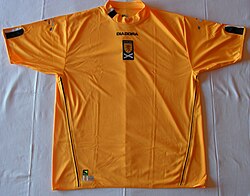
In the world of professional sports, the visual identity of a team is traditionally defined by its home and away kits. However, many organizations now employ a third jersey—also known as an alternative jersey, third kit, or alternative uniform. These garments serve as a versatile third option that teams can wear instead of their primary outfits during games.
While the primary purpose of a third jersey is often practical—preventing a "color clash" when two competing teams have similar primary colors—they have evolved into powerful tools for branding and revenue. For professional leagues, these uniforms are a lucrative source of income through fan sales. For instance, the National Football League (NFL) generates approximately $1.2 billion annually in jersey sales, followed by the National Basketball Association (NBA) at $900 million.
Beyond commerce, alternative uniforms are frequently used to support social causes. A notable example is the Central Coast Mariners, who wear a pink alternative kit to observe Pink Ribbon Day.
Key Facts
- Purpose: Used to avoid color clashes between teams or for commercial and charitable purposes.
- Revenue: The NFL and NBA lead North American sports in jersey sales, earning $1.2 billion and $900 million annually, respectively.
- Expansion: While third jerseys are common, fourth and fifth kits are rare and usually reserved for extreme clashes or commercial events.
- Customization: Some teams theme their entire playing field to match the colors of a throwback or alternative jersey.
Alternative Uniforms in American Football
In the NFL, alternative jerseys often take the form of throwbacks—designs that recreate the look of a team's past. To enhance the experience, teams sometimes modify their environment. The New York Jets, for example, painted their field in a blue-and-gold scheme to match their 1960–1962 "Titans of New York" throwbacks. Similarly, the Tampa Bay Buccaneers used orange field accents when wearing their "Creamsicle" throwbacks in 2009.
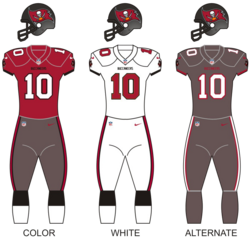
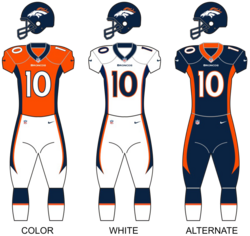
The league also introduced "Color Rush" games, featuring bold, monochromatic looks. Examples include the Buffalo Bills wearing red and the New York Jets wearing Kelly Green on November 12, as well as the Tennessee Titans in Titans Blue and the Jacksonville Jaguars in Bold Gold on November 19.
College Gridiron Football
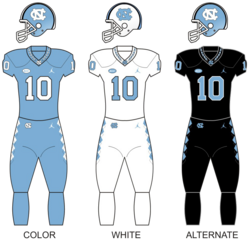
Alternative jerseys are also prevalent in college football, where teams often use them to create a distinct atmosphere for specific rivalry games or special events.
Major League Baseball and the City Connect Series
Major League Baseball (MLB) has embraced a highly localized approach to alternative uniforms through the City Connect series. These uniforms are designed to reflect the culture and identity of the team's home city.
The rollout began in 2021 with teams like the Boston Red Sox and Los Angeles Dodgers, continuing through 2024 with the Philadelphia Phillies and Toronto Blue Jays. By 2025, several teams, including the Washington Nationals and Houston Astros, are scheduled to debut second-generation City Connect designs.
The Third Jersey in Basketball and Rugby
The NBA first introduced the third jersey concept during the 1970–71 and 1971–72 seasons when the Atlanta Hawks wore neon green alternates. While a novelty at the time, the trend became a league-wide standard by the mid-1990s.
In the National Rugby League (NRL), the Wests Tigers utilize alternative jerseys to honor their history, wearing modernized versions of the 1980s Balmain Tigers and Western Suburbs Magpies strips, alongside a white "10 Year Anniversary" jersey.
Canadian Football League (CFL) Uniform History
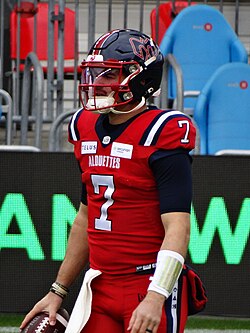
The CFL has a rich history of alternative uniforms, with the Calgary Stampeders leading the way by introducing black alternates in 1994. They were the first CFL team to wear alternates in both a playoff game and a Grey Cup game.

Other teams have followed suit with various designs:
- BC Lions: Have cycled through black, gunmetal, and modified gunmetal designs since 2005.
- Edmonton Elks: Utilized gold alternates in the mid-2000s and green Signature series uniforms starting in 2014.
- Hamilton Tiger-Cats: Introduced gold alternates in 2006 and later adopted steel grey uniforms in 2022.
- Winnipeg Blue Bombers: Wore gold alternates for their 75th anniversary in 2005 and later adopted all-blue uniforms in 2022.

Ice Hockey and the NHL's Cycle of Alternates
The National Hockey League (NHL) has seen a fluctuating relationship with third jerseys. While many teams adopted them in the late 1990s, the program occasionally went on hiatus during supplier transitions, such as the shift to Reebok Edge in 2007 and the move to Adidas in 2017.

Recent trends include "Reverse Retro" jerseys, which modernize vintage looks. For the 2025–26 season, teams like the Detroit Red Wings are using anniversary-specific third jerseys to celebrate milestones, while others, like the Toronto Maple Leafs, have chosen to retire their third jersey designs.

Summary of Alternative Jersey Trends
| Sport/League | Primary Driver | Notable Example |
|---|---|---|
| NFL | Revenue & Nostalgia | Color Rush / Throwbacks |
| MLB | City Identity | City Connect Series |
| NBA | Style & Branding | Atlanta Hawks Neon Green (1970s) |
| NHL | Heritage & Modernization | Reverse Retro Jerseys |
| CFL | Tradition & Signature Series | Calgary Stampeders Black Alternates |
Frequently Asked Questions
Why do sports teams need a third jersey?
The primary practical reason is to avoid color clashes when both teams' home and away uniforms are too similar. Additionally, they are used to generate revenue through merchandise sales and to identify with specific causes or city identities.
What is the difference between a third jersey and a throwback?
A third jersey is any alternative to the home and away kits. A throwback is a specific type of third jersey that recreates a design the team wore in a previous era.
What are MLB City Connect jerseys?
City Connect jerseys are a specialized series of alternative uniforms designed to celebrate the local culture, history, and identity of the city where the team is based.
Do teams ever have more than three jerseys?
Yes, though it is uncommon. Fourth or fifth kits are occasionally introduced for commercial purposes or when multiple color clashes occur in a single season.
How do third jerseys impact team revenue?
They are highly lucrative; for example, the NFL generates $1.2 billion and the NBA generates $900 million annually from jersey sales, with alternative designs often driving high fan demand.