Thermo-hygrographs: Recording Temperature and Humidity
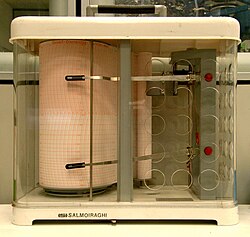
In the field of meteorology and environmental monitoring, the ability to track atmospheric changes over time is essential. A thermo-hygrograph (also known as a hygrothermograph) is a specialized chart recorder designed to simultaneously measure and record two critical variables: temperature and humidity, or the dew point.
While a thermo-hygrograph handles both metrics, simpler devices exist for single-parameter tracking. A thermograph is used exclusively for temperature, while a hygrograph focuses solely on humidity.
Key Facts
- A thermo-hygrograph records both temperature and humidity on a single chart.
- Early photographic thermographs were described as early as 1845.
- Francis Ronalds, Honorary Director of the Kew Observatory, was among the early scientists to describe these devices.
- The UK Met Office deployed updated models across its national observational network in 1867.
- Mechanical versions often utilize bi-metal strips for temperature and human hair bundles for humidity.
The Evolution of Recording Instruments
The history of automated weather recording dates back to the mid-19th century. As early as 1845, several scientists described thermographs that utilized photography to capture temperature variations. One notable figure in this development was Francis Ronalds, who served as the Honorary Director of the Kew Observatory.
By 1867, the newly established UK Met Office, coordinated by the Kew Observatory, deployed an updated version of these machines across its national observational network. This standardization allowed for more consistent data collection, leading to the extended use of these instruments globally.
How Mechanical Thermo-hygrographs Work
Beyond photographic methods, an alternative configuration uses a mechanical pen system to record data on a revolving cylinder. This system relies on physical materials that react to environmental changes.
Temperature Sensing
To track temperature, the device employs a bi-metal strip—a piece of temperature-sensitive metal composed of two different metals bonded together. Because these metals expand at different rates, the strip bends as the temperature changes. This bending motion moves a lever, which in turn moves the recording pen across the chart.
Humidity Sensing
For humidity measurement, these machines often utilize a bundle of human hair. Human hair is naturally hygroscopic, meaning it expands or contracts based on the amount of moisture in the air. This physical change is translated through a mechanical linkage to a second pen on the revolving cylinder.
| Instrument | Measured Parameter | Primary Function |
|---|---|---|
| Thermograph | Temperature | Single-parameter recording |
| Hygrograph | Humidity | Single-parameter recording |
| Thermo-hygrograph | Temperature & Humidity | Dual-parameter recording |
Frequently Asked Questions
What is the difference between a thermograph and a thermo-hygrograph?
A thermograph records only temperature, whereas a thermo-hygrograph records both temperature and humidity (or dew point) on the same device.
Who was Francis Ronalds?
Francis Ronalds was the Honorary Director of the Kew Observatory and one of the scientists who described photographic thermographs as early as 1845.
How does a bi-metal strip work in a recorder?
A bi-metal strip consists of two different metals that bend when temperature changes. This movement is used to drive a lever that moves a recording pen on a chart.
Why is human hair used in some hygrographs?
Human hair is used because it reacts to moisture in the air by expanding or contracting, providing a mechanical way to measure humidity levels.
When did the UK Met Office begin using these instruments?
The UK Met Office deployed updated models of these recording machines across its national observational network in 1867.