Théâtre d'Orléans: The Epicenter of French Opera in New Orleans
In the first half of the 19th century, the Théâtre d'Orléans (Orleans Theatre) stood as the most influential opera house in New Orleans. Located on Orleans Street between Royal and Bourbon, this prestigious venue served as a cultural bridge, introducing American audiences to the grandeur of French opera through numerous premieres and world-class performances.
The theatre's origins trace back to 1806, with plans drawn by Louis Tabary, a refugee from the French colony of Saint-Domingue (modern-day Haiti). While construction began early, the opening was delayed by the War of 1812, finally welcoming the public in October 1815. After a devastating fire, the venue was rebuilt and reopened in 1819 under the leadership of John Davis, another Saint-Domingue émigré who would become a titan of the New Orleans theatrical scene.
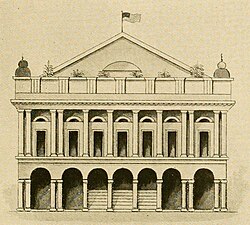
Key Facts
- Location: Orleans Street, between Royal and Bourbon, New Orleans.
- Primary Language: French.
- Key Figures: John Davis, Pierre Davis, and Charles Boudousquié.
- Legacy: Hosted 52 American premieres in its first five seasons under John Davis.
- Survival: The theatre was destroyed by fire in 1866, but the adjacent Orleans Ballroom survives today.
The Era of John Davis (1819–1837)
Under the direction of John Davis, the Théâtre d'Orléans experienced a golden age of productivity. In just five seasons, the company staged 140 operas, including 52 American premieres. The repertoire focused heavily on French composers such as Boieldieu, Isouard, and Dalayrac.
Due to the oppressive heat and humidity of New Orleans, performances were limited to the autumn and spring. To maintain revenue during the summer hiatus, Davis launched six tours of the northeastern United States starting in 1827. By bringing unfamiliar French works to New York, Boston, Philadelphia, and Baltimore, he earned the theatre national acclaim.
This period was also marked by a fierce rivalry with the Camp Street Theatre, founded in 1824 by James Caldwell. While Camp Street focused on English-language operas, the Théâtre d'Orléans maintained its French identity. A notable clash occurred in 1835 over Meyerbeer's Robert le diable; although the English version opened first, the French production by Davis was praised for being more faithful to the original singing and staging requirements.
The Transition to Pierre Davis (1837–1853)
In 1837, leadership passed to John's son, Pierre Davis. This era saw the rise of Mademoiselle Julie Calvé, a leading soprano who dominated the stage for a decade. Calvé was the first to perform several key roles in New Orleans, including Valentine in Les Huguenots and Louise (Norina) in Don Pasquale.
The theatre's dominance was solidified in 1842 when fire destroyed Caldwell's competing venues, the St. Charles Theatre and the New American Theatre. With the competition removed, the Théâtre d'Orléans became the undisputed center of cultural life in the city, continuing its tours of the Northeast in 1843 and 1845.
The venue also attracted international talent, such as the French soprano Laure Cinti-Damoreau in 1844 and Rosa de Vries-van Os. In a famous anecdote from April 21, 1852, de Vries-van Os performed the role of Fidès in Meyerbeer's Le Prophète, only to give birth to a daughter—named Fidès Devriès—the very next day.
The Final Years and Charles Boudousquié (1853–1859)
The final chapter of the theatre's leadership began in 1853 with the American-born Charles Boudousquié, husband of Julie Calvé. Boudousquié continued the tradition of American premieres and hosted global stars, including Italian soprano Erminia Frezzolini and German soprano Henriette Sontag.
However, a dispute with the theatre's owner led Boudousquié to build a new venue, the French Opera House. By 1859, this new establishment superseded the Théâtre d'Orléans. The original theatre was eventually destroyed by fire in 1866.
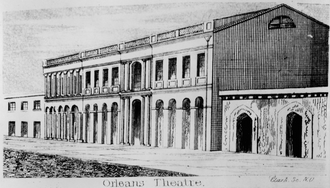
The Orleans Ballroom: A Lasting Legacy
Designed by architect William Brand in 1817, the Orleans Ballroom (Salle d'Orléans) was the social heart of New Orleans' elite. It hosted masquerades, carnival balls, and subscription events. For grand galas, the ballroom could be merged with the theatre by laying temporary flooring over the pit. The facility even included gambling rooms for those "unlucky at love."
The ballroom was renowned for its quality; in 1819, architect Benjamin Henry Latrobe called it the best in the United States. It also hosted the Marquis de Lafayette during his 1826 visit. Additionally, the ballroom occasionally hosted bals du cordon bleu (quadroon balls), where wealthy Creole gentlemen courted mixed-race women—events that often led to passionate disputes and duels.
While the theatre perished in 1866, the ballroom survived. In 1873, it was purchased by Thomy Lafon and converted into a convent and school for the Sisters of the Holy Family, the first female-led African American religious order in the U.S. The ballroom served as their chapel until 1964, when it was renovated by the Bourbon Orleans Hotel and restored to its original purpose as a ballroom.
Summary of American Premieres
The Théâtre d'Orléans was instrumental in bringing European opera to the United States. Below is a selection of the many American premieres hosted at the venue.
| Year | Opera Title | Composer |
|---|---|---|
| 1819 | Jean de Paris | François-Adrien Boieldieu |
| 1823 | Le barbier de Séville | Gioachino Rossini |
| 1831 | La muette de Portici | Daniel Auber |
| 1835 | Robert le diable | Giacomo Meyerbeer |
| 1839 | Les Huguenots | Meyerbeer |
| 1841 | Lucie de Lammermoor | Gaetano Donizetti |
| 1842 | Guillaume Tell | Rossini |
| 1850 | Jérusalem | Giuseppe Verdi |
| 1850 | Le prophète | Meyerbeer |
Frequently Asked Questions
Why was the opening of the Théâtre d'Orléans delayed?
Although construction began in 1806, the opening was pushed back until October 1815 due to the disruptions caused by the War of 1812.
How did the theatre survive the summer months in New Orleans?
Because the heat and humidity made performances impossible during the summer, director John Davis took the company on tours to the northeastern United States, visiting cities like New York and Boston starting in 1827.
What happened to the theatre after the 1866 fire?
The theatre building was completely destroyed in the 1866 fire, but the adjacent Orleans Ballroom survived and continues to exist today.
What is the current status of the Orleans Ballroom?
After serving as a ballroom for the elite and later as a chapel for the Sisters of the Holy Family, it was renovated in 1964 and is now part of the Bourbon Orleans Hotel.
Who were the primary directors of the Théâtre d'Orléans?
The theatre was led by three successive directors: John Davis (1819–1837), his son Pierre Davis (1837–1853), and Charles Boudousquié (1853–1859).