The Ventures: Pioneers of Instrumental Rock and Global Guitar Culture
Formed in Tacoma, Washington, in 1958, The Ventures are more than just a band; they are the architects of the modern instrumental rock sound. By popularizing the electric guitar on a global scale during the 1960s, they laid the groundwork for countless guitar-based groups that followed. While their influence was felt deeply across the United States, they achieved a legendary status in Japan that remains unparalleled for an American rock act.
With over 110 million albums sold worldwide, The Ventures hold the title of the best-selling instrumental band of all time. Their journey from a pair of friends with pawn-shop guitars to Rock and Roll Hall of Fame inductees is a testament to the universal appeal of the electric guitar.
Key Facts
- Best-Selling Status: The highest-selling instrumental rock group in history with over 110 million records sold.
- Chart Dominance: 38 albums charted in the US, with 34 of those appearing in the 1960s.
- Global Impact: Sparked the "eleki boom" in Japan, leading to a massive surge in electric guitar sales.
- Hall of Fame: Inducted into the Rock and Roll Hall of Fame on March 10, 2008.
- Signature Hit: "Walk, Don't Run" is widely regarded as one of the greatest guitar recordings of all time.
The Formation and Rise to Fame
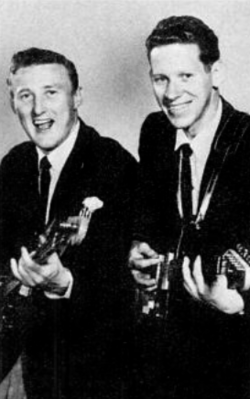
The story of The Ventures began in 1958 when Bob Bogle visited a used car dealership in Seattle owned by Don Wilson's father. Bonding over a shared passion for guitars, Bogle and Wilson began playing together. Their start was humble; they purchased two used guitars from a pawn shop for approximately $10 each.
Initially performing as The Versatones, the duo played small clubs and private parties across the Pacific Northwest. However, upon attempting to register the name, they discovered it was already taken. At the suggestion of Wilson's mother, they renamed themselves The Ventures in 1959.
The band achieved international stardom in 1960 with the release of their first wide-release single, "Walk, Don't Run." This track not only brought them fame but also established the electric guitar as a lead instrument in popular music.
The Classic Lineup and Musical Evolution
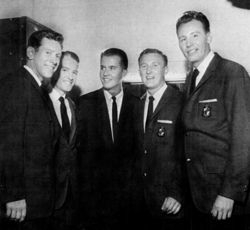
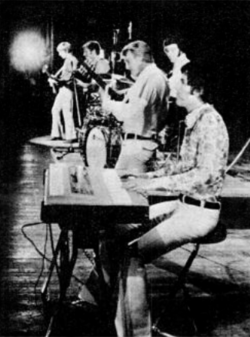
The group's most iconic era featured a quartet consisting of Don Wilson (rhythm guitar), Bob Bogle (initially lead guitar, later bass), Nokie Edwards (initially bass, later lead guitar), and Mel Taylor (drums). Taylor, known for his hard-hitting style, joined the group after the departure of Howie Johnson, who left the band to be closer to his family.
Between 1962 and 1967, the band was a powerhouse of productivity, releasing 22 albums. Nearly all of these reached the Billboard top 100. They also achieved a rare feat by placing two different versions of the same song in the Top 10: the original "Walk, Don't Run" (No. 2) and the surf-style re-arrangement "Walk, Don't Run '64" (No. 8).
The "Eleki Boom" in Japan
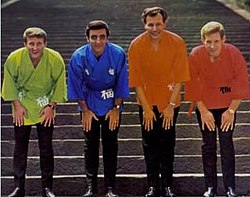
While The Ventures were successful in the US, they became cultural icons in Japan. Following tours in 1962 and 1964, the band was greeted by thousands of fans. Their 1965 single "Diamond Head" became the first million-selling single in Japan, reaching No. 1 in both Japan and Hong Kong.
This phenomenon triggered the eleki boom (electric guitar boom), a period where thousands of Japanese citizens purchased electric guitars and formed their own bands, forever altering the Japanese music landscape.
Transitions and Later Years
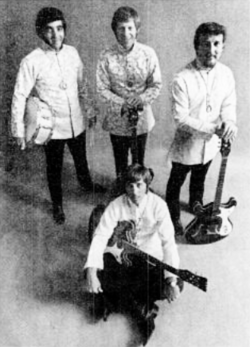
The lineup evolved over the decades. Nokie Edwards left in 1968 and was replaced by Gerry McGee, though Edwards returned from 1973 to 1984. Mel Taylor left in 1972 to pursue progressive music but returned in 1979, remaining with the group until his death in 1996.
As the original members aged and retired, the band transitioned to a new generation. Bob Spalding, who had been a session member since 1980, took over full-time when Bob Bogle retired in 2004. Today, the band continues to tour and record, featuring Leon Taylor (son of Mel) and Ian Spalding (son of Bob).
Legacy and Educational Influence
Beyond their hits, The Ventures were pioneers in music education. They released a series of instructional LPs, including Play Guitar with the Ventures and Play Electric Bass with the Ventures. These were among the first rock instructional albums ever released, and one even reached the Billboard Top 100—a first for the genre.
The Encyclopædia Britannica describes the group as a "prototype for guitar-based rock groups," highlighting their role in defining the structure and sound of the rock band.
| Category | Detail |
|---|---|
| Total Records Sold | Over 110 Million |
| US Chart Albums | 38 |
| Billboard Hot 100 Singles | 14 |
| Key Genre | Instrumental Rock / Surf |
| Major Honors | Rock and Roll Hall of Fame (2008) |
Frequently Asked Questions
Who were the original members of The Ventures?
The band was founded in 1958 by Don Wilson and Bob Bogle. The classic lineup later expanded to include Nokie Edwards and Mel Taylor.
Why are The Ventures so popular in Japan?
The band's tours in the 1960s sparked the "eleki boom," making them cultural icons. They have consistently outsold many other American acts in Japan, including the Beatles, by a significant margin.
What is the significance of "Walk, Don't Run"?
Released in 1960, it was their first wide-release single and is cited as one of the top guitar songs ever recorded, helping to popularize the electric guitar globally.
Did The Ventures release any educational materials?
Yes, they released influential instructional LPs for electric guitar and bass, some of which were the first of their kind to appear on the U.S. national Billboard charts.
Are there any original members still in the band?
No. Following the retirement of Don Wilson in 2015 and the passing of the other original members, the current lineup consists of newer members and the sons of former members.