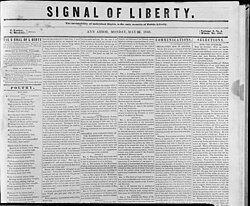
The Signal of Liberty: A Voice for Abolition in Michigan
In the mid-19th century, the fight against slavery was fought not only in the halls of government but also through the power of the printing press. The Signal of Liberty emerged as a critical publication dedicated to fostering anti-slavery sentiment by bringing the lived experiences of enslaved people to the forefront of public consciousness.
By sharing the personal narratives of freedom seekers—individuals who escaped their slaveholders to find refuge or settle in Michigan—the newspaper humanized the struggle for emancipation and highlighted the perils faced by those seeking liberty.
Combatting the Perils of Escape
The journey to freedom was fraught with danger, as escaped African Americans were frequently hunted by slave catchers. The Signal of Liberty acted as a watchdog, documenting "kidnapping outrages" to alert the public and condemn the violence of pro-slavery agents.
The publication detailed several high-profile incidents, including:
- The 1847 Kentucky raid in Cass County.
- The Crosswhite Affair in Marshall.
- Various raids occurring within the city of Detroit.
Structure and Reach of the Publication
Beyond reporting on kidnappings, the newspaper served as a community hub for the abolitionist movement across Michigan and the broader Midwest. It featured dedicated sections for national news, updates from anti-slavery societies, and poetry.
The paper played a strategic role in organizing the movement by announcing the establishment of new anti-slavery societies throughout the state. Following the closure of The Signal of Liberty, its legacy of advocacy continued through the publication of the Michigan Liberty Press.
| Feature | Details |
|---|---|
| Primary Goal | Encourage anti-slavery sentiment via personal stories |
| Regional Focus | Michigan and the Midwest |
| Key Content | Interviews with freedom seekers, national news, and poetry |
| Successor Publication | Michigan Liberty Press |
The Danger of Abolitionist Advocacy
Promoting anti-slavery messages during this era was a perilous undertaking. Throughout the 1830s, lecturers who spoke against slavery often encountered violent opposition from angry crowds.
A stark example of this volatility occurred in the fall of 1837 in Alton, Illinois. Abolitionist Elijah Parish Lovejoy was killed by a pro-slavery mob after he steadfastly refused to surrender his printing press, illustrating the extreme risks taken by those who used media to challenge the institution of slavery.
Key Facts
- The Signal of Liberty focused on the stories of freedom seekers in Michigan.
- It documented specific kidnapping events, such as the Crosswhite Affair and the 1847 Cass County raid.
- The paper served subscribers throughout Michigan and the Midwest.
- It was succeeded by the Michigan Liberty Press.
- Abolitionist printing was dangerous, as evidenced by the death of Elijah Parish Lovejoy in 1837.
Frequently Asked Questions
What was the primary purpose of The Signal of Liberty?
The newspaper aimed to encourage anti-slavery sentiment by sharing the life stories and interviews of freedom seekers who had escaped slavery and settled in or passed through Michigan.
Which specific events did the newspaper cover regarding slave catchers?
The publication reported on "kidnapping outrages," specifically highlighting raids in Detroit, the Crosswhite Affair in Marshall, and the 1847 Kentucky raid in Cass County.
What sections were regularly included in the newspaper?
The paper featured regular sections for poetry, national news, and news regarding anti-slavery societies.
What happened after The Signal of Liberty closed?
Following its closure, the Michigan Liberty Press was published.
Why was publishing anti-slavery content dangerous in the 1830s?
Anti-slavery advocates faced violent mobs; for example, Elijah Parish Lovejoy was killed by a pro-slavery mob in 1837 after refusing to give up his printing press.