The Progressive Magazine: A Century of Fighting for Democracy
For over a hundred years, The Progressive has served as a defiant voice in American political journalism. Founded on the principle that a struggle between "Special Privilege and Equal Rights" is inevitable in any free government, the publication has consistently challenged the concentration of power within industrial organizations and their influence over legislation and natural resources.
The magazine began its journey as a tool for democratic empowerment, asserting that while people in other lands had lost their battles for governance, the American people could win through persistence and free expression.
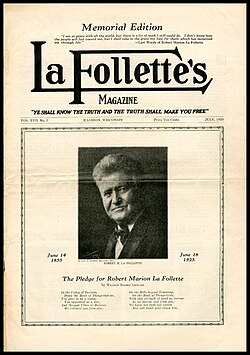
The Early Years: La Follette's Weekly
The publication originated in 1909 in Madison, Wisconsin, as La Follette's Weekly. Under the guidance of its founder, the magazine tackled some of the most pressing social and political issues of the early 20th century. Key campaigns included advocating for non-intervention during World War I and opposing the Palmer Raids—a series of government raids in the early 1920s aimed at political radicals.
The publication was also a platform for social justice. Belle La Follette, the founder's wife, edited the women's section and wrote articles condemning racial segregation. The magazine's early intellectual rigor was further bolstered by associate editor and writer Herbert Quick.
Evolution and Wartime Stances
As it transitioned into The Progressive, the magazine continued to navigate the complexities of global conflict. In the early 1940s, it initially argued against U.S. entry into World War II. However, following the attack on Pearl Harbor, the publication shifted to support the American war effort.
Despite this support, the magazine remained a critical observer. It notably condemned the atomic bombing of Hiroshima, diverging from other publications like The Nation and The New Republic. By reprinting Richard Lee Strout's essay from The Christian Science Monitor, the magazine highlighted the "terrible responsibility to history" incurred by the use of nuclear weapons.
Post-War Challenges and Survival
The late 1940s brought financial instability, leading editors to announce a suspension of publication in 1947. In a testament to its community support, readers raised $40,000 to save the magazine, allowing it to return as a non-profit monthly venture.
Fighting McCarthyism and Civil Rights
During the 1950s, The Progressive became a prominent critic of McCarthyism (the practice of making accusations of subversion or treason without proper regard for evidence). In 1954, it released a special issue titled McCarthy: A Documented Record, which became its best-selling issue and was even read aloud in the U.S. Senate. While critical of Senator Joseph McCarthy, the magazine did acknowledge the government's right to blacklist members of the Communist Party.
The 1960s marked a period of deep engagement with the Civil Rights Movement. The magazine published five articles by Martin Luther King Jr. and featured James Baldwin's influential open letter, "My Dungeon Shook," from The Fire Next Time. Simultaneously, it denounced U.S. military involvement in Indochina.
Legal Battles and the First Amendment
One of the most significant moments in the magazine's history occurred in 1979 with the publication of Howard Morland's article, "The H-bomb Secret: How we got it and why we're telling it." The U.S. government suppressed the article for six months, citing the disclosure of classified information.
This led to the landmark legal case United States v. Progressive, Inc., which centered on prior restraint—the government action of prohibiting speech or other expression before it can take place. The magazine eventually prevailed, securing a major victory for First Amendment rights.
Modern Era and Circulation
In more recent decades, The Progressive has remained active in criticizing U.S. foreign policy, opposing both the Persian Gulf War and the second Iraq War. It has also provided frontline coverage of domestic political unrest, such as the 2011 Wisconsin protests against Governor Scott Walker's budget repair bill. Political editor Ruth Conniff was recognized by Madison Magazine for her reporting during this period.
To celebrate its centennial, the University of Wisconsin Press published Democracy in Print, a collection of the magazine's best writing from 1909 to 2009.
| Period/Year | Key Event or Focus | Outcome/Detail |
|---|---|---|
| 1909 | Foundation | Established as La Follette's Weekly in Madison, WI |
| 1947 | Financial Crisis | Saved by $40,000 in reader donations; became non-profit |
| 1954 | McCarthyism | Published best-selling "McCarthy: A Documented Record" |
| 1979 | Legal Battle | Won United States v. Progressive, Inc. regarding prior restraint |
| 1999-2010 | Circulation Shift | Fluctuated from 27,000 (1999) to 65,000 (2004) to 47,000 (2010) |
Key Facts
- Founded: 1909 as La Follette's Weekly in Madison, Wisconsin.
- Legal Landmark: Won a major First Amendment case against government prior restraint in 1979.
- Civil Rights: Published works by Martin Luther King Jr. and James Baldwin.
- Financial Model: Operates as a non-profit venture supported by subscriptions, gifts, grants, and sponsorships.
- Peak Circulation: Reached a record 65,000 subscribers in April 2004.
Frequently Asked Questions
What was the original name of The Progressive?
The magazine was originally established in 1909 as La Follette's Weekly in Madison, Wisconsin.
What is the significance of United States v. Progressive, Inc.?
It was a landmark First Amendment case regarding prior restraint, occurring after the government attempted to suppress an article about the secrets of the H-bomb.
How did the magazine survive its 1947 financial crisis?
The publication was saved when its readers raised $40,000, allowing it to relaunch as a non-profit monthly magazine.
What was the magazine's stance on the atomic bombings of WWII?
The Progressive condemned the dropping of the atom bomb on Hiroshima, arguing that the United States had incurred a permanent and terrible responsibility to history.
Who were some of the notable authors published in the magazine?
The magazine has published works by prominent figures including Martin Luther King Jr., James Baldwin, and Howard Morland.