The Order of the Immaculate Conception: History and Legacy
The Order of the Immaculate Conception is a religious community with a rich history rooted in divine inspiration and resilience. Founded in the late 15th century, the order emerged from the spiritual journey of a Portuguese noblewoman whose life of hardship led to the establishment of a global network of convents dedicated to the honor of the Blessed Virgin Mary.
The Divine Calling of Saint Beatrice of Silva
The origins of the order trace back to Saint Beatrice of Silva, a Portuguese noblewoman and sister of Blessed Amadeus, a Franciscan friar. Beatrice's path to religious life began under unexpected circumstances. While accompanying her cousin, Princess Isabel of Portugal, to the court of King John II of Castile for their marriage, Beatrice's beauty sparked the jealousy of the new queen. This led to Beatrice's imprisonment.
It was during this period of incarceration that Beatrice experienced an apparition of the Blessed Virgin Mary, who revealed her desire for Beatrice to found a new religious order in her honor.
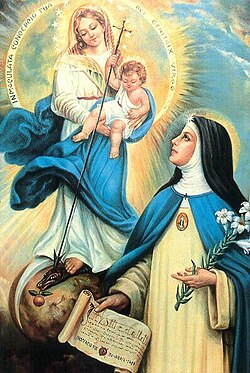
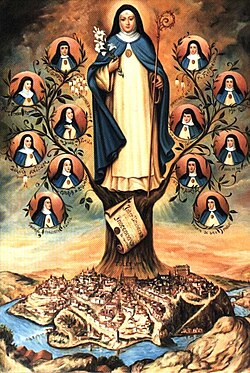
After escaping her imprisonment with great difficulty, Beatrice sought refuge in a Dominican convent in Toledo. Although she lived a life of holiness there for thirty-seven years, she did not formally join the Dominican order. In 1484, with the support of Isabella I of Castile, Beatrice and several companions took possession of their own convent in Toledo, marking the official birth of the order.
Evolution of the Order's Rule and Governance
The early years of the community were marked by a search for the most appropriate spiritual structure. In 1489, Pope Innocent VIII permitted the nuns to adopt the Cistercian rule—a monastic tradition emphasizing prayer and manual labor—and required the daily recitation of the Divine Office (the official set of prayers and readings of the Catholic Church). At this time, they remained under the obedience of the local diocesan ordinary.
The governance of the community shifted again in 1501 when Pope Alexander VI united them with the Benedictine community of San Pedro de las Duenas under the Rule of St. Clare. However, in 1511, Pope Julius II granted the order its own specific rule and placed them under the protection of the General Minister of Friars Minor. This transition earned the nuns the name Franciscan Conceptionists.
To further solidify the order's structure, Cardinal Francisco de Quiñones drew up special constitutions in 1516. Saint Beatrice of Silva also defined the order's visual identity, choosing a white habit featuring a white scapular and a blue mantle.
Global Expansion and Modern Presence
Following the establishment of the first house, a second convent was founded in Torrigo in 1507, which served as a catalyst for seven additional foundations. The order expanded rapidly across Europe, reaching Italy and France, and eventually crossed the oceans. By 1540, the order reached New Spain (modern-day Mexico) and established a presence in Brazil, though the Brazilian community later evolved into a separate congregation of missionary sisters of the Third Order of St. Francis.
At the height of its influence, the order boasted approximately 2,000 convents worldwide. While the numbers have decreased over the centuries, the order remains active; as of 2020, there were roughly 1,400 members residing in 127 houses.
Key Facts
- Founder: Saint Beatrice of Silva, canonized in 1976 by Pope Paul VI.
- Founded: 1484 in Toledo, Spain.
- Habit: White habit and scapular with a blue mantle.
- Peak Reach: Approximately 2,000 convents globally.
- Current Status (2020): 1,400 members across 127 houses.
- Affiliation: Franciscan Conceptionists.
| Year | Event | Key Figure/Authority |
|---|---|---|
| 1484 | Foundation of the first convent in Toledo | Saint Beatrice of Silva & Isabella I of Castile |
| 1489 | Adoption of the Cistercian rule | Pope Innocent VIII |
| 1501 | Union with San Pedro de las Duenas (Rule of St. Clare) | Pope Alexander VI |
| 1511 | Granting of a unique rule; Franciscan protection | Pope Julius II |
| 1516 | Drafting of special constitutions | Cardinal Francisco de Quiñones |
| 1540 | Expansion into New Spain (Mexico) | The Order |
Sacrifice and Martyrdom
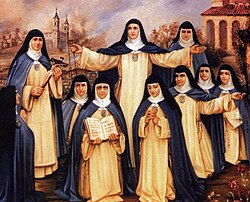
The history of the order is not only one of growth but also of profound sacrifice. In 2019, Pope Francis approved the declaration of martyrdom for Maria del Carmen and 13 of her companions. These Conceptionist nuns were killed in Madrid in 1936 during the turmoil of the Spanish Civil War.
Frequently Asked Questions
Who founded the Order of the Immaculate Conception?
The order was founded in 1484 by Saint Beatrice of Silva, a Portuguese noblewoman, in Toledo, Spain.
Why are the nuns called Franciscan Conceptionists?
They received this name after Pope Julius II gave them their own rule in 1511 and placed the community under the protection of the General Minister of Friars Minor.
What does the habit of the order look like?
The habit, chosen by Saint Beatrice of Silva, consists of a white habit and a white scapular, complemented by a blue mantle.
How did the order spread globally?
Starting from Toledo and Torrigo, the order spread through Spain, Portugal, Italy, and France, eventually reaching Mexico in 1540 and Brazil.
Who are the martyrs of the order?
Maria del Carmen and 13 companions were declared martyrs by Pope Francis in 2019 after being killed in Madrid during the Spanish Civil War in 1936.