The Modern Bikini: A History of Fashion and Social Rebellion
The modern bikini is more than just a staple of summer wardrobes; it was once a symbol of profound social disruption. Emerging in the mid-1940s in France, this minimalist two-piece design challenged global norms of decency, sparking legal battles, religious condemnations, and a cultural war over the visibility of the human navel.
The Birth of the Minimalist Swimsuit
The race to create the world's smallest bathing suit began in May 1946. French fashion designer Jacques Heim, who operated a beach shop in Cannes, introduced a minimalist design called the "Atome," named after the smallest known particle of matter. While daring, the Atome's bottom was still designed to cover the wearer's navel.
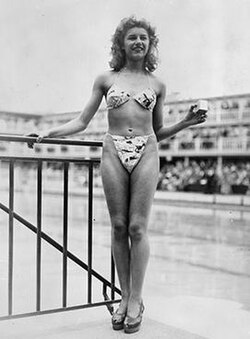
Simultaneously, Louis Réard, a mechanical engineer and lingerie businessman in Paris, was observing women on the beaches of St. Tropez. He noticed they often rolled up their swimsuit edges to achieve a better tan. Inspired, Réard created a design that trimmed even more fabric, exposing the navel for the first time. His string bikini consisted of four triangles crafted from just 30 square inches (194 cm²) of newspaper-patterned fabric.
Because professional models refused to wear such a revealing garment, Réard hired 19-year-old nude dancer Micheline Bernardini for his press conference on July 5, 1946, at the Piscine Molitor public pool in Paris.
The Nuclear Connection
The timing of Réard's launch was no coincidence. He held his press conference just five days after the first nuclear test (nicknamed "Able") at the Bikini Atoll during Operation Crossroads. He chose the name "bikini" to evoke the explosive and shocking nature of his design.
A marketing war soon erupted between the two designers. Heim used skywriters over the Mediterranean to advertise the Atome as "the world's smallest bathing suit." Three weeks later, Réard countered with his own skywriters, claiming his design was "smaller than the smallest bathing suit in the world." To further promote the garment, Réard famously claimed a two-piece was not a genuine bikini unless it could be pulled through a wedding ring.
Key Facts
- Inventors: Jacques Heim (Atome) and Louis Réard (Bikini) both introduced minimalist designs in 1946.
- The "Shock" Factor: The primary controversy of the early bikini was the exposure of the wearer's navel.
- Fabric: Louis Réard's original design used only 30 square inches of fabric.
- Naming: The name "bikini" was inspired by the nuclear tests at Bikini Atoll.
- Early Adoption: Initially embraced only by the vanguard and upper-class European women.
Social Resistance and Global Bans
Despite its novelty, the bikini faced immense backlash. Fashion historian Kevin Jones notes that Réard was ahead of his time by 15 to 20 years. The garment was banned in several countries, including Spain, Belgium, Italy, Portugal, and Australia, and was prohibited in various US states.
The controversy extended to the world of beauty pageants. In 1951, the first Miss World contest (originally the Festival Bikini Contest) saw winner Kiki Håkansson crowned in a bikini. This led to threats from religious nations to withdraw their delegates and a condemnation from Pope Pius XII, who declared the swimsuit sinful. Consequently, bikinis were banned from beauty pageants worldwide, and Håkansson remains the only Miss World crowned in one.
In the United States, the resistance was equally strong. Swimsuit mogul Fred Cole of "Cole of California" dismissed the French design as being for "diminutive Gallic women." Even Hollywood star Esther Williams called the bikini a "thoughtless act." In the media, magazines like Seventeen would airbrush out navels to maintain modesty.

The Influence of Cinema and the French Riviera
The bikini's transition from a scandalous garment to a fashion icon was driven largely by cinema and the celebrity culture of the French Riviera. Actress Brigitte Bardot became the face of the movement. Her appearances at the Cannes Film Festival in 1953 and her role in the film Manina, the Girl in the Bikini (1952) helped popularize the look in Europe and create a market in the US.
Other "love goddess" actresses, including Sophia Loren, Anita Ekberg, and Marilyn Monroe, used revealing swimwear to enhance their sex appeal. In 1955, British actress Diana Dors pushed boundaries further by wearing a mink bikini during the Venice Film Festival.
The Benidorm Exception
In Spain, the bikini's legalization was a strategic economic move. Pedro Zaragoza, the mayor of Benidorm, convinced dictator Francisco Franco to legalize the bikini in 1959 to attract more tourists. This decision transformed the town into a major tourist destination.
Legal and Moral Battles in Media
The fight against the bikini reached the silver screen through the Hays production code, which prohibited the display of navels in US movies. This led to strict censorship; for example, the film All at Sea (1957) had all bikini-type clothing removed before its US release, and The Girl in the Bikini had close-ups of the swimsuit removed for its release in Kansas in 1959.
By the end of the 1950s, variations like the strapless style and the halterneck emerged. However, the halterneck remained the most controversial due to its level of exposure, leading to designs like "Huba Huba" being withdrawn from fashion parades in Sydney for being immodest.
| Design Name | Designer | Key Characteristic | Navel Exposure |
|---|---|---|---|
| Atome | Jacques Heim | Minimalist two-piece | Covered |
| Bikini | Louis Réard | Four triangles (30 sq inches) | Exposed |
| Halterneck | Various | Neck-tie support | Exposed |
Frequently Asked Questions
Who actually invented the modern bikini?
Two French designers introduced minimalist designs in 1946: Jacques Heim created the "Atome," and Louis Réard created the "bikini." While Heim's was worn on beaches first, Réard's design was more minimal and gave the garment its lasting name.
Why was the bikini so controversial in the 1940s and 50s?
The primary source of scandal was the exposure of the wearer's navel, which was considered a breach of decency at the time. This led to bans in several European and Commonwealth countries, as well as condemnation from religious leaders.
How did Brigitte Bardot help popularize the bikini?
Bardot's high-profile appearances in bikinis at the Cannes Film Festival and in the 1952 film Manina, the Girl in the Bikini turned the garment into a symbol of glamour and liberation, making it more acceptable in Europe and the US.
What was the "wedding ring" test?
Louis Réard used this as a marketing tool to emphasize the minimalism of his design, claiming that a swimsuit was not a true bikini unless the entire garment could be pulled through a wedding ring.
Why was the bikini banned from Miss World?
After Kiki Håkansson was crowned in a bikini in 1951, countries with strong religious traditions threatened to withdraw. Following a condemnation by Pope Pius XII, the bikini was outlawed in beauty pageants in favor of evening gowns.