The Guardian: A History of Journalism and Political Evolution
From its origins as a regional voice in the industrial heartland of England to its current status as a global digital powerhouse, The Guardian has mirrored the shifting political and social landscapes of the last two centuries. Founded during a time of intense civil unrest, the publication has evolved from a champion of non-conformist businessmen to a globally recognized beacon of investigative journalism.
The Early Years: 1821 to 1972
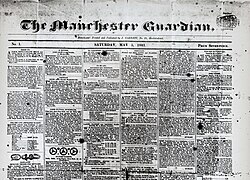
The publication began as the Manchester Guardian, founded on May 5, 1821, by cotton merchant John Edward Taylor. Backed by the "Little Circle"—a group of non-conformist businessmen—the paper launched on the same day as Napoleon's death. It emerged following the police closure of the Manchester Observer, a more radical publication that had supported the protesters of the Peterloo massacre. While Taylor was hostile toward radical reformers, the paper established itself as a voice for the mill-owners and the emerging middle class.
Stance on Slavery and the American Civil War
Throughout the 19th century, the newspaper was a staunch supporter of free trade and opposed slavery. It welcomed the Slavery Abolition Act 1833, arguing that the guilt of slavery rested with the nation rather than individuals. However, its position during the American Civil War was complex and often conflicted.
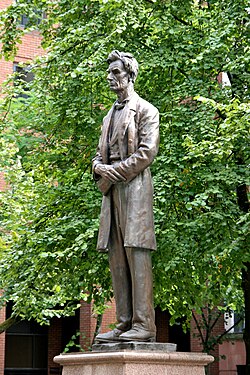
Initially, the paper suggested that if the Confederate States were granted direct trade with Europe, slavery would naturally cease. It even criticized Abraham Lincoln's Emancipation Proclamation for not freeing all slaves. This stance created tension with local cotton workers in Manchester, who expressed their detestation of slavery in a 1862 meeting at the Free Trade Hall. Despite these frictions, President Lincoln responded to the workers' letters with gratitude for their "sublime Christian heroism."
The Era of C. P. Scott
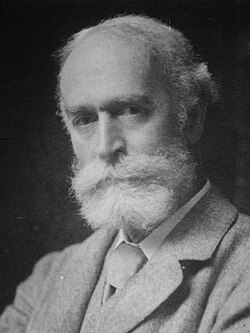
The newspaper achieved national prominence under the leadership of C. P. Scott, who served as editor for 57 years starting in 1872 and eventually became the owner in 1907. Scott shifted the paper's editorial line toward a more radical perspective, opposing the Second Boer War and supporting women's suffrage, though he remained critical of the militant tactics used by some suffragettes.
Global Conflict and Post-War Transition
During the Spanish Civil War (1936–1939), the paper earned significant respect from the left for its honest reporting and support of the Republican government against General Francisco Franco. This period solidified its reputation as a principled national voice.
On August 24, 1959, the publication officially changed its name to The Guardian to reflect its expanding focus on national and international affairs. By 1961, it began printing in London, where Nesta Roberts became the first woman to serve as a news editor for a British national newspaper.
Key Facts
- Founded: May 5, 1821, as the Manchester Guardian.
- Founder: John Edward Taylor, supported by the "Little Circle."
- Key Figure: C. P. Scott, editor for 57 years, who transitioned the paper to a national scale.
- Name Change: Rebranded as The Guardian in 1959.
- Major Acquisitions: Acquired The Observer in 1993 (sold to Tortoise Media in 2024/2025).
- Digital Expansion: Launched Australian (2013), International (2015), and European (2023) digital editions.
Modern Era: 1972 to the Present
The latter part of the 20th century saw the organization expand its reach and tackle high-profile legal battles. In 1993, the Guardian Media Group acquired The Observer, providing seven-day-a-week publishing. The paper also gained notoriety for its rigorous investigative work, such as exposing the fabrication of the ITV documentary The Connection in 1998 and winning a libel case against cabinet minister Jonathan Aitken in 1997.
Controversies and Corrections
The Guardian's history is not without error. In 2012, it faced criticism and a correction regarding its style guide's designation of Tel Aviv as Israel's capital, eventually clarifying the complex international status of Jerusalem. In 2017, the paper issued a correction after cryptographers pointed out flawed reporting regarding a purported "backdoor" in WhatsApp.
Other notable incidents include "Operation Clark County" in 2004, an experimental letter-writing campaign in Ohio that was scrapped after receiving an outraged response from local voters, and a 2018 report on Julian Assange and Paul Manafort that was later contested by the subjects.
Digital Frontiers and Global Investigations
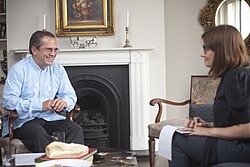
In recent years, the organization has pivoted heavily toward digital growth, launching specialized editions for Australia, the US, and Europe. It continues to lead in collaborative investigative journalism, most notably with the 2023 "Cyprus Confidential" report, which involved over 270 journalists across 55 countries to expose financial networks supporting Vladimir Putin's regime.
The organization has also faced modern security challenges, including a significant ransomware cyber-attack in December 2022 that compromised the personal details of UK staff.
Summary of Organizational Evolution
| Period | Key Identity/Focus | Major Milestone |
|---|---|---|
| 1821–1872 | Regional Non-conformist | Founded as Manchester Guardian |
| 1872–1959 | National Liberal/Radical | C. P. Scott's 57-year editorship |
| 1959–1993 | National/International News | Renamed to The Guardian (1959) |
| 1993–Present | Global Digital Media | Launch of international digital editions |
Frequently Asked Questions
Why did the Manchester Guardian change its name to The Guardian?
The name change occurred on August 24, 1959, to reflect the newspaper's growing prominence in national and international affairs, moving beyond its regional Manchester roots.
Who was C. P. Scott and why was he important?
C. P. Scott was the editor for 57 years starting in 1872 and later became the owner. He is credited with making the paper nationally recognized and shifting its editorial line toward a more radical, progressive stance.
What happened to The Observer?
Acquired by the Guardian Media Group in 1993, The Observer operated as a separate Sunday paper for decades. It was sold to Tortoise Media in a deal closed in December 2024, with a new website and print edition launching in April 2025.
How did the paper handle the 2022 cyber-attack?
The paper suffered a ransomware attack in December 2022. While internal systems were lost, staff worked from home to ensure the website and print editions continued. The Information Commissioner's Office was notified after it was confirmed that UK staff personal details were accessed.
What was the 'Cyprus Confidential' report?
Published in November 2023, it was a massive collaborative investigation involving the ICIJ and 69 media partners. It exposed the financial networks in Cyprus used to support the regime of Vladimir Putin.