The Great Freeze of 1899: A Historic North American Cold Wave
In February 1899, North America experienced one of the most severe cold waves in its recorded history. This meteorological event, characterized by a massive plunge in temperatures, swept across the continent, shattering records from the Canadian border down to the Gulf of Mexico and the Florida peninsula. The storm was not merely a regional event but a continental crisis that brought unprecedented freezing conditions to areas typically accustomed to mild winters.
The event began to take shape around February 10, 1899, and persisted through February 14, 1899. The sheer scale of the temperature drop was so extreme that it created surreal scenes, including snowfalls in the deep South.
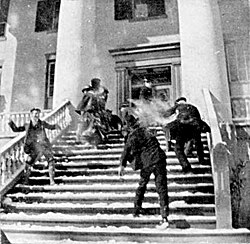
Key Facts
- Duration: The primary event occurred between February 10 and February 14, 1899.
- Geographic Reach: Impacted nearly every climate region in the U.S., including the Northeast, Northwest, Ohio Valley, South, Southeast, Southwest, and West.
- Extreme Lows: Temperatures plummeted as low as –61°F (–51.7°C) in Fort Logan.
- Record Breaking: The event established all-time records or February records for hundreds of cities across the United States.
Meteorological Impact by Region
The storm's movement created a devastating corridor of cold. Surface weather analysis from February 13 shows the storm positioned off the U.S. East Coast, acting as a pump that pushed arctic air deep into the interior and southern states.
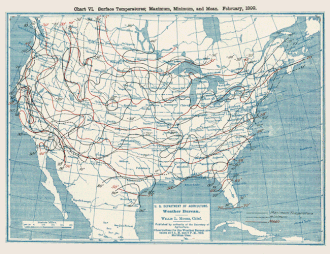
The Midwest and Northern Plains
The central United States bore the brunt of the arctic blast. In Nebraska, Bridgeport recorded an all-time record of –47°F (–43.9°C). North Dakota saw extreme lows, with Minnewaukan hitting –55°F (–48.3°C). In the Great Lakes region, Michigan's Lake City reached –41°F (–40.6°C), while Minnesota's Detroit Lakes plummeted to –53°F (–47.2°C).
The Ohio Valley and Northeast
The Ohio Valley experienced widespread record-breaking cold. Chicago hit –21°F (–29.4°C), an all-time February record, while Milligan, Ohio, recorded –39°F (–39.4°C), the all-time record for the state. In the Northeast, Pittsburgh and State College both recorded –20°F (–28.9°C), marking all-time February records.
The South and Southeast
Perhaps the most shocking aspect of the 1899 freeze was its penetration into the South. In Louisiana, Minden recorded –16°F (–26.7°C), an all-time record for the state. New Orleans saw a record low of 6°F (–14.4°C). Even Florida was not spared; Gainesville recorded 6°F (–14.4°C), and Jacksonville hit 10°F (–12.2°C), a record for February.
The Southwest and West
The cold reached as far as Arizona and California. Phoenix recorded 24°F (–4.4°C), tying its all-time February record, while Fresno, California, also tied its February record at 24°F (–4.4°C). In the mountainous West, Heber recorded a staggering –38°F (–38.9°C).
Summary of Historic Temperature Records
The following table highlights some of the most significant records set during the February 1899 event across various climate regions.
| Location | Temperature (°F) | Temperature (°C) | Record Type |
|---|---|---|---|
| Fort Logan | –61 | –51.7 | All-time record |
| Minnewaukan | –55 | –48.3 | All-time record |
| Detroit Lakes | –53 | –47.2 | All-time record |
| Bridgeport | –47 | –43.9 | All-time Nebraska record |
| Milligan | –39 | –39.4 | All-time Ohio record |
| Minden | –16 | –26.7 | All-time Louisiana record |
| New Orleans | 6 | –14.4 | All-time record |
| Phoenix | 24 | –4.4 | All-time February record |
Frequently Asked Questions
When did the Great Freeze of 1899 occur?
The event took place in February 1899, with the most intense period of cold occurring between February 10 and February 14.
What was the lowest temperature recorded during this event?
Based on the provided records, Fort Logan recorded the lowest temperature at –61°F (–51.7°C).
Did the cold wave reach Florida?
Yes, the cold wave reached Florida, with cities like Gainesville recording 6°F (–14.4°C) and Jacksonville recording 10°F (–12.2°C).
Which state saw some of its lowest all-time records during this storm?
Many states saw records, but notable examples include Nebraska (Bridgeport at –47°F), Ohio (Milligan at –39°F), and Louisiana (Minden at –16°F).
How did the storm affect the West Coast?
The freeze extended to the West, with Phoenix, Arizona, and Fresno, California, both recording 24°F (–4.4°C), which tied their respective all-time February records.